On PBS Kids… “6 Steps to Help Your Child Develop Self-Control”

In partnership with PBS’s Thirteen WNET, Confident Parents, Confident Kids wrote for PBS Kids in support of the new Parenting Minutes video on “Sharing Feelings.” The article begins…

“I call base!” my son would say frequently after he was introduced to the game of tag. If he wanted to end the tickling or stop the chasing, he would claim a piece of furniture or the staircase banister as his safe haven. No one could touch him there. And he relished in the power and security it afforded him.

In the Parenting Minutes video on Sharing Feelings, Helena and Andrew created a safe zone at bedtime for their daughter Liya in which they could talk about any feelings she’d experienced that day. They offered their empathy without judgment as a way of settling down and reflecting on the day. That opportunity gave Liya practice with identifying and articulating her feelings and honing her ability to practice self-control. When these skills are practiced at home, children are more likely to internalize them and use them at school to aid in focusing on the learning at hand. Read the full article on the PBS Kids’ site.

Quarto Author Chats – Jennifer Miller on “Confident Parents, Confident Kids”


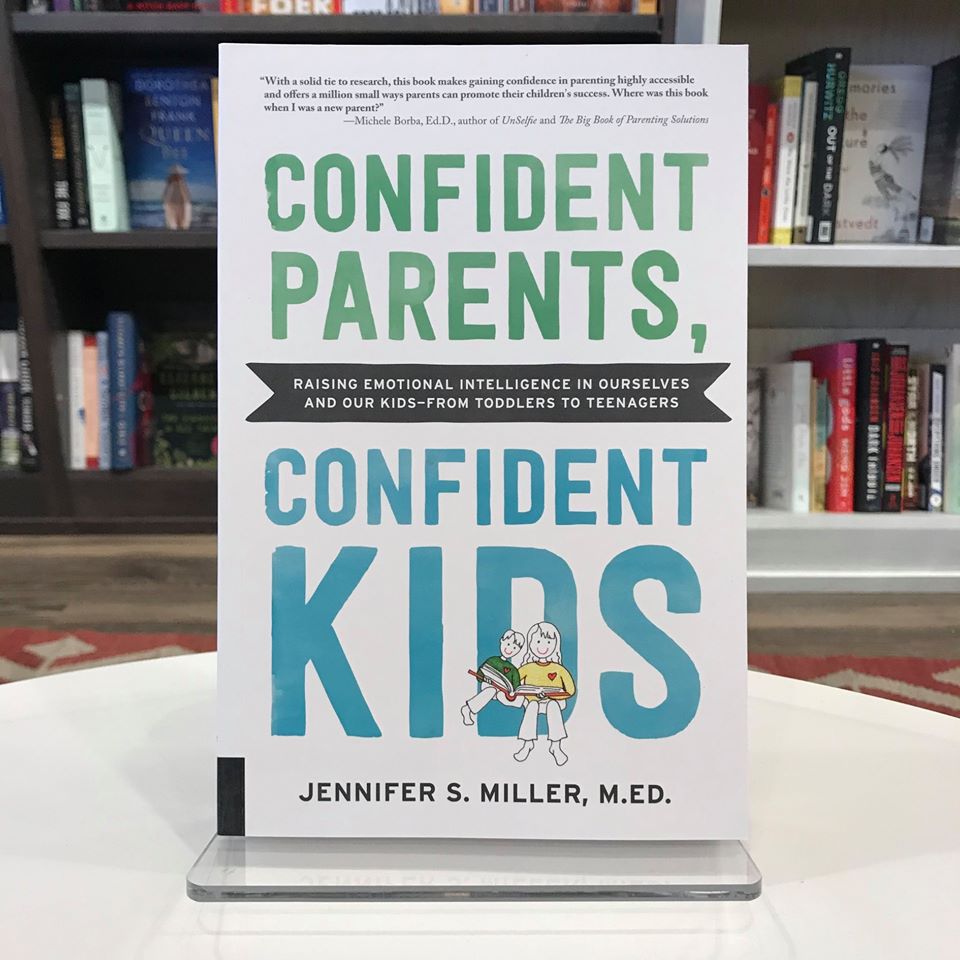
Hope you’ll give a listen to the podcast interview with Mel Schuit of Quarto Knows Publishing Group and Jennifer Miller who talks about her new book, “Confident Parents, Confident Kids: Raising Emotional Intelligence In Ourselves and Our Kids — From Toddlers and Teenagers.Quarto is committed to publishing beautiful, creative books for curious, passionate minds and does so in a highly collaborative manner. Learn more about how to raise confident kids and about the inspiration and ideas you’ll discover in the new book. Hope you check out this new podcast interview!

Quarto Author Chats — Jennifer Miller on “Confident Parents, Confident Kids”


Join the Preschool Mindfulness Summit! Starting today…


Starting today, I hope you’ll join me for the Preschool Mindfulness Summit hosted by author and educator Helen Maffini. This free online event involves experts in education, parenting and psychology who will discuss how we can help our children learn to focus their attention, learn how to care for themselves and their emotions, and also show compassion for others. The topics addressed are relevant, practical and enticing including:

  • Self-Compassion for Parents, Teachers, and Educators with Kristin Neff
  • Educating Mindful Minds With Rick Hanson
  • Talking to Preschoolers about the Brain with Liz Frink
  • Mindful Parenting with Genevieve Von Lob
  • Attuning to Children’s Unique Melodic Theme: Identifying and Understanding Children’s Temperaments to Build Social and Emotional Skills and Caring Relationships with Jennifer Miller (Interview live this Thursday, Feb. 6th!)

As our understanding of our children and mindfulness evolves, this dialogue is a tremendous value for parents and educators alike to raise questions and offer research-linked practices. Hope you’ll join!

Sign up FREE here! 

How Parents and Teachers Working Together on Class Parties Can Inspire Social and Emotional Learning Opportunities

by Guest Author, Lindsay Weiner

I’m often asked about how parents and teachers can collaborate and create social emotional learning (SEL) opportunities for children. The truth is, SEL opportunities exist in every corner of the classroom. Take seasonal classroom holiday parties like Valentine’s coming up as an example. Typically, this parent-led party involves a combination of a read-aloud, a craft-making, and a snack.  The kids enjoy it—it is a party, after all—but there is something missing from the typical party formula: the opportunity to bring intention and meaning to this tradition.

Why not rethink your child’s classroom parties in an SEL-inspired way and develop an experience that is more enriching and meaningful?

This past December, together with my child’s third grade teacher and the other class parents, we did just that. While we debated different activities, including writing letters to children in hospitals or soldiers overseas, ultimately our discussion with the classroom teacher helped us arrive at an idea that truly included practice in all of the SEL skills: a gratitude project to our community service providers. Later this school year, the children will be studying their community and this would be a great chance to talk about community providers such as the fire department, town hall, the police and the library, and at the same time, an opportunity to express gratitude for the work they do.

This is how it worked:

  • During class time, the teacher led the children in a letter writing activity to help express their thanks and share a holiday message. The exercise was completed during school time to bring more structure to the activity and to help children brainstorm how these different groups contribute to our community. 
  • Then, during the parent-led holiday party, the children rotated through four different activities (which included a craft, snack, and game). When the children rotated through the gratitude activity we set up, they decorated the letter, drew pictures and added their names and class photo. Small groups gave us a chance to reread each letter and reinforce the children’s thoughtfulness.
  • In the interest of time we had class representatives deliver these letters before the holidays and made sure to take photos. When they returned to school this week, their teacher was able to show them the photos so they could see (even if they didn’t get to experience first-hand) how their letters were received.

In this article that appeared in Edsurge, Leah Shafer talks about involving families in SEL programming and the importance of an integrated effort between parents, teachers and administrators. In our case, the success of this parent-teacher team approach offered an opportunity to develop an important SEL skill, gratitude, while at the same time build upon the teacher’s “community” curriculum. By making a small shift in something such as the class holiday party, we could nurture the values we want children to have and find ways to reinforce what children are learning about in school. 

Ultimately, there are many opportunities during the school year to make small changes and shift what has traditionally been done to something that is more SEL- inspired. Next year, we plan to encourage more parents
and classrooms in our school to take on this easy change and incorporate the idea of gratitude into their holiday parties, elevating the nature of the party and nurturing these important skills in our children. With some planning and forethought, and by utilizing a team approach which brings together parents and teachers, we can inspire small changes that have a big impact.

Resource:

Children’s books are a great way to set the tone for an SEL-inspired classroom activity. Lindsay highly recommends this picture book – The Thank You Letter by Jane Cabrera – for helping setting a tone of gratitude among students.


CPCK Note: What a treat to learn from educator Lindsay Weiner this week who specializes in thoughtful ways to use children’s literature to promote social and emotional learning in young people. Love her wonderful, simple and actionable ideas and will be taking them to my son’s school.

Lindsay Weiner is a teacher and founder of The EQ Child, an SEL consulting company based in Connecticut. She works with schools, parents, and community groups to incorporate SEL into their work. You can follow her on Facebook or to learn more please visit www.eqchild.com.

Free Webinar Today — “Raising Preteens and Teens with Confidence”

Have a tween or teen you are raising? Finding it challenging to feel confident as a parent or build confidence in your child? Join me for a special webinar on this very topic on Tuesday, January 28, 2020 at 1:30 p.m. EST hosted by Operation Parent. Operation Parent is a nonprofit organization dedicated to informing parents about the latest research and its practical applicable to the challenges of being a caring parent. More than 500 are already registered. Join now and learn more free! 

Thank you, Ann Zimlich and Michelle Massey for the important work you do and for this opportunity to collaborate!

PayPal Headquarters Book Chat on “Confident Parents, Confident Kids”

Check out my chat last week at PayPal Headquarters with Mike Todasco, Senior Director of Innovation about the new book, “Confident Parents, Confident Kids.” Mike Todasco, PayPal,  and the many caring parents who attended, thank you for a truly rich dialogue!


Also — Starting today – Don’t miss the Happily Family Conference: Mindful Parenting for High Needs Kids. Sign up here: https://conference.happilyfamily.com/?orid=4168&opid=14

This Week! FREE Online Happily Family Conference…

Mark your calendars —  and join me this week — January 23-27th! This is a major highlight of my wintertime enrichment opportunities. I love joining expert parenting hosts and friends Cecilia and Jason Hilkey for this rich, insight-filled online conference. Register here and you’ll receive links each day to five or so interviews (between 30-45 minutes long typically). You’ll walk away with new tools, ideas, and the inspiration to try them out to improve in your role as a parent.

Check out a few experts and their interview topics:

Dr. Rich Hanson –      Resilient: How to Grow and Unshakeable Core of Calm, Strength, and Happiness

Iris Chen  –      From Tiger Parenting to Peaceful Parenting and Unschooling; One Mother’s Journey to Self Awareness

Dayna Abraham  –     Parenting with a Partner When You Have a High Needs Child

Kim John Payne  –     Being At Your Best When Your Kids Are At Their Worst

Dr. Laura Markham. –   Tech, Social Media, Emotional Health and Resilience

Dr. Christine Carter  –  The New Adolescence: Raising Happy and Successful Teens in an Age of Anxiety and Distraction

Jennifer Miller –   Can We All Just Get Along: Using Fair Fighting to Build Family Harmony

All interviews are posted for 24 hours free and at your convenience. Watch one or many depending upon your interests. Please join me for this upcoming event!

Sign up FREE here! 

Martin Luther King Jr’s Call to Action Today: Unlearning Implicit Bias 


“Our lives begin to end the day we become silent about things that matter.”

“What is Martin Luther King Jr. saying to me?” I ask myself each January and the answer that returns is always fresh and significant. Though the need for valuing, seeking and embracing diversity is urgent and pressing in our homes, our schools and our workplaces, where do I turn my attention? How can I make a difference?

In our roles as parents and or as educators, are we doing all that we can to raise a generation of includers, of strength-finders, and of caring-in-diversity relationship seekers? In fact, it’s important for us to realize that children, even infants, begin learning bias in their earliest years. Where do they get these messages of bias? Directly from us.  

Implicit bias can be difficult to admit or even understand since it creates a paradox in our thinking, speech, and actions. Though we may believe that all individuals – genders, cultures, ethnicities, LGBTQ – are capable of doing a particular job, for example, we may harbor schemas, or abstract layers of knowledge from many years of limiting messages from others, that conflict with that belief and produce opposing stereotypes. Though we may not articulate a directly offensive view to a woman getting that job, for example, our attitude or tone used when discussing the woman might represent our underlying schema beliefs that, whether we desire or not, “teach” our child biased values. If, for example, we encounter a new person of another culture and approach cautiously prioritizing our safety when we would not do that with a new person of our own culture, then it sends a clear message to our young child. 

Just as all people cannot be fully self-aware since we all have blind spots being too close to our own skin, so too all have developed implicit bias over a lifetime of messages that create power-over dynamics where there are differences. Research has uncovered a number of ways in which we can unlearn our implicit biases. I’m hearing Martin Luther King Jr. tell me this is work I must do. In fact, it’s a responsibility each of us must undertake as contributing citizens, if we are to raise confident kids and become the confident parents we want to be.

Since modeling is predominantly how our children learn implicit bias – watching and listening to you – let’s focus on how we can change ourselves first. Using the CASEL social and emotional competence framework of the five core skills we need to build in ourselves and our kids, here are some research-based strategies for unlearning our own implicit bias.

Conduct a safety self-test to raise self-awareness. 

Because we are caring, educated individuals, because we may view ourselves as change-makers or global citizens, it’s uncomfortable (at best) to admit that we have implicit bias. However, instead of allowing guilt and shame from stopping us do the work we need to do, it’s critical to admit that we all have it by the very nature of living in a culture with a diverse range of others. So help raise your own self-awareness as a very first step. Conduct an audit of your own thoughts and feelings. Pick a week (this one seems one in which you might be more motivated inspired by the words and actions of Martin Luther King Jr.). Each time you go to a coffee house, restaurant or bank, notice how you interact with others. Who do you say hi to? Who do you feel safe with? What is the color of their skin? Intentionally say “hi” or act kindly to others who look different from you and check your feelings. Safe, unsafe? This will raise your awareness that there’s work to be done.

Become intentional about changing your thinking habits to increase self-management. 

Now choose the following two weeks (since it takes at least two weeks to create new thinking habits) to create new ways of thinking when you are interacting in your community. As you go about your day and encounter others, intentionally seek out those who felt “unsafe” to you when you conducted your audit. In the quick moment of interaction, utter in your mind, “safe,” to begin to turn around your perception. As you walk away, ask yourself, “what’s their back story?” Imagine the most empathetic, compassionate back story of pain, struggle, endurance, courage and kindness as you consider their story. Cultivate a character in your mind who is endearing and beloved as you watch his life movie.

Seek interaction with other races, cultures, genders, or same sex partners to cultivate social awareness and create relationships.

Numerous research studies have demonstrated that as individuals get to know a person who differs from them, their biases are shattered and they feel greater compassion for the “other.” Increased interaction helps us view people as individuals rather than as part of a larger culture. So on daily errands, become intentional about creating small talk with those from other races, cultures, or LGBTQ. How can you generate conversation, get to know something about that individual, and help shatter your own implicit bias? Consider the multiplying effect of doing this with your child by your side. Your child will not only experience your modeling but also, learn with you about another individual in their community with whom they would not normally interact.

Participate in service as family to activate your responsible decision-making skills. 

“Everybody can be great because anybody can serve,” is another favorite quote from Martin Luther King Jr. Each time you sign up to serve your own or another community, you have a chance to dispel implicit bias. Whether it’s serving dinner to a homeless population or bringing supplies to shut-in seniors, you’ll have the opportunity to interact with individuals you may never encounter in your daily routine while showing care for them. Include your family and all will have the chance to enact kindness and come away feeling nourished and cared about from those you’ve served as is always the experience with genuine service.

May we not become complacent or point the blame at others for the lack of understanding and acceptance of some humans. As parents and educators, we are called to address implicit bias as a core responsibility of raising the next generation. How can we become inspired by the model of Martin Luther King Jr. to take action in our lives to change the world one person at a time?


Want to take the learning further?

Check out the Collaborative for Academic, Social and Emotional Learning’s Equity Brief entitled: Equity and Social and Emotional Learning; A Cultural Analysis

Living the Questions

Happy new year to you and your family! I can’t help but linger on the big questions during the gray days of January. After the decorations have gathered dust and been put away, there’s a bareness and a simplicity to our home. That lack of clutter allows me some clarity of mind as I consider those questions that, in the busyness of our days, don’t typically get asked. 

In addition, I’ve recently been challenged on the very role and purpose of family. Why do we choose to live in a family when we could choose another lifestyle? It made me consider. As a researcher, I went directly to the literature. But then, I paused, moved away and considered for myself. Why is family life so important and what purpose does it serve in our lives that no other context can serve?

There were two commonalities I found as I sorted through writings on families from the science-based to the philosophical and spiritual. Family offers a support for our physical and mental health. The implication of this is that our own health and well-being have a direct impact on the well-being of others in the family so care for ourselves and others is a priority. The second is that family serves as the hub of our core values. As we anchor to those values, we can see evidence of them in our everyday choices and actions. Becoming clear as a family about what values we want to intentionally embody, nurture and promote can offer us a focusing path as we learn about and improve ourselves and our ways of parenting.

Here are some of these questions you might consider too.

What do I stand for? What does our family stand for?

What is my life about? 

What gives me a sense of meaning?

Who do I want to be as a parent? 

What do I value as a parent and as a husband or wife, daughter or son and family member?

How am I living those values and in what ways am I not? 

Where do I need to become more intentional to ensure that I am living my values?

How am I helping my son or daughter discover their own sense of purpose and meaning?

How do I regularly share power with my son or daughter to ensure they are growing their responsible decision-making skills?

How am I contributing to the world? How am I finding small ways my son or daughter can contribute?

I find the following quote so comforting as I consider the bigger picture. May you live the questions this January to start the new year in a considered, reflective way.

Be patient toward all that is unsolved in your heart and try to love the questions themselves, like locked rooms and like books that are now written in a very foreign tongue. Do not now seek the answers, which cannot be given you because you would not be able to live them. And the point is, to live everything. Live the questions now. Perhaps you will then gradually, without noticing it, live along some distant day into the answer.

– Rainer Maria Rilke

Today:

Jennifer Miller of Confident Parents, Confident Kids will be doing a fireside chat with Mike Todasco, Senior Director of Innovation at PayPal Headquarters (and long-
time dear friend) in San Jose, CA. Can’t wait to talk about parenting hopes and dreams and how we can promote social and emotional competence in ourselves and our children with the PayPal Team. Thanks Mike Todasco for this awesome opportunity!

On PBS Kids… “How to Coach Kids through Big Emotions”

Confident Parents, Confident Kids is delighted to partner with WNET Thirteen, the New York flagship PBS affiliate and PBS Kids to produce articles, resources and videos for parents related to supporting and helping our children learn about their big feelings. Today on PBS Kids’ blog, check out the following article on using emotion coaching with your young child. The article begins…

Young children can have big feelings, but not yet know how to handle them. Parents and caregivers can learn how to use coaching as a simple tool for responding to a child’s upset to build her emotional competence.

Coaching can become a powerful way to help children become more self-aware, understanding their own feelings and how emotions impact their choices. It can also give them valuable practice in responsible decision-making. Parents who use a coaching approach express confidence that their child will succeed in their efforts. Rather than fixing a problem for their child, they focus on helping their child identify and better understand their feelings and then, think through their own solutions to a problem. Read full article on PBS Kids.

And check out the related video with versions in English and Spanish! Parenting Minutes: Expressing Emotions