Rudolph Is the Parents’ Holiday Anti-bullying Lesson Worth Unwrapping

The beautiful story of a lovable, unique reindeer going from victim to hero is beloved by generations with a rich history and many hidden stories to reveal. Rudolph provides a well-known context for use to explore the roles of bullying, causes, and proactive solutions. In addition, the history of the story is a rich one, which adds depth to the children’s fable. The story and history of Rudolph the Red Nosed Reindeer have many social and emotional learning gifts for us to unwrap.

“Called him names” – the situation and roles of bullying

At the start of the story of Rudolph, we all know the other reindeer used to laugh and call him names. Name calling is known as social aggression, which is any negative behavior designed to embarrass and/or affect another’s social network. In addition to name calling, the other reindeer were also “excluding” Rudolph as “they would not let Rudolph join in any reindeer games”. Being excluded is another common and hurtful form of bullying. Name calling and excluding are classic bullying and for a very classic reason: for being different (Rudolph’s red nose).

It is helpful to understand the common roles involved in bullying in order to address it. Those roles are target, aggressor, bystander and hopefully an ally or allies. In the story of Rudolph, because he was the one being called names, he would be the “target” of the bullying. The “aggressor” is the person or persons doing the bullying behavior, which in this case, sadly would be “all of the other reindeer”. Unanimous bullying is rough and definitely the stuff of legend. Reindeer apparently are prone to a herd mentality. A bystander is someone who notices the bullying but does not encourage or discourage it, a kind of “Switzerland” role. We can only assume with all the name calling and excluding going around the North Pole that someone would have noticed, most likely the elves.  You might make the excuse that the elves were very busy making toys, but since they are Santa’s reindeer caretakers and are known for their keen sense of hearing, they must have known. So for our story, the elves were the “bystanders” in the bullying roles. However, do not get too upset about the elves. They clearly did not join in on the bullying as there is no mention of them also calling Rudolph names or excluding him. Many people are bystanders and perhaps they did not know what to do to help Rudolph. This article will show you what can be done.

A surprisingly cold overall reindeer climate at the North Pole

Another concerning part of the story is that Rudolph did not seem to know what to do to advocate for himself. The North Pole at the time definitely needed to put both proactive and reactive systems in place for bullying prevention and an overall-positive reindeer climate. A reactive system would be if all reindeer and reindeer supervisors were educated about the roles involved in bullying and on what to do after the bullying had started. A proactive anti-bullying system would be supports or structures that may have prevented the bullying altogether, such as teaching the reindeer skills for responding to others, taking someone else’s perspective, showing empathy and advocating for others.

If a strong system was in place perhaps the elves would have acted as allies, and they could have done a lot to help instead of acting as bystanders. 

These are common ways to be allies. They could have been a “confronter” and stood up for Rudolph; even something as small as “that is not a jolly thing to do” may have stopped the bullying. They could have been a “supporter” by supporting Rudolph through his trials comforting him after the bullying and helping him work through the problem. The elves could have been a “distractor” by distracting the reindeer when bullying, by changing the topic or telling a holiday joke. Some things they might have said to distract would be; “I hear there is a snowstorm coming in. Do you think we will be able to do the delivery run?” or even “Have you heard the joke about why Santa is so jolly?”

Rudolph also might have known some tips for a target. He could have stood up for himself by stating in a strong but non-threatening way “I feel hurt when someone bullies me, so stop bullying me”. Rudolph could have spoken to a friend, parent, or leader about the problem. Rudolph, however, was a wonderful role model as he did not let others’ negativity prevent him from being himself and shining his light.

Santa – The ultimate ally

Rudolph is eventually saved in the story by perhaps the ultimate ally, Santa. It is very possible Santa knew about the bullying and looked for a reason to give Rudolph a leadership role. The fog was possibly just the opportunity he was hoping for so he could turn things around for Rudolph. Perhaps there was an elf or a reindeer that did notice the bullying and reported it to Santa. Regardless, Santa is the perfect ally as a respected leader of the reindeer who had the vision to see what made Rudolph different as a strength rather than a weakness. This is a powerful way to turn around bullying and a wonderful way to see difference. What if we asked ourselves when we notice someone is different, how that difference is a strength? Better yet, what if we all tried to help them make that difference a strength?

“Poor Rudolph” – Empathy, the antidote

The author invokes a critical bullying antidote with the passage “They would not let poor Rudolph join in any reindeer games”. By saying “poor Rudolph” the author was trying to get the reader to feel some empathy. In fact, he was also doing it by just telling Rudolph’s story, as it helps us engage in two key parts of empathy, (1) noticing how another is feeling and then (2) seeing it from their perspective. The third part of empathy is feeling with someone or feeling at-least a little bit of what they are feeling. This would be different for every reader, but the emotional ride of the story from poor Rudolph to going down in history surely evokes empathy in us all.

Without this appeal to our empathy, a reader might have thought all of this bullying behavior could be warranted for flaunting his red nose, a kind of “who does he think he is walking around with his red nose all stuck up in the air.” This is exactly why empathy is so important. When we recognize how others are feeling, see things from their perspective and feel a little of what they are feeling, we are putting ourselves in the position of another. Doing this is putting ourselves in another’s shoes or in this case horseshoes and if we were in those shoes, we would not want to be called names or excluded. 

Rudolph for grown-ups – “Going down in history”

Empathy is at the core of our humanity and relates directly to the golden rule of “Do unto others as you would have done to you”. Without a perspective of empathy, we are prone to “other”-ing or to distancing ourselves from another person or group of people. To make them different from “us”. This psychological distance allows us to be callous or unfeeling towards them. Bullying and exclusion starts with othering someone for their difference. The small comments grow into rationale for exclusion or social aggression, “Othering” taken to broad extremes has allowed horrors such as Native American removal, slavery, the Holocaust, and many more throughout time. In fact, Rudolph the Red Nosed Reindeer was written by an author, Robert May, who was inspired by his own painful childhood experiences as a Jewish boy targeted by bullying. The story was created during a time of great personal sadness for May, during a global background of the horrors of the Holocaust.

Smothering othering with empathy using Rudolph

Empathy is really seeing ourselves in another, and it breaks down “othering” as it forces us to think about how we would feel and how we would want to be treated. Empathy can change bullies to bystanders and bystanders to allies. This is why the work of teaching empathy is so critical to creating safe inclusive communities and a better world. So, this holiday season as you share the story of Rudolph the Red Nosed Reindeer, talk about the gift of empathy within the story. For younger children ask them what they think Rudolph might be feeling at each stage of the story. Talk about bullying and how to be an ally. For older children, consider adding the deeper history of the story. But most of all, use the story to remind all to see what others are feeling, put themselves in their shoes, and act from a place of compassion.

Perhaps the lesson of Rudolph can help make us all go down in a more empathetic, peaceful, and inclusive history.


Guest Author Rudolph Keeth Matheny is a social and emotional learning teacher, speaker, and author. He is named Rudolph, after his grandfather, who dramatically escaped the Holocaust on “Kristallnacht” and immigrated to America. He then worked in a warehouse and sent most of what he earned to help family members and friends escape. HIs mother, out of concern for his being bullied, nicknamed Rudolph “Keeth,” which is what he has been called all his life. Now that he knows more about his grandfather, he embraces Rudolph both in his name and in his work. He is a co-author of School-Connect, a research and evidence-based social and emotional learning curriculum that is now in over 2000 schools. Check out his site, SEL Launchpad!

*What an absolute joy to learn from and partner with Rudolph Keeth Matheny this week! It’s an honor to publish his outstanding article. – CPCK

#parenting #antibullying #SEL

Learning about the World’s Holidays…

Expand your Children’s Social Awareness by Learning More Together:
About Some of the World’s Major Holidays…

These two posts have become an annual favorites! Because of the numerous holidays celebrated through the fall and winter months, it is an ideal time to discuss how people celebrate around the world – both the uniqueness of traditions and also the many commonalities. When doing the research, I was struck by the number of similar themes and symbols for the following world holidays. Most notably, the major holidays celebrate light in the darkness, show gratitude for food, family, and life and pause for reflection or prayer. I was so enriched by learning about the beautiful traditions of celebrations around the world. I hope you will take a moment to share these with your family. Happy holidays! Read the full article with brief summaries of each world holiday.

About the upcoming Winter Solstice…

This December 21, the shortest day of the year, will mark the turning from dark to an increase in sunlight. In the Northern Hemisphere, it is the coldest time of year and in the Southern, it marks the Summer Solstice. The traditions that recognize this passage seem to touch numerous cultures around the world and date back to ancient times in which the Mayan Indians, ancient Romans, Scandinavians, and others celebrated. Years ago, my own neighborhood friends would gather on this day, say some words of gratefulness for the gift of light in our lives, and each person would contribute a stick or evergreen branch to the fire. This tradition has remained in my memory as one of the most sacred I have attended. All of the major world holidays involve an appreciation for light in the darkness as a previous article explored including Christmas, Hannukah, and Kwanzaa. As we approach this passing of dark to light, I reflect on the themes cultures throughout the world have recognized, appreciate our commonalities and consider how we can learn from their wisdom and reinforce those themes in our own family. Read the full article on the Winter Solstice.

PBS Parenting Minutes

Check out the new, short parenting videos!

Confident Parents, Confident Kids is honored to partner with WNET New York, the flagship PBS Affiliate, in creating “Parenting Minutes,” videos dedicated to educating parents about simple, research-based ways to promote children’s social and emotional development. WNET has just produced and published two new video shorts along with printable tip and fact cards to serve as helpful reminders of the lessons in the video. Videos can be viewed in either English or Spanish. Hope you’ll check them out and share them!

Video One: Expressing Emotions

Video Two: Sharing Feelings

Thank you PBS – WNET for these valuable resources and your commitment to children’s social and emotional learning!

Speaking Tonight in Chicago, Hosted by the Family Action Network…

Jennifer Miller of Confident Parents, Confident Kids is excited to speak tonight in northern Chicago sponsored by the organizations listed below and hosted by the Family Action Network. What a joy to speak in a community that not only talks about the importance of children’s whole development, but invests their time, money, and focus on research-based social and emotional learning in their schools! If you live in the Chicago area, hope you’ll join us! Grateful to @RogerWeissberg and @LonnieStonitsch for this opportunity! Here’s to Confident Parents raising Confident Kids!

Event Sponsors

Promoting Empathy and Kindness through Books on Animals and More…

One Mom and Educator’s Methods for Promoting Her Own Son’s Social and Emotional Development

As a parent and an educator, I believe strongly in the power of social and emotional learning (SEL), and in the power I have as a parent to help my child develop into a healthy and kind person. There are several things I’ve done to encourage my son’s SEL growth and development. I talked with my son from birth. I described everything in rich detail to him when he was an infant: all about the lights, stairs, sounds, and more, but I didn’t stop at labeling objects. I frequently modeled using emotion words and explained what they mean. As a result, my son was highly verbal from a young age. In fact, despite him developing multiple ear infections, the doctor chose not to put tubes in his ears because he had such a strong vocabulary.

I have video of my son at about two-years-old making his face look sad, mad, happy, relaxed, excited, worried on cue when we prompted him with “show me a ___ face.” I didn’t stop at labeling and practicing our own emotions. We paid attention to when other children were crying in a store and said, “I hear something. What is it? Yes, someone is crying. Why do you think that child is crying?” We did this to help him develop his sense of being aware of others so he would become sensitive to how they express their needs. I also took him to the park and on play dates regularly so that my “only child” could practice his social skills and learn that the world is not only about him. As a parent, I did these things and continue to do them because I believe it will help my son better relate to others. In some ways, my child is my own little social science experiment: If I pour all of the intentional practice of SEL into him, will he be able to fill others’cups later in his life?

As an educator in the field of SEL, I believe in reinforcing the foundational skills he will need as an adult. Another intentional strategy I use with him comes straight from my work world and is from the RedRover Readers program (redrover.org/readers). The RedRover Readers program is a literature-based, social and emotional learning program designed to promote empathy. Educators learn how to ask specific questions and invite students into the stories. They invite children to share their thoughts, feelings and experiences in the context of animal- themed books about kindness and relationships. So, while reading books at night, I ask my son questions, and we delve into the story by taking the perspectives of each character to help him imagine how they might be feeling and what he might do if he was in that situation.

My intention as both a parent and an educator is to foster empathy and awareness in children – which contributes not only to their own wellbeing, but to a kinder, more compassionate world at large. By now, using SEL strategies with my son is second nature, and it is deeply rewarding to see how the social and emotional skills he has learned continue to develop and even influence those around him.

RedRover is a national non-profit organization helping to strengthen the bond between people and animals and bring animals from crisis to care through emergency sheltering, disaster relief services, financial assistance and education. RedRover.org

Karly is a parent and former classroom teacher who oversees the national RedRover Readers program. She has led workshops on topics including parenting, SEL, self-care and humane education. She lives in Sacramento, CA with her young son, husband, two dogs and one cat.

Gift Giving To Parents…

Book Pairings

I love the idea of pairings – wine pairings, cheese pairings. Everything sounds more joyful in pairs! So I thought I’d pair the content of my book with some really handy parenting gadgets, tools, and supplies to a.) make your gift-giving easier and more meaningful and b.) offers parents the equipment needed to take action and enjoy and deepen their family relationships. Because every age and stage of a baby, child, and teen’s development requires a different kind of parenting approach, there are recommendations by age and stage.

For Parents of Infants and Toddlers:

Pair the Confident Parents, Confident Kids book with a CD of Lullabies. Here are two that I loved with my own baby and toddler and an additional one that comes highly recommended. These include:


For Parents of Young Children, Ages 4-7:

Pair the Confident Parents, Confident Kids book with my favorite feelings tools (listed in the book) or these recommended feelings picture books! These include:


For Parents of Middle Childhood Ages 8-12:

Pair the Confident Parents, Confident Kids book with games in which your child can have choices and control, prompt meaningful family conversations, or help you laugh together! These could include:


For Parents of Teens Ages 13-17:

Pair the Confident Parents, Confident Kids book with games that offer your teen support with dealing with the big range of emotions they will be experiencing, or spurring conversation with dice for dinnertime enjoyment, or learning coping strategies together. These could include:


Moments for Movement and Mindfulness this Holiday Season

Guest Post by Shira Ackerman, Director of Education and Research for GoNoodle

With Thanksgiving approaching and the holiday season coming soon after, we at GoNoodle know that many parents and teachers seek ways to help their children and students give thanks, offer gratitude, and find time to reflect on the gifts that really matter. As such, we encourage families and teachers to take some time this season for moments of movement, mindfulness and social and emotional learning, in order to help kids focus on the season in meaningful and enjoyable ways. In fact, movement is a great way to do this; as explained by a recent study highlighted by Edutopia: “The most successful social and emotional learning (SEL) programs use active forms of learning to teach students, and evidence suggests that dance outpaces other forms of physical activity and other forms of arts learning when it comes to improving SEL outcomes.”

Below are some tips, suggestions and recommended GoNoodle videos for infusing moments of gratitude, reflection and of course, fun and movement into your kids’ lives this holiday season: 

Show Thanks: Take the time to say thank you for the big and small gifts you receive every day. Consider implementing a weekly moment for you and your kids to show appreciation for someone and why you appreciate that person. 

Recommended GoNoodle Video: Be Grateful 

Recognize Your Own Strength: Appreciating others begins with appreciating yourself. Have kids name, use and share their strengths and talents so they can feel empowered and share all they have to offer with the world!

Recommended GoNoodle Video: Own Your Power

Give the Gift of Movement and Fun: Put aside material gifts and give your kids (and you!) what they really want and need: quality moments of fun, love, and bonding. A short family dance party with kid-friendly music and dance videos from GoNoodle will get your whole family, laughing, letting loose and enjoying your time together. 

Recommended GoNoodle Video: Footloose

Press Pause: Amidst our always busy lives, especially during this time of year, a moment of mindfulness can help everyone relieve stress, feel calm and regulate their emotions. Practice mindfulness as a family or give your child a mindfulness video to do when he/she seems overexcited or overwhelmed. 

Recommended GoNoodle Video: From Mindless to Mindful

GoNoodle provides 100s of free movement and mindfulness videos to help kids to be their best. To get moving at home, visit GoNoodle.com or download the free GoNoodle app for Android, iOS, Roku, and Amazon.

Thanks GoNoodle for these outstanding resources many educators already use in schools and that can be easily accessed and utilized by families. Parents, these videos are short and packed with helpful content. Use them to change the tone in a household, build connection between family members, and support transition times.

At Confident Parents, Confident Kids, we are so grateful for your participation in this global dialogue on parenting for and with social and emotional learning. If you celebrate in the U.S., happy Thanksgiving to you and your family! May you feel a sense of gratitude for your safety, health and happiness over the coming weeks.

TODAY Parents Instagram Take-over — Happening Now!

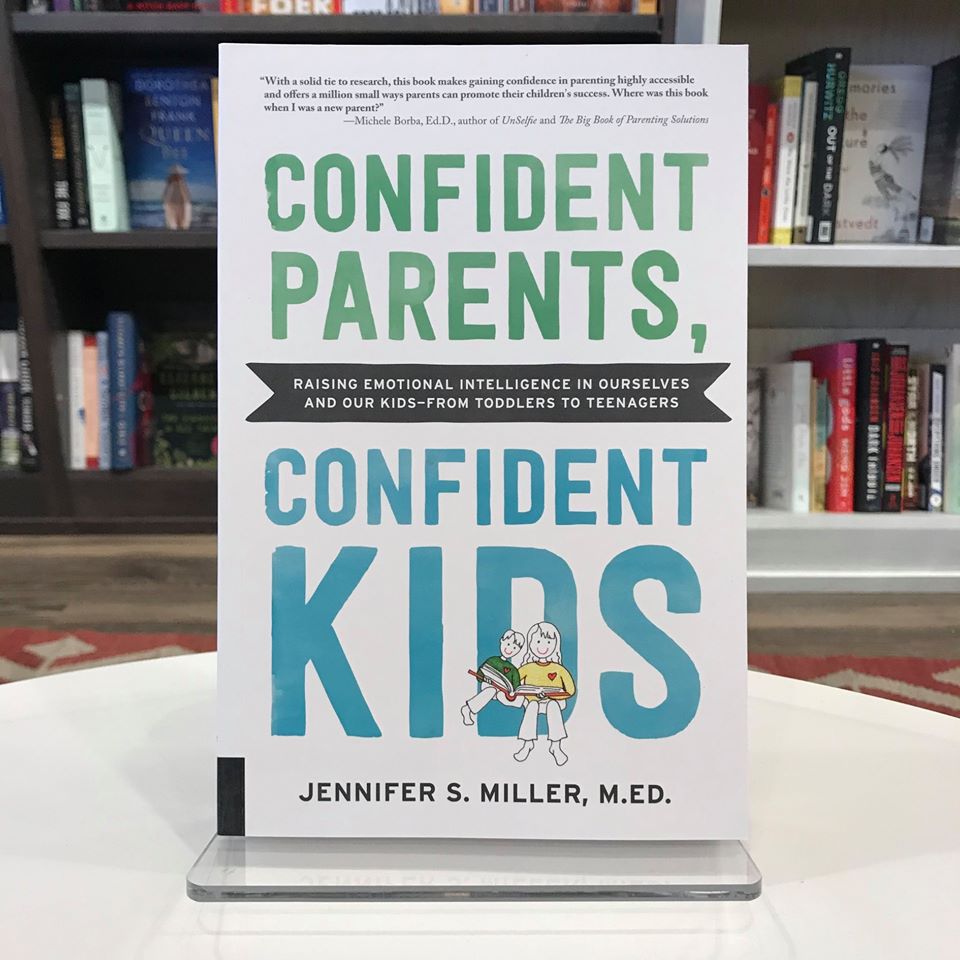
NBC’s Parent Toolkit team partnered with Jennifer Miller on her new book “Confident Parents, Confident Kids” to take over the TODAY Show’s Parenting feed – TODAY Parents. They’ll be lots of great content, tips for parents and information on the new book running over the next 24 hours. Don’t miss it!

Thanks for this awesome opportunity, @NBCNewsLearn!

Excerpt from New Book on Inside SEL…

Check out an excerpt from the new book in the newsletter that offers information, news and resources for the field of social and emotional learning. It begins…

In an exclusive excerpt from her new book — “Confident Parents, Confident Kids” — author Jennifer Miller shares a poignant example of how parents can nurture and coach their children when faced with various social and emotional obstacles.

“I hope you’ll become a brave, confident boy, mi corazón.” Mateo’s Mom would whisper to him when he was a newborn. And every day of those first months, his Mom would tell him the many dreams she had for him. READ THE FULL EXCERPT AT INSIDE SEL: 

Confident Parents, Confident Kids: Raising Emotional Intelligence in Ourselves and Our Kids


Tomorrow – World Kindness Day! Partnering with Go Noodle

“The Enduring Gift of Kindness; Raising Children Who Show Gratitude and Act with Generosity” on Go Noodle!

This week, Confident Parents, Confident Kids is partnering with an important organization. Have you heard of Go Noodle? They produce short 1-2 minute, high quality videos for children to be utilized by teachers and families. They reach an estimated four million children in public schools across the United States. These videos offer children joyful opportunities to move, dance, and practice mindfulness including focusing attention and activating compassion. In fact, as we spoke with other parents about Go Noodle, many were familiar from their children’s experiences at school. Teachers use these videos during transition times of the school day to get the wiggles out, change focus or direction, create a joyful climate, and boost social and emotional skills. We are delighted to learn about this incredible resource. And parents, there are videos geared for use in the home. Some of them are included with the article from Jennifer Miller this week including:

  • “Empower Tools: Have Compassion”
  • “Talk about It: Be Kind”
  • “Empower Tools: Tune into your World”
  • “Talk about It: Help Others”
  • “Best Tees: Be Nice”

“The Enduring Gift of Kindness; Raising Children Who Show Gratitude and Act with Generosity” begins…

A few days ago, my son and I approached a crowded grocery store entrance together. I watched as he noticed an older man walking with a cane. He quickly positioned himself so that he could open and hold the door for this man and then ushered me in as well. “That was kind,” I said to him as I felt lit up inside. And that warmth lasted through our shopping excursion. I found myself smiling more easily, speaking gently and kindly to the cashier at the checkout, and feeling more patient with the crushing crowd of pre-football game shoppers.

Research confirms my experience. Kindness is contagious. Studies have shown that people can merely read about acts of kindness without witnessing one and act more kindly going forward.1And it’s not necessarily the specific act that is contagious but rather, the expression and intention of kindness whatever the act may be. READ THE FULL ARTICLE HERE AND CHECK OUT THE FOLLOWING HIGH QUALITY VIDEOS FOR THE KIDS YOU LOVE!