This Friday — Join CASEL Cares Webinar on Supporting SEL at Home during COVID19

Join the new CASEL Cares series through the Collaborative for Academic, Social and Emotional Learning this Friday where we’ll discuss how to support children’s social and emotional development at home during the #COVID19 pandemic. This webinar will address:

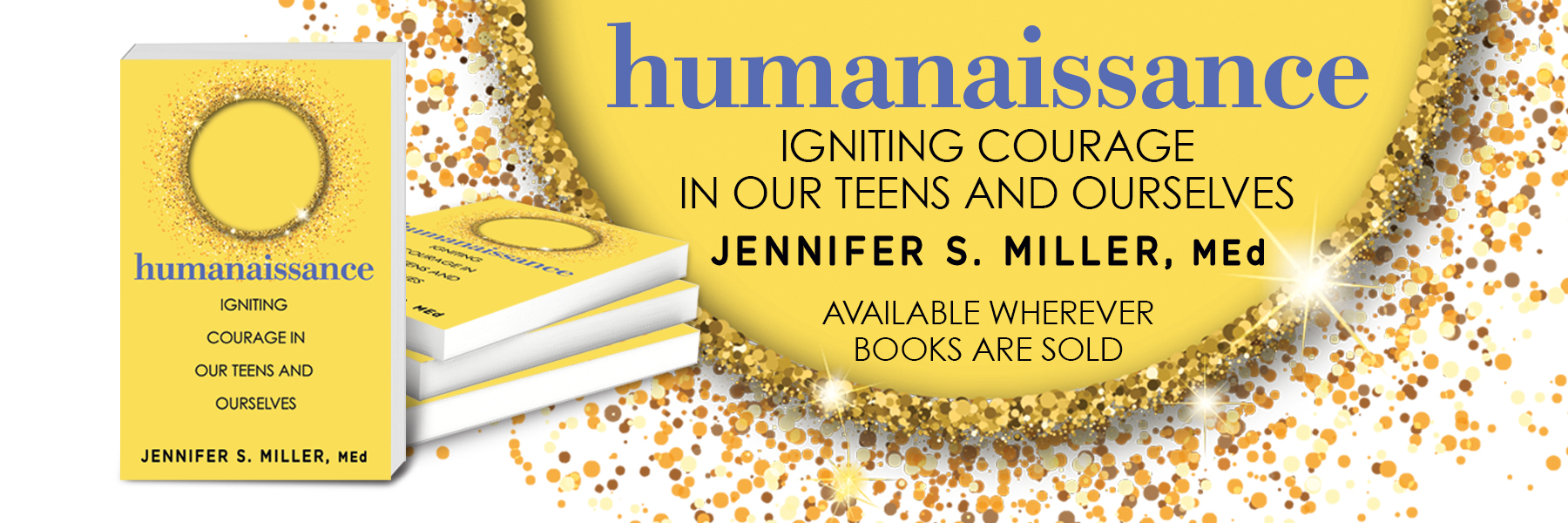
What does social and emotional learning look like in family life? How can parents, caregivers and educators incorporate social and emotional skill building into their daily lives at home with their children? And how might parents hone their own skills at home?  Jennifer Miller will show how this unique time may just be the opportune moment to practice resilience and advance social and emotional skills. During this shelter-in-place, stay-at-home time period, caring adults can use new practical strategies and tools to support their expanded role as 24-hour caregivers and educators. Jennifer will discuss how you can plan ahead for big feelings — your children’s and your own; how you can set up your home for learning success; how to facilitate social connection in a physical distancing world, and how to turn it around when stress gets the best of us and things go sideways. Sign up here! 

We Need Your Input!

Please write in the comments’ section or if you have numerous ideas, you can email confidentparentsconfidentkids@gmail.com.

What are you doing to stay socially connected?

What are you doing to help your child stay socially connected?

Families are Stronger Together Staying Home and Safe

For all of the Harry Potter fans out there, do you recognize this illustration concept borrowed from the Battle of Hogwarts in “Deathly Hallows”? My son and I just completed reading and watching the Harry Potter series and this image came to mind when, in the final “Deathly Hallows” movie, each witch and wizard used their magic to protect Hogwarts when the battle began. It may be challenging at times to stay at home, but we are stronger and healthier when we do. If you are struggling with parenting challenges, I hope you’ll use and search the Confident Parents, Confident Kids site for free support. There’s guidance on helping children deal with fears, monkey mind at bedtime, setting up your home for learning, power struggles, a fighting fairly family pledge and much more!

Happy First International #SEL Day


Yes, this is the first time that the world comes together to celebrate and recognize the critical importance of social and emotional skills in our roles as parents and educators and for raising confident kids!

Social and emotional learning is a framework for understanding and cultivating essential skills that help us come to deeply understand who we are as individuals, our thoughts, feelings, impulses, values, strengths and limitations and also, how we relate to others in ways that are meaningful, fulfilling, and sustainable. Those competencies include self-awareness, self-management, social awareness, relationship skills, and responsible decision-making.

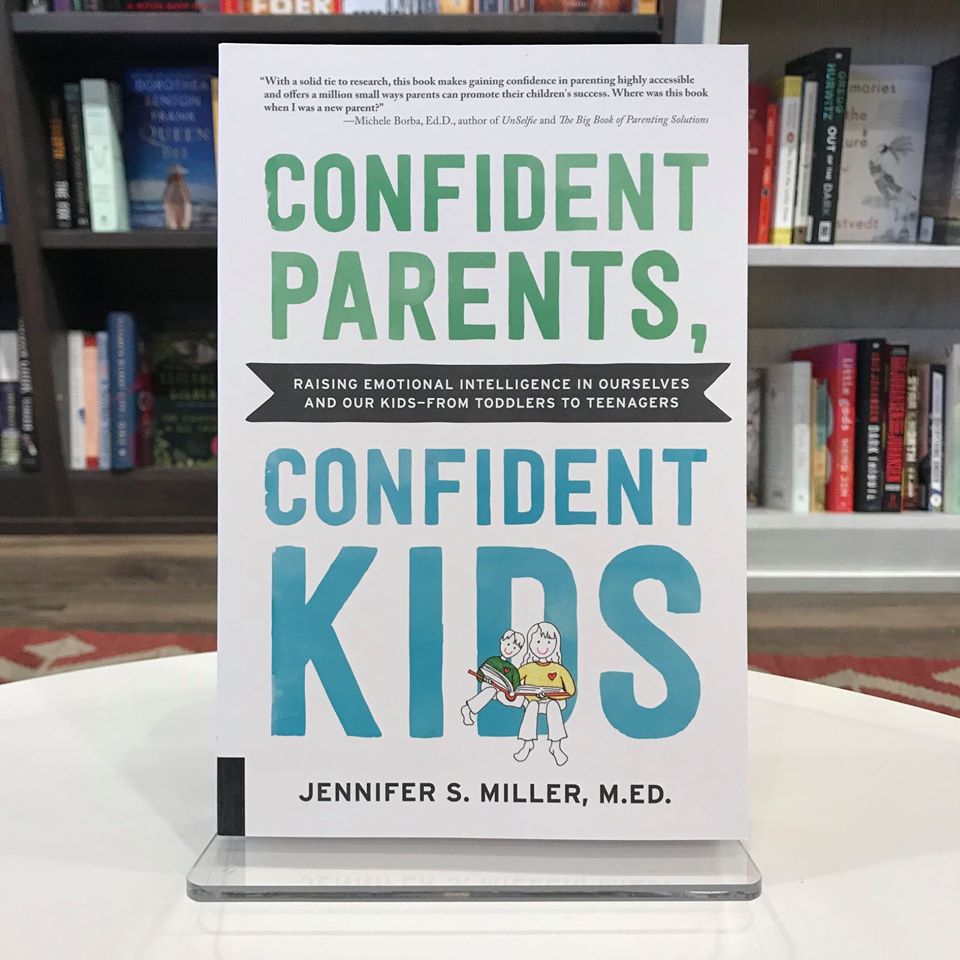
Educators have the ability to practice these skills everyday through the academic curriculum and many schools use research-based curricula and professional development to help them do that in a high quality manner. Families also have the ability to teach social and emotional skills, not through a formal curriculum but through their everyday interactions — their routines, their power struggles, and challenges. In fact, research conducted in partnership with Shannon Wanless, a child development psychologist at the University of Pittsburgh and the “Grandfather of SEL” Roger Weissberg showed a direct alignment between the hopes parents expressed for their children and for their own roles as parents and social and emotional competencies. For more on that research, check out “Parenting For Competence, Parenting With Competence: Essential Connections between Parenting and Social and Emotional Learning.” And to learn specific simple strategies for promoting social and emotional competence at each age and stage, get your copy of “Confident Parents, Confident Kids; Raising Emotional Intelligence In Ourselves and Our Kids — From Toddlers to Teenagers.”

Hope you’ll join the first of the CASEL Cares webinars today with author of “Permission to Feel” and Director of the Yale Center for Emotional Intelligence, Marc Brackett. Register here! 

Spring Breaking At Home

A Week of Joyful Challenges and Shared Responsibilities

This year it seems we’ll have an enforced staycation for spring break. Ours falls this week – earlier than most as we began on Monday with our first official no-school day. I took comfort in the school schedule last week. So admittedly, I was daunted by the thought of a whole week home with a twelve-year-old who, if plans and expectations were not established, would indulge in screen time most of that time or else whine about boredom. Yes, we’ll be playing card games and board games and doing puzzles together. But I also wanted to promote independent play. So what’s a caring parent to do? I reached out to a wise friend to see how she was handling the expanse of time and she was ready with some reliable ideas.

If you too find yourself daunted by an enforced staycation, let the following ideas guide and inspire you! 

Establish Expectations for your Morning Routine

By what time will you get up and how? When will you eat breakfast and who will provide it? By what time do pajamas come off and day clothes go on? Though you want your child to have some freedom, the morning routine can cause considerable stress if all family members are not clear about expectations and also, take some responsibility for their own roles. Get together as a family. Discuss each of your respective roles and responsibilities. Agree on a plan together. Check out this video short on ways to create a smooth morning routine.

Work Together to Manage Screen Time 

Learn together about the brain development impacts on children and teens so that it’s not just you, the “meanie” parent saying screen time should be limited but an understood science-based principle about healthy development. 

Create a System for Screen Time Tracking

The American Association of Pediatrics recommends no more than two hours of screen time per day for children three years and up including teenagers. If children must work on screens for school work, that time can be assigned or limited differently since that may be the only way they can get their school work accomplished. But for video gaming, YouTubing, Netflixing and any other entertainment, the recommendation is two hours a day.

My friend’s method is simple and elegant. Her girls each have four 1/2 hour popsicle sticks (color on one end is red to designate used-up time and on the other, green for unused time). Each half hour they use, they flip over the stick in a cup to designate time used.

My son keeps a chart on a white board. He knows he’s allotted fourteen hours per week (or two hours per day) and can go over on any given day but knows he must keep that fourteen hour balance and sacrifice screen time at the end of the week if he uses it up.

My friend allows exceptions for family movie nights. Those do not count toward her girls’ hours. For us, we’ve created an exception for piano learning on YouTube. Our son used to have lessons outside our home but now, he learns online so that we offer an extra hour a day for his online learning. How will you agree to track screen time in your household?

For a family meeting agenda and a template of a family media agreement, check out this article that will also help you learn together about why limiting screen time is important.

Create a List of your Child’s Favorite Non-Screen Activities.

Have you noticed that when a child gets off a screen, they feel lost and unsure what to do? Their hormone levels have been so stimulated and rewarded by the screen time that it can be disorienting without that level of stimulation. That’s why it’s important to develop a go-to list of non-screen activities that are favorites of your child’s. When she shuts down, she can visit her list and consider a range of options instead of looking to you to figure out what’s next. Now that the family is home together, why not also create a family list of favorite things to do individually and together?

Get Outside at Least Once a Day (Regardless of the Weather)

We all need some fresh air and simple exercise. The outdoors offers both. So set the expectation with your family that it doesn’t matter what time of day they choose, all should get outside and refresh their bodies and minds with a walk around the block, a bike ride, or a gander around the backyard. 

Ensure That Each Family Member is Responsible for a Chore (per day or per week)

Learn more about teaching how to do chores through interactive modeling, creating a team work environment, and agreeing upon age-appropriate tasks for children.

Allow for Plenty of Freedom and Offer Creative Prompts

Yes, freedom is a wonderful thing if your child will take advantage of the time. But we are so conditioned to rely on screens for our entertainment, that your child could be challenged by the large amount of free time. For our spring break time, I created daily prompts that I posted for our family. Set a tone by posting the challenge and turning on music that will inspire calm or creativity energy (and turn off news which can create a stressful energy). Lay out inspiring and novel art supplies to help with the challenge. You could choose a different theme for your week like the arts, nature, or even a favorite story book. 

Consider the fact that a focus on the arts may offer a chance for your child to express fears, worries, or other emotions they are experiencing during this unique time. Here are some ideas from our week of the arts  that offers daily choices…

Arts Week

Day One: Creative Writing

  • Decide on a friend or relative that lives in another town. Write a pen pal letter and mail.
  • Write a song entitled “We don’t know when they’ll find a cure.”
  • Write a poem on a favorite memory from a birthday.

* Offer a couple of alternatives for writing tools including loose leaf paper and pens, typewriter, or markers and plain paper.

Day Two: Drawing

  • Still Life: Place an already constructed Lego set or other interestingly shaped toy in the center of a table to draw.
  • Self Portrait: Use long paper to do a full body outline of your child. Then allow him/her to fill in their own self-portrait details.
  • Landscape: Using a rectangular-shaped paper, challenge your child to illustrate the setting for his/her favorite character’s story. Go “plein air” if the weather is nice and take your supplies outside to draw from your yard.

Day Three: Drama

  • Write a play about three kids who discover a portal to another world in their basement.
  • Create a video acting out a number of big emotions.
  • Develop a skit telling a story of a favorite animal and her friends without any words.

Day Four: Sculpture

  • Get out clay or play dough and generate a list of favorite objects. Pick one to sculpt.
  • Take a walk around your block and find interestingly shaped natural objects. Bring them back and use a hot glue gun (with a parent’s help) to glue together a found object sculpture.
  • Use multi-colored construction paper and create a three-dimensional bouquet of spring flowers.

Day Five: Dance

  • Turn on your favorite music and host a family dance party.
  • Learn new moves and techniques on YouTube together. Our friends recommend Just Dance.
  • Play GoNoodle Movement videos and follow along each time you plan to transition to a new activity – from breakfast to playtime, after lunch, and late afternoon.

Though we do not have a daily agenda or full day routine during spring break, we still have plenty of ideas to keep our imaginations fueled and bodies, minds, and spirits fully engaged. When you are spending time together as a family, check out these – anytime, anywhere collaborative games that will promote family connection!

Wishing you joy, creativity, and connection for your time off together!

*Many thanks to wise friend Kimberly Allison for her tips this week that inspired this post!

EQ in your PJs: Emotional Intelligence Resources for Families and Secondary Students

From Creator Rudolph Keeth Matheny

Like all of us, I have been absolutely overwhelmed and saddened by what is happening with Coronavirus. I know many are struggling, some in traumatic ways, and we are all dealing with heavy emotions. Educators are facing challenges of trying to move learning online, while balancing the strong concerns of how to support students as they cope with daily changes, fears, and challenges.

I am a social and emotional learning (SEL) teacher, speaker, and author (A.K.A. Emotional Intelligence or EQ)  who spends most of his time presenting to large groups, keynotes, and workshops. Obviously, I am not doing any of those currently, and wanted to find a way to be a help.

“When you can’t do what you do, do what you can.”- Bon Jovi

Determined to help students and families cope with challenges, I asked my filmmaker son to work with me to create some videos for online support. He was home from college and, graciously, he agreed, did some amazing early work, and the idea has inspired others to chip in. It is now a whole family project, with my wife and daughter contributing to videos and resources. We partnered with School-Connect, a national research and evidence based SEL curriculum for secondary schools to help make some of the additional resources. Truman, my son, and I spent over 60 hours filming our first video series last week, and a team of colleagues at School-Connect helped create handouts, activities, and other resources (we now have a few other colleagues chipping in with quizzes and other interactive components).

We decided to call our video series “EQ in your PJs.” The idea is to create calming, supportive, educational resources that students, teachers, and families can use to grow some social and emotional skills to help navigate the crisis and build some skills for the future. We plan to release a new unit of lessons every other week.

The first unit “Managing Stress Before it Manages You” is now up. It has been reviewed by many school psychologists, teachers, students, administrators and received some rave reviews.

These resources are 100% free and we all hope they are a light in dark times to many.

I hope you are all safe, healthy, and finding reasons to smile. Check out the resources here!

Creator of EQ in PJs Rudolph Keeth Matheny is a social and emotional learning teacher, speaker, and author. He is a co-author of School-Connect, a research and evidence-based social and emotional learning curriculum that is now in over 2,000 schools. Check out his site, SEL Launchpad!

Start Your Mornings At Home On a Positive Note!

Don’t forget to join Jennifer Miller of CPCK and her family for our daily morning announcements each weekday to begin in a reflective and connecting way with your family. We’ll post on Facebook Live each weekday morning at 8:15 a.m. EST and the recording can be watched throughout the day. We’ll give updates, say a global pledge of allegiance, offer inspirational words or a reading and do some deep breathing to start our day calm and ready to learn and collaborate as a family. Join us at the FB Feed for Confident Parents, Confident Kids! 

Do You Have an Emotional Safety Plan?

Prepare Yourself and Your Family for Emotional Fires…

Hospitals have assembled incident command systems, or plans for teams to address the extensive health care needs from the COVID-19 pandemic. States are issuing orders for statewide shutdowns of restaurants, schools, events, and even, borders. And we, as families, are encouraged to stay home. While all this flurry of emergency activity is taking place around the world, we are likely to feel ongoing elevated stress even if we are safe and warm in our own homes. So what’s our plan? What’s our system? We plan for the uncertainty of a fire in our homes with smoke alarms and exit strategies. And it’s important since one in four homes will have a big enough fire to necessitate calling the fire department. But what about emotional fires?

Every single one of us will be overcome with anger, fear, or anxiety at some point. We’ll likely discover our fuses are shorter, our patience less, as we cope with a continuous level of stress and strain during this time. And those moments of intensity are our true tests of character. How will we react when our brains are in fight, flight, or freeze mode? Without thought or planning, we risk lashing out at our loved ones and not only disrupting our routine but also our foundation of trust. And we have to live with the guilt and regret that comes with it. But what if we simply planned for those moments and discussed how we were going to cool down with our families? Particularly during this time of daily and sustained stress because of the COVID-19 pandemic, it’s worth giving some thought to how we can bring our best selves to most testing times in life.

First, why have a plan?
It helps to have a general sense of how your brain functions under great stress to know why you should have a plan. Anytime you are emotionally shaken from fear, anxiety, anger or hurt, you are functioning from your primal brain, your amygdala. There are chemicals that wash over the rest of your brain cutting off access so that your only functioning abilities are in your survival center. Effective problem solving requires access to the control centers for logic, language, and creativity though these are cut off by those chemicals and cannot be utilized when greatly upset. If, in the past, your plan when your child makes a poor choice that angers you is to come up with a logical consequence on the spot, you will not be capable of that kind of higher level thinking.

This “hyjacking” of your brain, as Daniel Goleman author of Emotional Intelligence refers to it, serves a critical role. In true survival circumstances, you are able to focus on fighting, freezing, or fleeing from the danger source. But in family life, fighting with words, freezing unable to think, or fleeing out of the door is often not constructive, safe, or practical. Creating a plan for what each member can do when they are in this state of mind and practicing it can prepare all members to act with emotional intelligence during a crisis, big or small.

Creating a Family Plan

Discuss when not emotional. Find a moment when you don’t have time pressures to sit down and discuss a plan.

Share your knowledge. Talk about the above information and educate your children and your spouse about how the brain functions in a highly emotional state. Identify what kinds of words or actions tend to trigger your heated upset. Ask your children, “in what circumstances do you get the most upset?” Also, reflect on the symptoms you and your children might experience that clue you into understanding your emotions. For example, do you get red in the face when you are upset? Does your child shake when she is fearful or anxiety-ridden? What physical experiences do you have when you are highly emotional?

Model. Children understand their emotions and how to handle them primarily from watching you. Have you ever noticed your child yelling or using words in anger in the same way you do? Modeling is a powerful teacher. So you go first! Take a quiet moment to respond to the following questions and/or fill in the blanks. Here is a pdf document with blanks to fill in to use with your family – My Emotional Safety Plan

When I am angry or have high anxiety, I will say… (Keep it short!)______________________

Example: “Mommy needs five minutes.”

Then, I will go (Describe specific place.) __________________________________to cool down.

Example: I go to my favorite chair in my bedroom. I have heard from others that it’s not safe for them to leave the room because a.) they have little ones; or b.) they are worried siblings will hurt one another. In those cases, designate a place in the room you are in or in the case of the siblings, sit quietly in-between them in the middle of the floor.

When I get to my cool down spot, I will… (Take how many deep breaths? Then I will write? Draw? Think Plan?)________________________________________________________

Example: I take ten deep breaths. This is an essential part of any plan since it removes the chemical from your logical brain so that you have access again. I keep my journal and pen beside my chair if I need it. Sometimes, in the case of a child’s misbehavior that I need to respond to upon my return, I think about logical consequences or constructive responses while there. I ask, “What does he need to learn? How can I best facilitate his learning in this situation?”

I will return to my family when…_________________________________________________

Example: For me, it’s when I have cooled down properly and know my next move when I return to the situation.

Now ask your family to write their own plans after they’ve heard yours. Make sure all know each other’s plans. An adult who leaves the room can scare a child and escalate the upset. But if you’ve already discussed it, then you merely need to remind him of your plan and implement it.

Having a plan can lend safety and security to your family life. It can create a more caring, supportive environment when all know that there is a clear response process for each person when they are at their most vulnerable. After living with and using your family emotional safety plan, you may wonder how you could have lived without it.

Wishing you and your family physical and emotional health and safety and may you discover that this time together can offer your family a chance to deepen your trusting relationships.

For more, check out the book, “Confident Parents, Confident Kids; Raising Emotional Intelligence In Ourselves and Our Kids — From Toddlers to Teenagers.”

Reference

Goleman, D. (1994). Emotional Intelligence; Why it can matter more than IQ. NY, NY: Bantham Books.

Join Us for Morning Announcements with the Miller Family on Facebook Live

Set the Tone for Your Learning Day at Home…

Jennifer Miller of CPCK and her family — son, Ethan and husband, Jason will be doing morning announcements for families (just like schools do morning public announcements). Join us at 8:15 a.m. Eastern Standard Time on Facebook Live each weekday morning through our feed: https://www.facebook.com/confidentparentsconfidentkids or if you are in another time zone, visit the feed and watch the recording when you are ready to begin your home school day.

Our Morning Announcements will include:

  1. What’s going on (in our community and our world);
  2. A global pledge of allegiance;
  3. Inspirational Words, Wisdom (through poetry or other readings) or Intentions;
  4. Deep breathing.

We intend these announcements to last only fifteen minutes. Here is the Global Pledge of Allegiance we’ve written that we’ll recite:

Global Pledge of Allegiance

We pledge allegiance to the families of our world

that we recognize we are closer and more connected than we may seem.

And through the love for which we stand, one world, many beliefs, indivisible, with liberty, health, safety, and justice for all.

We hope you’ll join our family in getting the learning day off to a positive start!

My Kid’s School is Closed, So Now What?

Supporting your Children’s Social, Emotional, and Mental Health During the COVID-19 Pandemic

By Guest Author, Pamela McVeagh-Lally

As the spread of COVID-19 causes more and more school closures across the United States, we, parents and caregivers, are faced with the daunting reality of needing to stay at home with our children for weeks and possibly months. While educators are working hard to prepare take home packets and online resources to support our children’s continued academic learning while schools are closed, intentionally supporting our children’s emotional well-being during these unpredictable and stressful times is our job.

With relentless, confusing media coverage about COVID-19 and discussion about it in our everyday conversations, it is important that we talk to our children about the virus and reassure them that, as disrupting as it may be, schools are closing to help to keep us all healthy and safe. Our role as adults is to offer accurate, age-appropriate information while gently correcting any misunderstandings they may have. Giving your undivided attention and really listening to and empathizing with their fears (while managing and not projecting our own), while being clear about how best to stay safe is essential. And this won’t be a one time conversation. As the situation changes, we’ll need to continue our proactive, honest conversations with our children aimed at keeping them informed but not overwhelmed. National Association of School Psychologists and Child Mind Institute have great resources to guide you.

Setting Up for Success While At Home Together

Other than frequently and empathetically checking in with your kids, what else can you do to support their well-being and maintain a sense of normalcy while they’re out of school (and while you’re attempting to work from home)? Here is a list of ideas to consider for your family:

  • Stick to a consistent routine daily. Set expectations about getting up, getting dressed, and eating breakfast. (Many schools are finding ways to set up food programs during closures.)
  • Limit endless snacking. (We know this will be a tricky one for some of us who have stockpiled granola bars!)
  • Create a schedule for each day with your children to break up the time. Include “class time” when they complete school work, dedicated time for play, physical exercise, and emotional and mental health activities (see “Coping Kit“ below for ideas). Though there’s no need for a rigid agenda, all family members can be soothed by a  predictable structure.
  • Put a limit on social media. Encourage staying connected to friends but not obsessively reading news or discussing the virus online. 
  • Don’t have the TV on in the background all day. The worry for children will escalate if they repeatedly hear and view adults panicking or reports of deaths.
  • For children without their own phones, set up a FaceTime playdate with a friend and let them chat using your phone.
  • Dedicate time every afternoon to organizing and cleaning up to keep chaos and germs at bay.
  • Talk about and plan for ways in which you’ll deal with family arguments or sibling rivalry. Check out the Family Peace Rose for more.
  • Make dinner together.
  • Go old school! Have story time, play a board game, or try to learn a new language together during evening family time.

Create a Family “Coping Kit” To Deal with Anxiety

It is expected that we will experience anxiety during times of uncertainty and stress. One way you can help your child address their anxiety is through building a simple “Coping Kit.” A “Coping Kit” includes practical strategies that empower children to manage difficult feelings productively. Depending on your child’s age and needs, their “Coping Kit” could include:

  • This simple feelings wheel to accurately name and acknowledge emotions they may be experiencing. Remember, there are no “bad” emotions–it’s ok for them to feel whatever they feel and your job is to help them use strategies to cope.
  • Calming breathing techniques and mindfulness activities to reduce stress;
  •  Yoga or other movement and stretching activities;
  • Relaxation techniques like guided imagery or progressive muscle relaxation;
  • Fun indoor physical activities and games;
  • A private journal or sketchbook where they can express their emotions through writing or drawing;
  • For older children, find a social cause to learn more about together and support remotely. Or cultivate compassion by encouraging them to reach out via phone or text to potentially isolated elderly family members, neighbors, or their peers who are home unsupervised; and 
  • Practical strategies to help maintain their physical health including: 1. Picking out a fidget bracelet, button, or other small wearable item (that can be disinfected daily) to redirect the urge to touch their face. 2. Choosing part of a song they love that is at least 20 seconds long to sing while washing their hands

Finally, children take their emotional cues from us. Being honest about our fears is important to model but we should express our feelings appropriately. How can we find ways to regain calm, and also model and verbalize compassion for others? How can we notice when our stress level is rising to stop, breathe, and use our own coping strategies before responding to our children? Plan ahead for those big feelings and you’ll proceed with confidence that you are ready to handle the stress.

There is no way around it. This moment requires us to dig deep and take deliberate action to make sure we stay mentally healthy for our kids. Even small acts of care for ourselves are important like watching a TV show that makes you laugh, taking two minutes each day to write down something you’re grateful for, or talking honestly and privately about how you feel with a friend. 

Though we may be practicing social distancing, remember to stay in touch with other parents and caregivers to share ideas, seek support, and stay connected!

About the Author:

Pamela McVeagh-Lally is a founding partner of the SEL Consulting Collaborative and a philanthropic and non-profit education consultant, dedicated to helping all children thrive through building the field of social and emotional learning (SEL) and advancing the effectiveness and impact of SEL-focused organizations. Her clients include school districts, state departments of education, grantmaking foundations, multinational education non-profits and start up social and emotional learning organizations. She lives in Ohio with her husband and two children.

*Our hearts go out to the many families who cannot afford to take time off work and are facing major childcare and/or financial dilemmas. 

* CPCK Note: Many thanks to author Pamela McVeagh-Lally for quickly and expertly writing this helpful article to support parents and families during a particularly stressful time!  


Need Your Help!


Help Spread the Word…

With this new book, I set out to inspire and support parents and offer a new way to view their roles and their children through an empathetic, loving and informed lens in this incredibly tough and meaningful journey raising kids. This represents a decade of research, writing, and practice work along with a lifetime career focused on children’s social and emotional development. Most of the work of spreading the word about the book comes through the author’s efforts in partnership with you, caring readers, commenters and deep thinkers and practitioners of parenting with social and emotional learning.

Help me reach my goal of fifty reviews on Amazon! The book is at the halfway point with 26 reviews. Amazon will add the book to the suggestions’ list when it hits 50 reviews. Help this important book stand out on the crowded virtual bookshelf! IF you’ve ordered and read it, thank you! Now take just a brief moment to write an honest review!  If you scroll down, on the left side, it will say “Customer Reviews,” and then, “Write a customer review.”

And of course, spread the word!

Eleven Simple Tips for Parents Supporting Children Dealing with Anxiety

There’s a lot of worry swirling in the world right now. From the book, here are some simple strategies for addressing worry with your child or teen. Print off this one-pager to serve as a helpful reminder as you interact with your child.

Thank you for your support!

Parenting and Dealing with Illness

Healing takes courage, and we all have courage, even if we have to dig a little to find it.

– Tori Amos

With one dear friend parent recovering from surgery, another quarantined with her family for Coronavirus (COVID-19), and our family dealing with walking pneumonia, I’m reflecting a lot on the set of challenges facing families when dealing with illness. When a parent gets sick, life goes on. Kids have to get up and get ready for school. Lunches must be packed. Homework has to get accomplished. It can be a real struggle for moms and dads to get through the day when they have come down with the flu. Harder still, parents go through major life transitions such as beginning a new job, losing a loved one, or struggling with depression. And parenting goes on.

How can you deal with those times in a way that allows you to heal yourself and parent healthy children? And how can you avoid placing more burdens on your children than they can reasonably handle? There seems a fine line between asking your children for help and giving them adult responsibilities for which they are not ready.

While I was sick over the past couple of weeks, I reflected on this topic and how I might channel the little energy I had in the direction of healing and being a responsive parent without doing more than I could handle. “I’ll help you feel better,” said E. However, he grew moodier and at times, angry. Children often become angry, upset and worried when a primary caregiver is sick. Their own sense of safety and stability is shaken. They wonder, “Is she going to be able to take care of me and my needs?” and “Is this going to go on forever?” Children are acutely aware that their very survival depends upon their parents despite their desires for independence. So in addition to dealing with your own problems and lack of energy, you also are likely to encounter a child who is not at his or her best.

Here are some thoughts about what you might do in these circumstances.

Ask for understanding.
Communicate with all family members what you are able to give and what you are unable to give. Set clear expectations so that they know in advance what you are unable to do. For most of us, this is incredibly challenging since it feels like admitting a weakness. However, it is a strength to be self-aware and understand your limitations. Communicating with them will allow your family members to support you in the ways that are needed. Model this for your children and they will learn how to become more self-aware and ask for help when it’s necessary.

Acknowledge that the problem is time-limited.
Children often feel as if the current situation will last forever. It helps to assure them that temporary adjustments need to be made while you are recovering.

Arrange for adult supports.
Ask for help or simply accept help when offered from other adults around you. This too can be a real challenge. However, asking your child for emotional or physical support for which they are too young crosses a critical boundary line and can create tremendous anxiety for a child and in turn, you. Create mutually supportive adult relationships and look for chances to help friends and family when they are sick or in a crisis. We all can have those relationships if we are the first to give and reach out when others are in crisis. Reach out to others and they will likely be at the ready to support you when you most need it.

Stick by your child’s routine.
Being consistent with your daily routines will provide a greater sense of security for your child. They will still likely feel uneasy that you are not doing well. However, they will relish in the comfort of your typical routines.

Understand and empathize with your child’s emotions.
Realize that your child is likely to become angrier, needier, sadder and generally more upset when you are sick or stressed. If you meet their anger with anger, it will only escalate the problem. Instead, acknowledge and accept their feelings. Encourage all family members to give each other grace in a stressful time. Be gentle with one another and forgiving as one member attempts to heal.

Release yourself from extraneous commitments.
During the normal course of the week, we likely have enough commitments to fill our calendars with little time to spare. Ask for understanding from those commitments and minimize what you are responsible for so that you can focus on healing. Gain time later as you invest now in your health.

Set clear, non-negotiable emotional boundaries.
If your burdens are partially emotional, be certain that you are only sharing them with appropriate adults in your life. Your children are unable to shoulder your emotional problems though they will try because they love you. Don’t put them in that position. When you are tempted to talk with them about your troubles, remember that there is a critical boundary line. You remain the adult to allow them their childhood. The book Chained to the Desk; A Guidebook for Workaholics, Their Partners, and Children and the Clinicians Who Treat Them talks about the adult consequences of parents who required children to share in their emotional challenges. For those individuals, it can be a life-long struggle of never measuring up, high anxiety in trying to serve others’ needs and not being able to ask for support or help. Allow your partners, friends or a counselor to provide that adult support to ensure you are getting your needs met and are not tempted to unload your worries on your child.

If it’s a life transition you are facing, raise your awareness of what you can expect emotionally. The book, Transition; Making Sense of Life’s Changes by William Bridges explains that in each transition (whether it’s perceived socially as positive like the birth of a child or negative like being fired from a job), there is a death which requires letting go (and the sadness that goes with it). There is a state of limbo, an in-between period in which, like the caterpillar in the chrysalis that turns to “goo,” one must release the past and embrace the unknown of the present and future. And finally, the birth of the next phase of who you are becoming. Each phase of a transition produces a bundle of emotions. Raising your awareness about what you can expect will help you deal with them and allow you greater self-compassion.

Forgive yourself.
This can be our most difficult task as we strive to be the parents we most want to be. Investing in your own self-care including forgiving yourself for not being the best version of you while you are undergoing health or transition issues can serve you and all those around you. Often times, the stress and pressure of sickness can add to your anxiety and impede your ability to heal. Kristin Neff, leading researcher on self-compassion, defines it in three ways. She writes that self-compassion involves:

…being kind and understanding to oneself in instances of suffering or perceived inadequacy. It also involves a sense of common humanity, recognizing that pain and failure are unavoidable aspects of the shared human experience. Finally, self-compassion entails balanced awareness of one’s emotions—the ability to face (rather than avoid) painful thoughts and feelings, but without exaggeration, drama or self-pity.

Her research supports the theory that mental health and a healthy self-concept are dependent on self-compassion.

All of these recommendations are easier said than done. However, as I strive to become the best version of myself through continued learning, I strive for my own optimal mental health in order to raise a confident kid. I wish for you gentleness and healing as you do the same.


1 Robinson, B.E. (1998). Chained to the Desk; A Guidebook for Workaholics, their Partners and Children, and the Clinicians who Treat Them. (3rd Ed.) NY: New York University Press.

2 Bridges, W. (2004). Transitions; Making Sense of Life’s Changes. (2nd Ed.) Cambridge, MA: Da Capo Press.

3 Neff, K.D., Rude, S.S., & Kirkpatrick, K.L. (2007). An examination of self-compassion in relation to positive psychological functioning and personality traits. Journal of Research in Personality. 41 (2007) 908–916.

Originally published on April 10, 2014.