Celebrate the Earth

…By Showing Care as a Family

The lives of our children and our teens can be relegated to indoor time exclusively as they go to school and participate in extracurriculars like sports in gyms and music or plays in theaters. And when at home, they go on their devices to connect with friends or scroll through social media. Because of our ever-growing fascination with and use of technology, we find ourselves with less and less time to go outside. This creates further disconnections between ourselves and nature. Our kids may not feel a sense of responsibility to the environment because of this disconnect. And truly in order to invest our time, money and precious resources in anything, we require a safe, caring relationship. So how are we helping our family cultivate a relationship with nature?

First, since a caring relationship is necessary, how can you engage your children in showing care? I asked some families how they get outside and here’s what I heard:

  • We go to a local park every day after school to play and get out that Spring energy.
  • I take my kids out to look for birds during their great migration. We head to a different park each time we are free and try and identify the type of birds we see through binoculars.
  • My son loves to go creeking. He puts on protective boots and we head to a creek with friends as soon as the weather permits.
  • We love to take bike rides. 
  • We pick out seeds and plant them in our yard together.

Earth Day has been celebrated since 1970 and this year, the entire month of April is considered Earth month in an effort to call attention to how we all need to care for our home planet. Perhaps just making a commitment to get outside with your family more might be one simple step you can take to create a more caring relationship between your family and nature? Watch this poem by Amanda Gordon titled “Earthrise” to feel inspired to do more to care for our planet!

Here are a few more ideas of steps you can take with your family to recognize the importance of our home planet this month:

  1. Connect

Simply spending time in nature whether it involves walking to your nearest patch of grass, heading to a local park or traveling to a state or national park. Make sure when you do you, you create the conditions to become fully present and aware. Put devices away. Notice the details of the environment. Use all senses to guide your noticing. What can you see? Smell? Taste? Hear? Touch?

Bring nature journals or drawing pads with you to fine-tune your attention on the details together.

2. Care

Learning together to care for your environment helps children learn about their role and responsibility with the nature around them. Create a small garden if you have a yard or find a sunny window for plants. When you buy seeds or starters, be sure and read about the needs of the plant. How much sun do they need? Plant food? Soil condition? Amount of watering? Then, plant and work on caring for those plants together.

Visit a grocery store with your child that carries local produce and/or meats and seafood. Note which foods you buy are locally sourced. Take note of where non-local foods are from and consider the kinds of transportation necessary to get it to you. Before eating dinner together, share gratitude for all those people and the natural resources involved in bringing you your meal.

3. Reduce, Reuse, Recycle

Discuss water use in your household. How can you fill the dishwasher thoroughly or the washing machine before you run a load? Children can learn to turn off the water while they are brushing their teeth. Create a rain barrel to reuse rain water when watering your lawn or garden. These steps may seem small and even insignificant but they do offer ways in which to teach your children to pay attention to how they use natural resources like water.

Take a family trip to the local dump. As you drive, discuss what you tend to throw away. Assign someone as a scribe to write down what items could be rinsed and recycled. Make sure you have recycle bins in the house and your children know how to look for the triangle to determine whether the item can be recycled.

Check out these terrific children’s books to support your conversation:

What a Waste; Trash, Recycling, and Protecting Our Planet by Jess French

My First Book of Reduce, Reuse and Recycle by Asa Gilland

Ten Things I Can Do to Help My World by Melanie Walsh

For Parents:

The Climate Book by Greta Thunberg

4. Learn

If you do spend more time in nature camping or hiking in a state or national park, take the time to learn before your next trip how to leave no trace. Check out the site: Seven Principles of Leave No Trace.

Or in your own home or when you travel, discover what native lands you are on and learn about those tribes. Download the Native Lands app on your phone and use wherever you roam. Learn about how indigenous peoples related to the land and preserve natural resources and find out what practices you might try out in your own life.

As I talk to parents about what they want to teach their children and the legacy they want to leave behind, I often hear that individuals want to leave the world a better place than they found it. One important way we can do that is to examine how we support, care for and help grow the natural resources that surround us and support us each day so that they are around for generations to come.

The Conflict Code

Co-creating a Signal When the Family Heat Intensifies

When my daughter and I disagree, it escalates so quickly. We end up both yelling even though I never want to yell. How can I stop the escalation?” A workshop participant and Mom of a teenager asked. When an argument is heated, the conflict can become emotionally super-charged quickly.  And when it does, we can risk saying things we really don’t mean. Personal attacks and stabs at the other person’s character can escape from our mouths without much thought until later, when we feel the searing pain of regret and our inability to turn back time. 

We know from research on how the brain responds while stressed that, in those moments, we act on impulse. Our limbic system, or the survival center for the brain, takes over quite literally and our only thoughts turn to flight, fight or freeze depending upon the situation. In parenting, this auto-response – our default system – can actually work against our goals. We want to influence our child’s positive choices — either their words or actions or decisions. We may want to set clear boundaries or show how rules have been unfairly broken. We may want to demonstrate how our child can disagree in healthy ways that do no harm. Yet, when our limbic system takes over, none of those goals can be met if we are merely fighting back without our reflective consideration. Our child will be on the defense, their limbic system in high gear. They may be afraid of us, poised to fly away or freeze. Or they may be angry and ready to fight back.

Just leave. Walk away.” Uttered another workshop participant.  And there’s a helpful intent here. Taking a pause, a break away from one another does offer the space necessary for calming down. But simply walking away can be misinterpreted by a child. Particularly if we are angry, they can fear we are storming off and won’t return. Intention and motivation matter! And our child just may make up stories about why we are leaving that have nothing to do with emotional intelligence. Stonewalling, or giving the silent treatment, is a form of nonverbal aggression and can do damage to a trusting relationship, not at all a healthy, constructive conflict tool. So if our child thinks we are stonewalling, they can hurt from yet another form of aggression.

So what can you do? There are a few ways to ensure that these kind of escalating conflict situations stay in the healthy zone. 

Create a conflict code.

In fact, I suggested to this Mom to create a conflict code with her teenager. And weeks later, she reported, it worked. She went to her and asked, “what can we say to one another when we recognize that our fight is escalating and we need a pause to calm down before figuring it out together?” They came up with the phrase “code red.” And they decided to keep one another accountable. They were both responsible for looking for those moments or opportunities to use the code and when either one spotted the chance. Each would have the chance to call it out. When one did, they would respect the code and go to their respective rooms to take some time and breathe. The Mom returned to me to let me know how this simple step had transformed their conflicts. Her daughter now felt empowered to use the code. And when they did, they both respected the code and took a break. They were able to come back together after a time and figure out next steps with their cooler heads (and fully functioning brains). It was key that she co-named the code with her daughter. They solved the problem together proactively and both felt a sense of agency in shaping how their conflicts were managed. Other examples family’s have used for code words are “break,” “stop,” “pause,” “red light,” and “no go.”

Talk about conflict when not upset.

Another key part of the code solution is that they discussed their arguments when they were not in a conflict. This helped both Mom and daughter become reflective about what happens when they are upset with one another. Because we are unable to think logically or reflectively when we are experiencing challenging emotions, that reflection in non-emotional times can make all the difference. We have the chance to agree. Also, a child becomes aware of a strategy like walking away and taking a break and views it as such – a strategy – not an angry action to worry about.

Create a plan.

To fully plan for our most challenging feelings in family life is to take full responsibility for the fact that we will have moments when we over-heat. We admit and allow for our humanity, messy as it is. And we provide an example for our children of taking responsibility for our emotions so that they too can learn these all-important self management skills. Check out this easy-to-use one page template called “the Family Emotional Safety Plan” that guides you or your child – or your entire family – through key questions to determine what you’ll say, where you’ll go and how you’ll calm down when emotions run high before trying to resolve an argument.

Springtime can produce many new activities, outdoor exploration and go-for-it energy. After all, we are feeling pent up from the long winter. But this forward moving energy can also create more conflict in family life. So taking a moment – maybe its a family dinner? – to talk about how you will handle it when those challenging emotions inevitably arise is just a smart step to ensure that you are protecting your family while promoting essential skills for getting along.  With a plan in place, you can feel free fully to enjoy the sunshine!

Want more?

Check out these other supportive tools for family conflict:

Family Emotional Safety Plan in Spanish

Family Guidelines for Fighting Fair

Peace Rose – Tool for teaching children to resolve their own conflicts

Stop, Think, Go! Traffic Light Game – Practicing problem-solving

How to Teach Kids Life Skills to Promote Independence and Confidence

Don't miss this article with numerous links to videos showing Dr. Woo's children teaching life skills.
Check out the video (link below) on how to read social cues!

A Parent’s Guide to Supporting Our Children’s Social and Emotional Development Post-Pandemic

By Jenny Woo, Ph.D.

In my roles as an educator, emotional intelligence researcher, former Montessori school director and mom of three, parents often ask me what they can do at home to better support their children’s development. While the most common answer you might hear at a Parent-Teacher Conference or the Pediatrician’s office is to “read to your child,” I believe there is so much more parents can do – all within the reach of everyday activities.

Parents are the first teachers of our children, and home is the first environment where our children play and learn. Yet, we frequently disassociate domestic activities from real learning, and inevitably miss out on the richness of practical and sensorial development that lie within our reach. I remember my over-zealous self as a parent: always in search of a new playground, children’s museum, or learning center – shelling out money for new experiences.

Now as a more seasoned parent and researcher, I’ve come to appreciate the value of practical life skills in not only laying the foundation for our children’s social and emotional growth, but also in ensuring that our teens can live independently and confidently on their own. This is something I’ve been doing with my kids. Below, I share examples of how to help your children develop these essential life skills and simultaneously boost their social and emotional skills.

To help your child get started ASAP, I included simple How-To videos that my children recorded to teach kids on these life skills. You can also subscribe to our Youtube channel. Videos are added almost daily.

How to Build Self-Awareness by Raising Self-Reliant Superstars

Caring for oneself is an essential life skill, and it directly connects to self-awareness. By teaching our children activities like cooking for themselves, cleaning up, and doing chores around the house, we empower them to become aware of their everyday needs and take responsibility for their well-being. For example, here’s a checklist of what your child can do:

Preschooler (Ages 4-5): 

Early Elementary (6-8):

Elementary and Beyond (9+):

By encouraging independence, we’re helping our kids develop a strong sense of self and their ability to problem-solve in the face of challenges. 

How to Build Self-Management by Raising Responsible Decision-Makers

Encourage your child to develop healthy habits like exercising regularly, healthy eating, and prioritizing sleep. These activities not only promote physical health but also teach them the importance of self-discipline and making smart choices. They will inevitably make mistakes (and poor choices) – which are in itself opportunities to practice managing oneself. For example, help your child apply these habits of mind: 

How to Build Social Awareness and Relationship Skills by Raising Compassionate Humans

Instilling compassion in our children is a powerful way to build social awareness and strengthen their ability to connect with others. Teaching them to genuinely care about others and understand different perspectives helps them form meaningful connections with people from all walks of life. Does your child know the difference between sympathy and empathy? Here are concepts and actions your child should know and do:

I will end this on a practical note for promoting parental sanity. Remember the time when we thought our homes would magically clean themselves? Yeah, me neither. Assigning age-appropriate chores to our children not only teaches them responsibility and social and emotional skills, but it also lightens our load!! It’s a no-brainer: everyone wins! As our children learn to manage their belongings and contribute to the household, they develop a sense of accomplishment, boosting their self-esteem and work ethic.

Is there a life skill you want to teach your child that isn’t in this list? Dr. Woo would love to produce truly useful and relevant videos! So request one by adding a blog comment or you can email her at info@mindbrainemotion.com.

DrJenny Woo is a Harvard-trained educator, TEDx speaker, and founder/CEO of Mind Brain Parenting.  Jenny is the creator of a series of award-winning emotional intelligence games: 52 Essential Conversations, 52 Essential Relationships, 52 Essential Critical Thinking Skills, and 52 Essential Coping Skills. Her latest deck is on life skills! Her games have won the 2018 Parents’ Choice Awards, 2021 National Parenting Product Awards. Based in Irvine, CA, Jenny is a mother to three elementary-age children. 

Our Big Questions…

Once upon a time (a little over ten years ago), Jennifer Miller had so many big questions that she started writing about them every single week. Now, our Confident Parents Lead Team gathers twice a year to round up all of our big questions and share them with one another. Here are the two questions we ask that we’ll pose to you too:

  1. What are you working on in your own parenting with your family? What’s challenging you?
  2. What are the current themes in the world concerning parents, parenting, raising kids that we should discuss?

Questions always drive our explorations and experiments. We know we’ll work toward our hopes and dreams if view parenting as an opportunity to build social and emotional skills in our children, our teens and ourselves. We come away from these discussions as a team renewed and inspired. Check out our big questions for the upcoming months. Please let us know which of these are on your mind and heart too and we hope you’ll also share your own big questions.

  • With limited time left in the house (for parents of teens), how can we take advantage of our family time together? And our children are growing up, how do we deal with our own sense of loss?
  • How do we deal with divisiveness and fixed mindsets – competitive versus learning conversations?
  • How do we talk about, protect and prevent college/school/community shootings – violence and lack of safety in school? (This comes up all too frequently and was asked before the recent Nashville violence – among others in the news).
  • How do we promote independent learning and balance with support?
  • What’s private versus public in our social media world?
  • What’s the parents’ role with child/teen romance?
  • How do we deal with negative feedback or “haters” and help our children do the same?
  • How do we deal with misinformation our children are hearing or we, as a family, are encountering?
  • How do siblings influence and define one another’s identity?
  • Where do parents find sources of patience?
  • How do we care for our children’s well-being in our current cultural context?
  • How do we teach our children to take care of themselves?
  • How will artificial intelligence influence our children’s social and emotional development today and in their future?
  • How can we foresee or envision future trends and forces and help our children do the same?
  • How can we become advocates for our children and teens in ways that are effective?

This team is never short on big questions and big insights. Hope you’ll join in. We are eager to learn about what you are wrestling with. We are stronger when we share and learn from one another!

Want to learn more about our team? Check out our team page.

#SEL Day Success, New Parent Toolkit and Family-School Partnerships on Benchmark Education’s Blog

Our Superpower Success!

The fourth annual International Social and Emotional Learning Day was a big success and you were apart of it! Thank you to all those Confident Parents – lead by our Confident Parents Leadership Team! – who shared their own and their children’s SEL superpowers! Here are some other outstanding highlights of that special day. There were:

  • Over 10 million views from over 5,000 mentions and 40,000 interactions with #SELday across social media
  • #SELday trended on Twitter for several hours
  • Nine #SELday state proclamations
  • A letter recognizing #SELday from President Joe Biden and First Lady Dr. Jill Biden
  • A bipartisan resolution for National SEL Week introduced in the U.S. Senate
  • Over #SELday 4,100 participants representing 88 countries and all 50 U.S. states
  • More than 2,500 schools, districts, and youth-serving organizations represented
  • Participants committed to over 11,000 actions to showcase, promote, advocate, and support #SELday

Confident Parents’ Jennifer and Jason Miller along with teen son attended a Congressional Briefing on Capitol Hill that day where plans for the bipartisan resolution for National SEL Week were announced. But more importantly, we heard from a high school principal and the father of a student who entered high school (in a low income neighborhood in D.C.) three reading levels behind and because of the caring relationships with teachers and their investment in his and other students’ social and emotional supports graduated valedictorian of his class.

The “Parenting with SEL 101; Stories from South Carolina and Ohio” in the virtual summit attracted 461 participants and a rich discussion with a sharing of tools and resources in follow up. Miss it and want to catch? Check out the recordings of the day-long virtual summit and don’t miss Goldie Hawn discussing SEL through her program MindUp.

A New Parent Advocacy Toolkit

Hearing misinformation about SEL? Find accurate, useable information here!

This downloadable toolkit is a quick guide for parents and caregivers to share accurate information in support of social and emotional learning in our children’s schools and communities. Developed in 2023 by the Leading with SEL Coalition.
 
Use and share the toolkit to:
  • Ground conversations in facts and data
  • Dispel misinformation, and
  • Advocate for high-quality social, emotional, and academic learning

And On Family-School Partnerships…

“Exchanging Heart Language; Moving Educators and Parents from Acquaintances to Partners” Today on Benchmark Education’s Blog

Here’s how it begins…

“If you talk to a man in a language he understands, that goes to his head. If you talk to him in his language, it goes to his heart.”  — Nelson Mandela, Lead Liberator of South Africa

“If culture was a house, then language was the key to the front door to all the rooms inside.”  — Khaled Housseini, Afghan American Author

The seismic changes in schools and in families ushered in over the past few years have shone a bright light on the role of parents and caregivers as essential teachers and partners in education. Teachers were dependent upon parents to get their students online and in a conducive learning environment during remote learning. As students returned to their buildings in person, parents and caregivers remained deeply invested in their success. Many students had experienced trauma as a way of life before the pandemic, but now all students added layers of trauma from the consequences of a global pandemic, creating a unique uneasiness as parents and caregivers sent their children back to school.

You could say these are hard times or you could say these are heart times — times that unmistakably, undeniably involve our hearts in showing up, in accepting and managing challenging emotions, and in growing and sustaining our nourishing relationships.

Schools are recognizing the vital role that social and emotional learning plays. As children feel safe and learn more about how to deal with their big feelings while creating healthy relationships, they can focus on and learn directly through those caring relationships. And we access one another through language. It’s our front door — our passageway for connection with students and with the families who love them. And if we don’t find the language that connects and resonates, we’ll lose our opportunities to build authentic partnerships that ultimately determine whether or not our child can learn in school. It’s just that important.

Schools are busy engaging staff in professional development. They’re asking important questions about how we can support our students who are bringing so many emotions and, for some, externalizing behaviors with them to school. And some are boosting, updating, or taking on new change initiatives like social and emotional learning to transform their buildings. What we know to be true from school change research is that how we speak with one another — and who we include in that talk — is the key to real change.

Indeed, researchers Hall and Hord found that they could identify whether or not a positive school change would last over time if they could document or observe the one-legged interview.1 This simply meant that a teacher passing another teacher in the hallway would mention the intended change — what they were learning about, how they were trying out new strategies — in passing in the amount of time it took to walk from one leg to the next, literally seconds. If, claimed the researchers, the change was a part of their everyday quick conversations, then they were wrestling with it in their minds and hearts. They’d internalized the intention and vision and were going to work collaboratively to bring it to life.

But that evidence comes from teachers who are able to run into each other in the hallway every single day. They can exchange encouraging words. But what about parents and caregivers who are essential members of the learning team — students, parents/caregivers, and teachers — who do not have that daily in-person contact? In fact, most schools have been shut down to parents and caregivers. Most are not allowing them in the building or limiting their building access as part of COVID policy. How do we involve families in the changes we are trying to bring about? It begins with language.

READ FULL ARTICLE HERE.

Confident Mom Superpowers!

From Leann Wagner about her daughter Emma Wagner:

She lets me know that good still exists in this world. She is my everything and I need her to keep me faithful to being the best mom I can possibly be.

Fathers’ and Sons’ SuperPowers

Check out these superpowers from fathers and sons!

Mike Wilson, Confident Parents Writer and Outreach Coordinator, Harris County Department of Education, TX and also, producing of the popular podcast “Making After School Cool!” writes:

My SEL Superpower is self awareness because  I contently monitor my feelings and reactions to various situations as a part of my personal commitment to self improvement.

Jason Miller, Confident Parents Writer, Founder of Inner Sound and Co-founder of Hearth writes:

My SEL Superpower is presence. At any given moment, I am in-tune with the space, the energy inside of me, and my connection with others.

Ethan Miller, son of Jennifer and Jason, is 15 years old. He says:

“My SEL Superpower is kindness. I try and act kindly toward all of my classmates and anyone I encounter online.”

Nikkya Hargrove’s son Johnathan says:

“My SEL Superpower is singing because it helps people feel good.”

Now These Are SEL SuperPowers!!!

Nikkya Hargrove’s SEL Superpower is presence. She writes:

My SEL Superpower is my presence because I am calm and take everything as it comes.”

Nikkya’s daughter Aviah Hargrove’s Superpower is magic! She writes:

“My SEL Superpower is magic because I have special senses.”

In SEL terms, this is called self awareness!

Nikkya’s son Jonathan says his SEL Superpower is singing. He writes:

My SEL Superpower is singing because it helps people feel good.

Shannon Wanless, Director of the Office of Child Development at the University of Pittsburgh writes:

“My SEL Superpower is self-reflection because life is an amazing journey of constant self-discovery! I love journaling, sitting quietly outside and thinking, and looking to friends with different identities to help me see myself in new ways.”

Shannon’s daughter Maryella, Age 16 writes:

“My SEL superpower is her persistence. I can focus and learn and push forward even with things are hard or stressful or seem insurmountable.”

Shannon about her daughter:

“My daughter is unshakable!”

Shannon’s son, Charlie, Age 13 writes:

“My SEL superpower is relationship-building skills.”

Shannon writes about him:

“He can be in any group of kids and end up joking around with them within minutes. How does he do that?” ❤

More SEL Superpowers to come!!! What’s yours?

Confident Parents Book Give-Away!

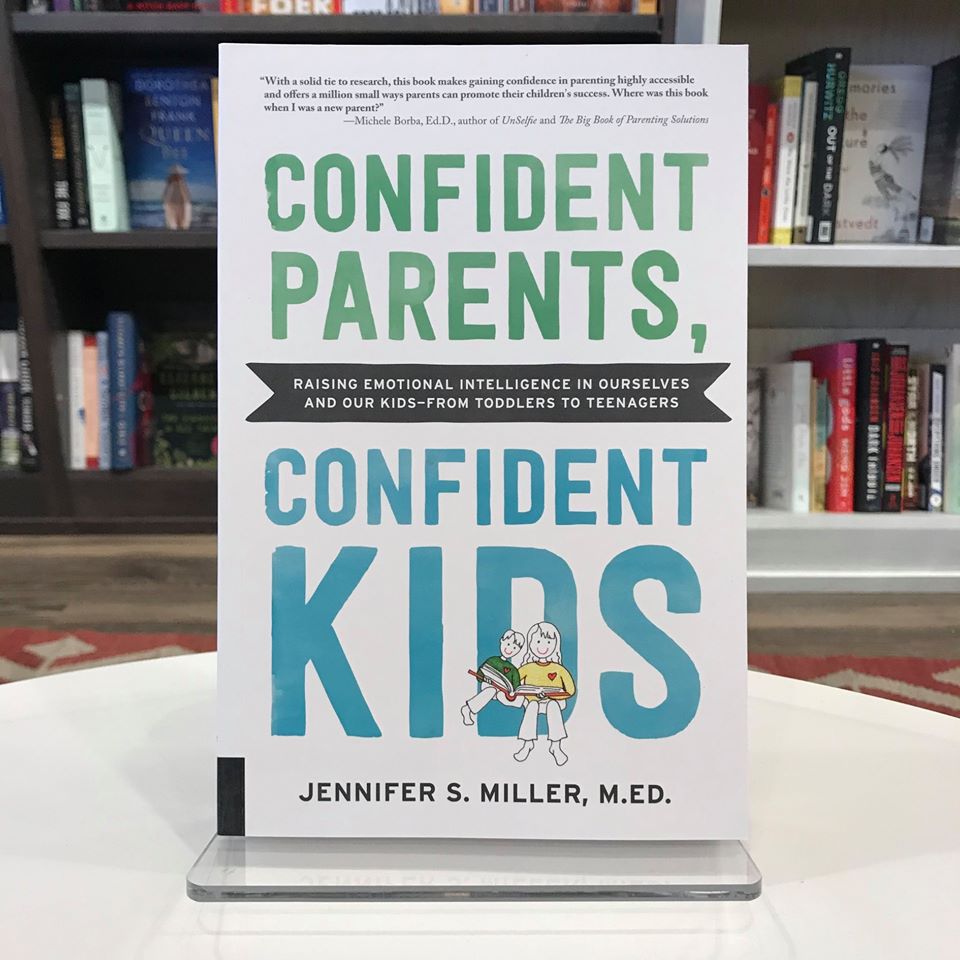
The first seven to respond on our Confident Parents’ Facebook feed or Twitter feed with a photo of themselves and/or their children along with a statement about your SEL Superpower will win a free “Confident Parents, Confident Kids; Raising Emotional Intelligence In Ourselves and Our Kids — From Toddlers to Teenagers” book. In it, you’ll learn about how social and emotional development looks at each age and stage and ways in which you can build those superpowers and support learning in family life!

Here’s how to enter to win!

Post your own or your family/child’s picture with a statement that fills in the blanks:

“My/Our SEL Superpower is ___________________________________ because I/we __________________________________________________. Please include the hashtags: #ConfidentParentSEL and #SELDay2023

Post on our Facebook feed here.

Post on our Twitter feed here!

Either social media posting will enter you to win if you are one of the first seven to respond. Good luck!