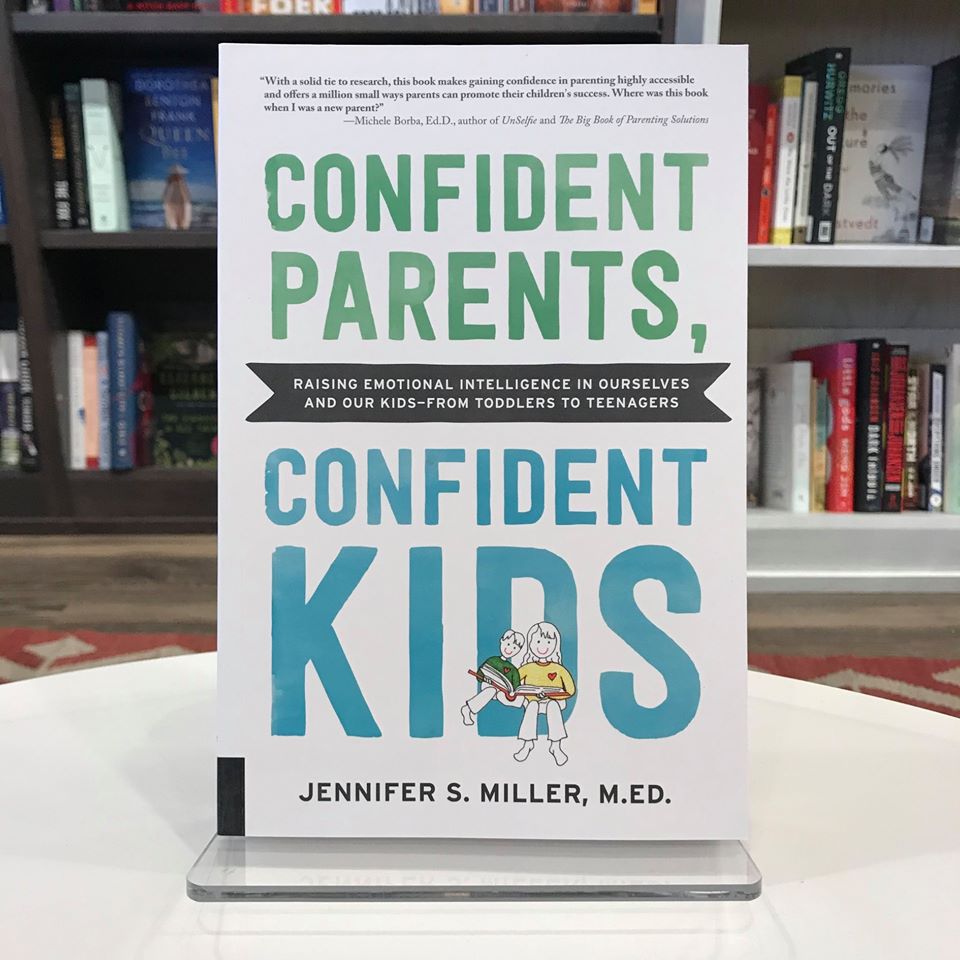
Introducing… The New Confident Parents and Caregivers Newsletter Designed for School Communities!
You’ve asked! And we’ve listened (and worked really hard to bring this to life!).
After many teachers, school principals, district superintendents, Family Engagement Specialists and more have asked: “how can we offer this research-aligned content to our school community families?,” we’ve created the Confident Parents and Caregivers School Newsletter, a communication vehicle for parents and caregivers created by expert parent educators that offers practical knowledge, strategies, and support.
Through it, parents and caregivers will learn more about:
how they can better understand and support their children’s development at each age and stage;
how they can support learning at home;
how they can manage their toughest family challenges including homework routines and managing technology in healthy ways; and
how they can connect to and with you as partners in supporting their children’s learning.
Each newsletter will be:
Easily accessible – All content will be written for a wide and busy audience at an eighth grade reading level.
Research-aligned – Just as Confident Parents, Confident Kids has always been committed to sharing research-based tips and strategies, this newsletter will also align with solid research.
Practical and Relevant – Because all content is written by an expert parent educator who works daily with a diverse range of families, it’s well-informed by the day-to-day practical challenges and opportunities caregivers face.
Culturally-adaptive and Inclusive – All language will be inclusive. There will be no use of education buzz terms or divisive language. A Spanish edition is available.
Two-way Communication – The newsletter will offer polls and reflective questions. Responses will be shared back with the school community. And ways parents/caregivers can proactively partner will also be shared.
Parents/Caregivers Can Learn About Their Specific Child’s Development through Grade Level-Specific Tips
In Each Issue:
Did You Know? – Age/Stage Information
Supporting Learning at Home Tip of the Month
Focus on a Life Skill (such as, self management)
Learning to Use Technology in Healthy Ways Tip
Proactive Partnering with Teachers Tip
Putting Tips into Action: One Family Tool
Tell Us What You Think (Reflection Question or Poll)
2024-25 Monthly Themes:
Oct. – Motivation, Hard Work, and Persistence
Nov. – Supporting Learning at Home
Dec. – Dealing with Big Feelings
Jan. – A Fresh Look at Family Routines
Feb. – Promoting Executive Function Skills
Mar. – It’s All about Relationships – Friendship, Collaboration, Conflict, and Getting Along in Family Life
Apr. – We Read Together, We Learn Together
May – Reflecting on a Year of Learning
Aug. – Building Trust and Belonging from the Start
And a Bonus! Educator Newsletter
Plus, you’ll receive a once-a-school-year bonus educator newsletter to inform all educators about the kinds of tips and strategies parents and caregivers are learning to offer a common language and shared learning agenda.
In our first issue, we tackle motivation, hard work, and persistence and how to cultivate those at home. Try it for free by signing up for our free one month trial. Or check out our newsletter page to learn more!
Safe and Trustworthy Information
We know you take your roles as protectors of your school and district families very seriously. We commit to the following safety assurances so that you can feel comfortable about sharing this information with a broad, diverse range of families.
These include:
All content will be research-informed.
All content will use highly accessible language. No education buzz terms or divisive language will be used.
There will be instructions on how to opt out at any time if they do not want to participate.
They’ll receive assurances that their email address will only be used for the Confident Parents’ newsletter and never for any other purpose nor will it ever be shared or sold for any other purpose.
They will also be assured that the newsletter will never advertise consumer products or services to them but will solely contain helpful learning information and resources.
If you choose to subscribe monthly or annually for the parents/caregivers in your school community, you’ll receive a sample welcome note for those families that you can personalize. In it, it will include the opportunity to “opt in” if they want to receive the newsletter. They will submit their email address directly to sign up. We will track who from your school/district opts in and give you that list. We will only charge for the subscription level corresponding to the number of families who decide to join.
We are always looking for ways to support parents and families as school partners and as the cultivators of the fertile soil we need to grow our children healthy, confident, and resilient! We believe this will nurture your families and bridge the gap between home and school advancing your partnerships in important ways! We hope you’ll check out the new Confident Parents and Caregivers School Newsletter!
By Reading, Viewing, Questioning, and Discussing Together
By Guest Author Tracy Nemecek
A few summers ago, I taught a class at a local literary center that invited middle school students to take a closer look at diversity, representation, and inclusion in children’s literature. As an undergraduate double major in Psychology and English, I was excited about the opportunity to both teach and learn at the intersection of my academic interests. I found myself feeling energized as I prepared for the course, and later by the students’ interest in the topic. I also came to discover just how useful the information I was presenting in my class could be to me as a parent in my attempts to both model and promote a mindset of curiosity informed by critical thought.
Over the course of the weeklong class, we looked at a variety of children’s books from the 1940’s through the 2000’s and had many thoughtful conversations. The students became interested in looking at their own favorite childhood books to see how the content, characters, and illustrations stood up to the criteria we were using to analyze the stories we had been reading together.
Inspired by my students, I realized I wanted to reflect on a beloved story that I had read in elementary school. After the class came to an end, I talked about it with my daughter (who was in middle school at the time) and we both decided to read one of my favorite childhood books, Jennifer, Hecate, Macbeth, William McKinley, and me, Elizabeth by E. L. Konigsburg, a story about two tween girls who began their relationship around a shared interest in witchcraft and endured some strained dynamics and disagreements to ultimately become friends.1
My daughter and I discussed the book using some of the criteria that I had taught to my students. The points of analysis that we used originate with The Council on Interracial Books for Children’s list of ways to analyze children’s books for racism and sexism.2 Below are a few selections from the list, followed by suggestions for questions you might use as springboards for your own family conversations about books and other media.
Look for stereotypes, passive/active doers, and visibility/invisibility.
Who are the main characters? What characters are present but in the background? Why do you think the writer made those choices? Do you think the author is suggesting that what is true for one character is true for everyone? Which characters are driving the action or change in the story? How does this look like/look different from our community? Who do you feel is missing from the story?
Check the power dynamics across relationships and look at the storyline for messages about who is in charge.
Is one character making many/most of the decisions? How did they get to be in charge? What do you think about the kind of leader they are? Why do you think others are willing to follow this leader? Who else could be in charge? How might such a change impact the outcome of the story?
Consider the potential impact of the story on childrens’ self- and social identities. Is there an opportunity for identification with an array of characters and traits?
What kinds of messages is this story sending about how people should be and act? Do you agree with those messages? What are the standards for beauty, strength, and intelligence? What might it mean for characters who don’t meet those standards? How do you feel about that?
As my daughter and I read and talked together, we engaged with the points and questions in the following ways:
The story was published in 1967. The two central characters are a black girl (Jennifer) and a white girl (Elizabeth) attending fifth grade in New York state. Jennifer’s racial identity is visible in the illustrations (which are in black and white) but is only mentioned in the text once, and in a small way you could easily miss. My daughter and I talked about visibility/invisibility and what kind of impact a more straightforward focus on the friends’ racial differences might have made on the story overall. We wondered what it might have been like for Jennifer to be the only black student in the school, particularly as the book was published in the midst of the American civil rights movement.
Jennifer presents herself as a witch when she first meets Elizabeth, and Elizabeth becomes Jennifer’s apprentice in the ways of witchcraft as their relationship develops. This involves the creation of rules and demands that Elizabeth must follow as a part of her “training”, and as a result, Jennifer is portrayed as the one who is more in control of the relationship. As we considered the power dynamics between Jennifer and Elizabeth, we talked about the potential reasons that could explain why Elizabeth was willing to accept Jennifer’s controlling requests, and how a longing for connection might make a person change their standards for respect of self and others.
The girls’ interactions take place primarily at the local library and the neighborhood park. Jennifer and Elizabeth do not acknowledge each other while at school. As my daughter and I considered the potential impact of the story on readers’ self- and social identities, we were curious about the role that their racial differences might have played in their choice to keep their friendship separate from their school life.
Inspired by our discussion of this book, we have been able to expand our focus to include other books, as well as shows and movies, and reflect on their messaging from a similar point of view. We have talked about the absence of recurring characters from a variety of racial backgrounds on “Friends,” and the insensitivity of including characters of diverse body types and gender and sexual identities primarily for the purposes of setting up running jokes.3 We had a conversation about a warning that appeared on screen before the movie “Sixteen Candles” that appropriately acknowledges a cultural stereotype reflected in the film, and about the noticeable absence of any similar warning about the boundary violations and blatant disregard for the rights and safety of a female character who experiences loss of consciousness after alcohol use.4
In my conversations with both my students and my daughter, we reached the conclusion that we weren’t looking to walk away with two piles of books and other media, one labeled “good/right/okay to continue reading or watching” and the other labeled “bad/wrong/need to discontinue reading or watching”. Instead, we made it clear that we want to be active consumers of information and entertainment who think about how stories and characters align with and are distinct from our own worldviews.
Media selections need to present children with a diversity of perspectives, characters, backgrounds and settings in order to expand their exposure to the variety of traits, personalities, and cultures that comprise our world. However, media that reflects bias can be a powerful teaching tool, too. Books, shows, or movies with problematic representations can give children and the adults who care for them an opportunity to learn how to spot and talk about stereotypes, notice who is and isn’t featured, and think about how they might rewrite a storyline or make changes to an illustration. Ultimately, the decision to continue engaging with a particular book, show, or movie rests with each family, as some sources may not be the right teaching tools to use.
Giving children the power to apply critical thinking skills provides them with an alternative to mindlessly taking in information and believing it is true and accurate simply because it is available. This empowerment can come from and contribute to the strengthening of competencies such as:
Self-awareness: the awareness of values, examination of prejudices and biases, linking values to feelings.
Social awareness: taking others’ perspectives, identifying social norms, and systemic understanding.
Relationship skills: cultural competency, being an upstander.
Responsible decision-making: making informed and reasoned judgments, understanding the operation and application of critical thinking, promoting community well-being.5
The act of applying critical thinking to books and other media doesn’t simply involve offering criticism or deciding if something is right or wrong. Rather, it is a conscious intention to take a closer and more thoughtful look at what we are learning and how we are being entertained. Doing this can enable us to actively participate in creating a more balanced and accurate view of the world and our place in it.
References:
Konigsburg, E.L. (1967). Jennifer, Hecate, Macbeth, William McKinley, and me, Elizabeth. Atheneum Books.
The Council on Interracial Books for Children. (1980). 10 Quick Ways to Analyze Children’s Books for Racism and Sexism. [Brochure]. The Council on Interracial Books for Children.
Bright, K.S., Kauffman, M., & Crane, D. (Producers). (1994–2004). Friends. [Television series]. Bright/Kauffman/Crane Productions and Warner Bros.
Green, H.A. (Producer) & Hughes, J. (Director). (1984). Sixteen Candles [Film]. United States: Universal Pictures.
Tracy Nemecek is a parent to two daughters, ages 19 and 16. She is also a licensed mental health counselor in private practice in Rochester, NY and an SEL educator who works with both children and adults in a variety of school and community settings.
“Children fall in love with books because of the memories created when they snuggle up and read with someone they love.” – Raising Readers
I have been reading aloud to my three children (now ages 9, 9, and 5) on a nightly basis since the day they were born. When I began this routine, I was motivated by creating a nightly ritual that signaled bedtime, as well as bringing back stories like Goodnight Moon and The Very Hungry Caterpillar from my own childhood. There was something soothing about reading the books my mother had read aloud to me to my own children.
As my boys have grown, the bedtime books have evolved. There are now chapter books integrated into the mix. Sometimes one of the older boys reads to himself as I read aloud to the other. And just as the books have shifted and changed with time, so has the actual bedtime routine. In our household, a parent rarely escapes the child’s bed until that child is sound asleep. This phase, which has been going on for four years now, has had some tense moments. There is still an occasional night when I find them begging for “one more book!” or “one more chapter!” coming close to putting me over the edge.
But recently, I had a revelation: the time I spend reading aloud to my three sons is my favorite, most quality parenting time with them. It is the time I look forward to the most. I feel connected with them as we experience the joys that accompany storytelling.
As I reflected as to why these moments are so meaningful to our family, here is what I came up with:
Reading Aloud Presents Opportunities To Teach Empathy
By selecting stories with characters who have different cultures, families, homes, experiences, etc. than ourselves, we gain valuable opportunities to teach our children perspective taking and empathy. This is especially important for children from dominant cultural groups. I am a straight, White, female raising three White boys. I see it as my responsibility to share stories with my children that provide them with a window into someone else’s world. Rudine Sims Bishop first wrote about the concept of using literature as a “window” in 1990. She observed, “[Children from dominant social groups] need books that will help them understand the multicultural nature of the world they live in, and their place as a member of just one group, as well as their connections to all other humans.”
When I read The Youngest Marcher: The Story of Audrey Faye Hendricks, A Youth Civil Rights Activist by Cynthia Levinson to my twins when they were six years old, they had a lot of questions. The story opened the “window” into young Audrey’s experience and perspective. My children were introduced to the concept of racial segregation and inequity through a story told in the perspective of a young, Black girl.
I have also turned to picture books when my children have an experience that brings up questions. Sometimes I don’t feel like I have the words to address their questions in the moment. A picture book can provide content that allows children to discover information about human differences. For example, once we were swimming at a pool where a child with patches of different skin colors, known as vitiligo, was also playing. My children were curious, and wanted to know more about the appearance of the child’s skin. These questions tend to make us uncomfortable as adults, yet they are coming from a place of curiosity that can lead to a teachable moment. While I did not feel I had a good response for my children the moment they asked the question, I was able to find the book Skin Like Mine by Latashia M Perry. I used the content of the book to open a conversation about skin color and helped my children make the connection to the child they had seen at the pool.
How do I do this?
Find picture books or novels with characters with different backgrounds, races, family structures, cultures, religions, etc. than your child.
Read the book aloud to your child. Pause to ask if your child has questions about the story several times throughout.
Invite your child to reflect on how the characters in the story are feeling.
Provide space for your child to be curious and make sense of the story.
Reading Aloud Helps Open Up Conversations About Real-Life Challenges Children Are Facing
“Literature transforms human experience and reflects it back to us, and in that reflection we can see our own lives and experiences as part of the larger human experience. Reading, then, becomes a means of self-affirmation.” (Bishop, 1990).
Just as literature can serve as a window into someone else’s experience, it can also be a mirror into one’s own inner world. When my mother-in-law was diagnosed with cancer, she went from being a caretaker central to my children’s lives to fighting for her own life and needing our family’s care. During this tumultuous time, I looked to children’s books to help me with getting my children to open up about how they were feeling and to show them that they were not alone in being faced with their grandparent’s mortality.
I found the book, Big Tree Is Sick by Nathalie Slosse to take on the topic of cancer. When their grandma went into hospice care, we read Nana Upstairs, Nana Downstairs by Tomie diPaola and The Memory Box: A Book About Grief by Joanna Rowland. These especially helped my four year old with making sense of the abstract concept of death.
There are so many wonderful picture books and novels that take on difficult topics that we face in our lives. If you need help finding a title that connects to a particular challenge your family is facing, your local librarian is a great place to start.
How do I do this?
Identify a challenge your child or family is facing.
Use the Internet or better yet, a local librarian, to find a book that your child can relate to.
Read the book with your child.
Pause to ask questions:
“How do you think _______ is feeling? How can you tell?”
“Have you ever felt like [the character] before? What was that like for you?”
Reading Aloud Provides A Still, Mindful Time to Bond with Children
My sons are always on the move and it is often difficult to find a time when they are still enough to have a conversation that lasts more than 30 seconds. When a book is opened and a story begins, I can feel my children settle and calm. They focus on the story, the pictures, the words. They ask questions:
“Where is that mouse?!”
“What does [that word] mean?”
“Are the Greek gods real?”
The mouse from Goodnight Moon, the Snuggle Puppy song, and The Little Blue Truck stories will always bring me back to sitting in the blue recliner rocking chair with a one year on my lap old filling in words I left out in the story (because we read the story so many times, they memorized it!). The bonds between parent and child that can be built during this special time are incredible.
How do I do this?
Identify a picture book or novel you love that you think your child will love, too.
Set aside time to read together for 10-15 minutes each day.
Let your child know how much you look forward to that time together and how special it is to you.
So, why read aloud with your child? It’s more than just the benefits of literacy learning. It creates special moments and deepens your bond with your child. It can help a child make sense of complex challenges they are faced with, as well as expose them to new perspectives.
It is memorable.
It is magical.
References:
Bishop, R. S. (1990). Mirrors, windows, and sliding glass doors. Perspectives: Choosing and Using Books for the Classroom, 6(3). The Ohio State University.
Betty Weir is currently the Director of Professional Learning at a K-8 district in Illinois. She has been a school principal and a middle school language arts teacher, as well. Much of her educational experience has centered around literacy and SEL education for children. She is an active parent with her own three sons and has daily opportunities to learn, grow, and repair with her children.
Part Two Next Week!
Next week, we take these ideas and further the discussion with guest author Tracy Nemecek’s ideas on how, through dialogue around reading and media consumption, we can build both social awareness and critical thinking skills.
I moved to the United States from Spain seventeen years ago. I still remember the challenges of navigating a new social and cultural context as an English learner and a newly arrived immigrant. It took me years to find my voice and become the person I wanted to be. Mostly, this happened when I realized that I didn’t need to “fit in” or change myself, but I couldn’t ignore my immediate context either. By learning to merge the two, I found a new way of being.
During challenging times, I occasionally met a person who spoke Spanish, a “Hispanic,” as it is known in the U.S. Those were moments of joy. Being able to use my mother tongue, and connect with someone who shared similar struggles, gave me hope and strength. Having spent time in Nicaragua and Peru during my college years, I understood their hopes and dreams, and also their fears. But as a white person, I also knew that the experiences of Latinxs were impacted by the color of their skin.
My first child was born a decade ago. When I held her for the first time, the words that came out of my mouth were:
“Hola cariño” (hello sweetie!)
During the pregnancy, I had been considering which language I should use to communicate with her. But when we first made eye contact, these words came naturally to me without thinking.
I grew up in Catalunya, a region in Spain where the common language is Catalan, but my parents immigrated there from the Northwest side of the country and we spoke Spanish at home. Growing up bilingual had many advantages, as I could easily switch from one language to the other without effort, and I developed a love for languages.
However, during my childhood, kids were very aware of which language you spoke at home and which one you decided to use to communicate with others. You could feel included or excluded in different settings based on your home language. As a small child, I interpreted that speaking fluent Catalan was key to being seen as a local and not a foreigner.
As I held this newborn and the first Spanish words were shared, I knew that it was important for her to speak the language of her mother and grandparents, and develop an appreciation for her heritage. Even if this meant that, at times, she would be seen as different because she spoke a different language.
Today, we know the many benefits of being bilingual. Compared to non-bilingual peers, bilingual students have an easier time understanding math concepts and solving word problems; developing strong thinking skills; using logic, focusing, remembering, and making decisions; thinking about language; and learning other languages.
At the same time, we know that being bilingual supports children in maintaining strong ties with their family, culture, and community. It is important for children to build pride in their heritage, as it encourages the development of a healthy identity, strengthens a positive self-image and provides protection against bias and discrimination.
Despite these benefits, many bilingual or multilingual students in the U.S., particularly our Indigenous, Asian, Hispanic, and Latinx communities, attend schools that don’t consider these students’ language practices in the educational program which lead to students internalizing harmful messages about themselves. Instead of celebrating this strength, many students hide the fact that they speak more than one language, so they can be seen as normal.
As parents, we have an important role to play in creating caring and inclusive homes and communities, and planting the seeds to reduce discrimination.We can help normalize that children and parents in our communities may speak more than one language, and embrace this fact as a gift.
If you have bilingual and/or multilingual children in your community, you can support them by:
US Department of Education. The Benefits of Being Bilingual – A Review for Teachers and Other Early Education Program Providers.
España, C. and Herrera., Y.L. (2020). En Comunidad: Lessons for Centering the Voices and Experiences of Bilingual Latinx Students. Portsmouth, NH: Heinemann.
Dr. Lorea Martínez is the award-winning founder of HEART in Mind Consulting, a company dedicated to helping schools and organizations integrate Social Emotional Learning in their practices, products, and learning communities. An educator who has worked with children and adults internationally, Dr. Martínez is a faculty member at Columbia University Teachers College, educating aspiring principals in Emotional Intelligence. Her second book for educators, Teaching with the HEART in Mind, is currently available. Previously, she was a special education teacher and administrator. Originally from Costta Brava, Spain and now in San Francisco, CA, Lorea is a mother to two daughters. Learn more at loreamartinez.com
Don’t Miss This District-Approved Tool for Parents
By Guest Author Erin Lillie-McMains
Educational platforms that offer rapid feedback and a way to track your child’s progress on tests, quizzes, and assignments are part of the landscape at most schools. When parents start interacting with these platforms, their natural first line of questions often centers around what I would call, the “nuts and bolts.” “How do I set up the account? How do I access the data I desire?” After a couple months however, most parents start to ask questions such as, “How often should I check the platform?”, “Is it good for my child to feel like I’m watching his every move?”, and “How do I keep my anxiety over a missing assignment in check so I don’t cause a spike in anxiety in my child?”
This past Spring, I wrote an article calling on schools and parents to consider how to establish healthy tech boundaries when using rapid feedback educational platforms. This flier and infographic is a follow up to that article. It is simply a list of tips and guiding questions for parents to think about as they start interacting with educational platforms. It might be useful as a hand out at a Curriculum or Back-to-School Night for 6th grade parents, who are just starting to interact with these platforms. It could also be included with other technology forms and agreements that get sent out at the beginning of the school year. There are several potential uses and of course, I encourage schools to modify and customize the flier in order to meet the specific needs of parents in their community.
Here it is:
Confident Parents, Confident Kids is so grateful to Erin Lillie-McMains for her time, expertise, creativity, and initiative in following up on her article which elevated an important school problem to create a tool that can help solve it! Fantastic! We celebrate you!
Erin Lillie-McMains is an L.C.S.W. and middle school social worker in the greater Chicagoland area. She has worked with adolescents for twenty-four years and helped a school based team implement Social Emotional Learning curricula. Most importantly, she is a parent of two high schoolers and one middle schooler.
As a little girl, I often sang the lyrics, “let there be peace on Earth and let it begin with me.” I sang with gusto but did not ever reflect on what that meant. Is peace merely the opposite of war? As a change-maker in my adult years, I’ve spent years reflecting on related questions — how do you create peace? — peace of mind, peace of heart, peace in the world? When I took the helm as director of the Center for Peace Education, it became a mission for me. The idea of peace transformed from a condition and a setting to a learned set of skills that anyone and everyone can be engaged in practicing.
This weekend, the United Nations declares Saturday the International Day of Peace. They define peace as “not only is it the absence of conflict, but also (peace) requires a positive, dynamic participatory process where dialogue is encouraged and conflicts are solved in a spirit of mutual understanding and cooperation.” It’s not enough to just get along. But instead as individuals, as organizations, as countries, we must learn to grow our collaborative relationships actively and continually.
Yet, I do believe it begins with me in my relationships and so this is a chance to examine once again how peace is beginning with me. And again, the proving ground it seems is home – and family life. With those we love and count on daily, we have the chance to practice over and again the hardest, most challenging skills. These skills have two layers — our own practices and how we teach our children — and they remain inextricably linked, interdependent. These may include:
returning to a centered, focused, grounded place in your body, heart, and spirit;
dealing with darker emotions constructively;
solving problems collaboratively with loved ones;
learning from differences in opinions;
working through disagreements in healthy ways;
taking ownership of one’s own roles and feelings in a problem;
seeking empathy and understanding for another’s pain or role in a conflict;
holding paradox with grace and patience such as, my emotional needs may conflict with your needs;
repairing harm when we are the cause of hurt or harm;
clearing the air directly with the individual in conflict versus avoiding or circumventing by going to others;
seeking and offering forgiveness; and
restoring trust and deepening connection.
Though peace involves skills, it can also be helped along with the right conditions. Playing soothing music in your home sets a tone of calm. Burning candles or using a diffuser with essential oils engages your senses and can lead to feelings of comfort and safety. Opening windows, bringing the fresh air in, and listening to the sounds of nature and humanity outside can offer calm (or not, if you are in the city like I am! :). Consider the conditions of your living space and how they might be more conducive to creating calm.
Through the years, Confident Parents, Confident Kids’ has published a number of articles and tools for parents around this topic of dealing with conflict in healthy and growth-filled ways (much more than are listed below!). Creating peace in family life requires the active exercising of a full range of social and emotional skills — those same skills that will nourish our child and teen’s thriving today and for their future. So I cannot imagine a more important mission in family life than to practice peace.
Check out the following curated articles and tools that may offer specific support for whatever you most need to work on in your family.
Confident Parents’ Founder/Author Jennifer Miller is featured today on the CivilTalk Podcast, a platform that serves as a haven for university students where they can convene, engage, and hone their civility skills together. Jennifer speaks with Topacio Althaus, the host of CivilTalk.
We consider questions like:
How do you ensure civil talk happens in family life when our national political climate is so divided?
How do schools build the necessary skills to promote civil talk?
How can families deal with the complications of technology at home? Does that add or take away from civil talk — and what to do about it?
And how can parents promote essential life skills like empathy, self awareness, self management and more in the messy, raw context of family life?
I have a single quote inside my kitchen cabinet that I see daily as I make breakfast. It reads, “where focus goes, energy grows.” As I’ve focused on this idea, it’s helped me notice more often where my attention and focus are trained throughout a given day. If I have a hope, desire, or goal I’m working toward, I know that my conscious focus needs to be on that hope daily if I want to move closer toward it, if I want it to grow.
Intentions bring a sense of meaning and purpose to how you show up in life. It orients your mindset in a particular direction. And research confirms it is one key to achieving goals.1 Do you want to increase your friendships? Setting an intention to be a good friend may help you focus on how you might bring about more friendships in your life. “Intentions create an integrated state of priming, a gearing up of our neural system to be in the mode of that specific intention: We can be readying to receive, to sense, to focus, to behave in a certain manner,” wrote Daniel Siegel in The Mindful Brain.2 Of course, once you train your brain to focus in a particular area, it requires self management (a higher order thinking skill) to be able to stay focused on that area. But if you’ve articulated your intention to someone you love, there is an accountability in sharing it.
So how do we use the power of intentions in family life? The beginning of the school year seems an ideal time to help your child set their own personal intention for this coming school year to help them focus on how they want to show up. And with a bit of reflection as a family, your child can express their intention so they prime themselves for that focus over the coming weeks and months. With this understanding of where your child wants to focus their attention, you will understand best how you can support them. The intention can be simple and single-focused. And in fact, it loses its power if you attempt to load it down with all of their goals, hopes, and wishes. So focusing on one area, maybe an area where they haven’t focused before, can help them develop a new capacity. Their intention can also help to serve as an anchor and reminder of their focus when competing demands divide attention. You can provide gentle reminders of their intention they can always return to.
In addition, you as a parent/caregiver can benefit tremendously from setting your own intention for the school year. As you attempt to manage supporting your child’s learning when home as well as your own work and other key relationships and responsibilities, setting an intention can train your own focus when you turn your attention to all efforts related to your child’s school.
Here’s a dinner conversation starter to help you begin the thinking with your family.
Family 1-2-3 Questions – Conversation Starter:
1. Who do you admire? And Why? Or simply what traits in other people do you admire?
2. Are any of those traits you admire challenging for you?
3. Where do you want to improve and learn this year?
Parents can model and think through their own responses to this question related to the school year. You might consider:
1. Who in education or teaching do you admire?
2. What traits do you admire that challenge you?
3. Where do you want to improve in your own role as your child’s learning support this year?
Formulate a simple, short intention statement from this. Some examples might be:
I will to work hard and bring my best effort to all assignments.
I will show kindness to my teacher and classmates.
I will be open to new friendships this year.
I will create space for a caring relationship with my child’s teacher.
Write these down. Keep them at the ready. School will get hard. Work will challenge your student. Teacher’s expectations may challenge you. Return when you feel that challenge to your intention statement. How can it help you stay focused? How can you use it to remind your child of their focus?
We all require support as we attempt to do hard work. And the relationships of school which determine whether or not we learn are just as hard work as the worksheets, tests, and projects that make up the curriculum. Setting your sights as a family on how each individual can meaningful contribute to a safe, healthy, caring and supportive school year will help you all focus your attention together on making the most of your child’s year of learning ahead. And that’s powerful.
Your alarm goes off in the morning. If you’re like me, you hit the snooze button (at least) one time before pushing yourself to get moving. You get up and begin your morning routine — shower, get dressed, brush teeth, have breakfast — all of the things you need to do to ensure you are able to kick off your day in a way that checks all the boxes necessary before heading out the door.
As a parent, your morning routine has more complexity. On top of making sure you are checking all of the boxes needed for yourself to confidently start the day, you have the responsibility of overseeing that your child’s routine is in motion and that all of their boxes are being checked. Not to mention, for those with more than one child, that checklist is multiplied!
Routines and checklists are great! They offer guidance and predictability. However, they can’t guarantee the ‘perfect morning’ all on their own, especially when it comes to our children. Try as we may, there always seem to be barriers that work against our ability to get ourselves and those dependent upon us out the door effectively and efficiently.
There are two specific barriers which we have discovered to be particularly present in our home and, in speaking with other parents, have learned are common in other households as well: punctuality anxiety and a lack of planning.
Barrier #1: Punctuality Anxiety
Many of us are beholden to a place of employment that relies on us to arrive for work on time and on top of that, punctuality is imperative for positive performance. For instance, someone who is a doctor that has their first patient being prepped for the operating room doesn’t have the same kind of ‘wiggle room’ with timing as someone whose employment situation offers a little more flexibility. Not to mention, in some families, there is a bus to catch for school!
The way punctuality anxiety shows up in our household is when one of our children chooses to spend an especially long time completing one of the routine tasks. Thus begins my inner monologue as I try to stay composed: Why is Maggie needing to tell me all about gym class yesterday in the process of brushing her teeth? Must that REALLY happen now when I need to leave the house in five minutes to get to work on time?! Then, all it takes is one more second of time needed beyond my control and my inner monologue lashes outward “I have to leave this house in five minutes in order to get to work on time, why are you telling me this story now? We have the whole ride to school and you can tell me about it then!” Next thing I know, my daughter is having a meltdown triggered by my yelling at her… a meltdown that now adds ten more unplanned minutes to the morning routine…(not to mention the fact that now we are both frustrated and stressed).
Barrier #2: Lack of Planning
These days it seems inevitable that we start our morning routine only to make a discovery such as, “Oh no! It’s the first day of his new swim class at school and his favorite swimsuit isn’t washed!” or “Today’s the day she is supposed to turn in her homework, and only one of the two pages is done!” or “Mother Nature threw us a curveball: an early fall tornado!” Next thing you know, you are frantically throwing things in the laundry for a ‘Quick Wash’ cycle or running down to the basement to take shelter and wait while losing precious seconds. Or you’re anxiously coaxing your child through that second page of homework while packing lunches…
Are these barriers familiar to you? Here’s the good news… the power to knock them down lies within you! While neither my husband nor I would say we have ‘nailed it’ in using these, here are some proactive strategies that we have found to work rather well as of late:
Set your alarm earlier! It’s amazing what ten extra minutes can do to allay your anxiety.
If you have a caregiving partner at home, cross-check daily schedules with them! Is their schedule more flexible to allow for them to drive your child to school on a particular day? Then, your daughter can afford the time to share every last detail of that gym class story!
Keep an updated and detailed calendar. We have found the ‘Notes’ section on our shared digital calendar to be especially helpful such as, “Grandpa is the one picking up Daniel from preschool today.”
Carve out time the evening before to review the calendar and strategize for what’s “on deck” for the day ahead. What’s the weather prediction? Will it impact road conditions? Is tomorrow the day that homework is due? “Oh look! It’s his first swim class tomorrow. Better get his favorite swimsuit washed tonight! Her well-child doctor’s visit is tomorrow! Did we figure out who is picking her up early from school to take her? My first meeting tomorrow is especially important to be punctual for. I’d better ask my partner to be on drive-to-school duty!”
With that in mind, we are all human and because of a myriad of variables, we can’t always be so on top of planning ahead. Here are some in-the-moment strategies that we have used and found to be helpful:
Onboard a strategy or two that helps you to maintain composure as best as you can when you feel anxious. The more composed you stay, the more likely your child is to stay the course. “Deep breaths” may work for some people, but not everyone. Perhaps walking out of the room for a minute or tapping your thumbs to each of your fingers or another calming strategy is helpful for settling your own feelings.
Let natural consequences take their course! If you end up being late to work and have a stressful day of running late to every meeting because you didn’t know there was going to be a major storm causing difficult road conditions, ideally it’ll remind you to look ahead at the weather and plan accordingly next time. Reflect with your whole family! Children benefit from learning about those natural consequences and how you’ll take steps to create safety when facing unexpected events. Together, make a solid plan for next time.
As you consider what you’ve read, I encourage you to ask yourself: Do “manic mornings” happen in my house? Do I find myself getting anxious when I am worried about a stand-still in our family’s morning routine? Is there a way I can plan ahead more effectively to help mornings move more smoothly?
While it is impossible to guarantee a ‘perfect’ morning routine all of the time, employing strategies like these can ideally help you towards kicking off the day as effectively and efficiently as possible!
Liza’s Favorite Recommended Resources Include:
Conscious Discipline – Check out their website with free resources that for educators and parents alike.
The Secrets of Happy Families; Improve your Mornings, Tell your Family History, Fight Smarter, Go Out and Play and Much More by Bruce Feiler
Liza Adams is Co-Director of Early Childhood Services at The Mandel JCC’s Early Childhood Center in Beachwood, Ohio. She has been working in the field of early childhood education since 2008 after graduating from Ohio State University with a Bachelor’s Degree in Human Development and Family Science. Liza went on to obtain her Master’s degree in Jewish Education from Siegal College, and participated in the Jewish Early Childhood Education Leadership Institute that encouraged inquiry and reflective practice, development of leadership, and building of school culture. Liza is passionate about partnering with caregivers to cultivate an environment for young children in which high-quality care and trusted relationships are foundational, play is the way for curiosity to take its course, and there is a positive approach to social-emotional learning and behavioral guidance. Liza is also the mother of a daughter in elementary school and a son in preschool.
Whether your child speaks the desire or not, most if not all children enter the school year with a hope of cultivating new friends. Yet, our children may not feel comfortable initiating a conversation or have well-rehearsed the social skills needed to grow a friendship. It can require great courage to risk possible rejection to go up to someone brand new to begin a conversation. If your preschool age child once played side by side with peers and began a friendship by bumping their toy cars into one another, that easy start can become more complex as children grow. “How do I just talk to someone I don’t know?“, “What if no one is playing a game I like?” and “What if I ask to play and they say ‘No.’? are real concerns. Social anxiety can strike at any moment. Kids don’t often know how to cope with those worries and turn to you for guidance. So how do you help your child through those times while supporting their social skill development?
We know that whether at school or in an extracurricular activity, friendships will add to a child’s comfort and enjoyment and can even determine whether they’ll participate in the first place. Research studies confirm that friendships can contribute to a student’s academic performance. Studies have concluded that for both elementary and middle school students, those that have significant friendships at school have a higher motivation for working toward social and academic goals.1 A teacher writes:
“We expect our elementary and middle school students to have mastered these skills before they reach our classrooms. In fact, many of the problems we solve daily are not related to academics but to our students’ undeveloped social skills.“2
Indeed, friendships and a sense of belonging at school can directly address the chronic absenteeism problem that schools has faced since the pandemic. Each student who has at least one treasured friendship – their go-to buddy – has greater incentive to get to school each day.
For teachers, making relationship building a priority at the beginning of the school year can not only eliminate some of those social anxieties that get in the way of learning, they can motivate a child to engage and work hard with friends at their side throughout the school year. Developing friendships and being able to collaborate with peers requires multiple skills that must be learned and practiced over time. And it’s not enough for students to learn to create a friendship with those who are just like they are. Additionally, teachers and parents need to build the skills of accepting and working with students who are different from you. Caring classroom communities not only help students discover their commonalities but also recognize, celebrate and focus on the uniqueness and importance of differences.
Though you may feel as a parent that you have little influence on friend-making at school when you are not present, that’s not exactly true. There are numerous ways you can offer valuable practice in friendship skills at home. Practicing some of these skills over the coming weeks as all students are newly back to school can help set your child up for success setting the tone for a school year where they feel a sense of belonging and care.
Here are some ideas to try out.
For Preschool and Elementary School Age Children
Model.
Find chances in the grocery store or at the bank during regular weekly activities in which your child accompanies you to model introductions to people. Perhaps when you go buy school supplies, this could be your chance. You may go to the same store each week but do you know the names of the employees that assist you? Introduce yourself and your child.
“Hi. I come in here weekly and you’ve helped me many times. What is your name? It’s nice to meet you. This is my daughter, Amanda. She is a big help on shopping trips.”
Be sure and take the opportunity on the car ride home to reflect on the introduction. You might ask, “What did you notice that I said to the woman at the store? Are there some kids at school you might be able to introduce yourself to in a similar way?”
Practice at home.
For younger children, get out three or four of your child’s stuffed friends and have them join you for a snack after school. Start by making your own introduction of one to another. Then, have your child do the rest of the introductions. “Seal meet Wayne, the bunny. You both like playing legos with Amanda.” Share one commonality and one difference. My son loved this game and looks for opportunities to introduce puppets, trains, cars and other friends that have not yet met. Remember to point out the small aspects you may take for granted to set your child up for success. Nonverbals matter! For example, “I looked at him in the eyes. I smiled and then, I offered my name.“
For older children into middle school, you can involve them in introductions by play acting with them and engaging them in fun. Talk about how it can feel awkward to introduce yourself. Maybe share a story of a time you felt awkward or silly but made an introduction anyway and were glad you did. Show them how you did it. “I just walked up and said ‘I see you are reading that great book. I read it last summer and loved it. I’m Amanda.’” Recognize that it will take some courage to approach a peer. Offer simple ways to join in a game, just sit down, or introduce a topic to get through the awkward first step and move on to getting to know others. It helps to consider questions your child might ask to open up conversation like, “what do you like to do at recess?” Or “who was your favorite teacher last year?“
Create new attitudes around differences.
If your child’s classroom teacher is not intentional about building classroom community and inclusive connections, children may tend toward creating small groups and leaving children out. Your child does not need to be dear friends with every child but they do need to show acceptance and respect and get along with every child in the class. After all, they’ll have plenty of interactions and may even need to work with each of their peers on academic projects. How you talk about differences at home matters greatly. How can you notice when you are talking about classmates, neighbors, or any person outside of your immediate family? Now is the time to use your best self management skills and exercise curiosity (versus judgment with differences). When differences arise — “they don’t think like we do.” — the essential question becomes, “what can we learn from that difference?” Judgment of classmates at home leads to judgment of classmates at school. Set your child up for success in the classroom by curbing any judgment and showing acceptance and curiosity for uniqueness. Look for the (at times, hidden) gifts of each individual! When your child comes home from school talking judgmentally about another child, use your best life coaching approach. You might respond,
“every child in your class has a gift whether it’s clear to you or not. Your special trick can be finding that gift. Do you know what it is for the classmate you’re talking about?”
Ask about free times like lunchtime and recess.
There are very few free moments during the school day when children choose what they can do and with whom they can do it but lunch and recess are often those times. It can be so difficult to find someone to sit with at lunch when looking out at a sea of unfamiliar faces. Talk about this and what your child might do. Model simple language that he can use. “Can I sit with you?” is all it takes – that and a lot of courage – to sit down with a new group of students and have lunch. Talking about it with you and helping your child see that everyone has those feelings of awkwardness at one point or another may give him the courage needed to take that first step.
Provide reinforcing comments.
As your child tells you about attempts to make new friends, reinforce what she is doing. “I notice you introduced yourself today. That kind of bravery is going to pay off, just wait, and see.” It may take a number of tries to make a connection that lasts beyond the lunch period. Also, it’s tempting to ask about and judge the kids with whom she is connecting. You may know the parents or have seen the potential friends through school interactions. We know that peers can be a significant influence on our child and we want it to be a positive one. However, because it can feel so challenging to make connections and kids are still trying to figure out in which group they belong, allow them some space to take healthy risks and try out new friendships.
Teach to repair harm.
Making friends is hard enough but keeping friends can represent another level of social skills. After all, there are no perfect friends. Each will make mistakes and hurt one another. The trick when hurt or harm occurs is that your child knows how to make amends. Teach that their next choice can be a better choice to heal the relationship. They may feel hurt too. So they need practice at home — with you, with siblings, with neighborhood friends. When they cause harm (and it may be inadvertent), how can they accept their role and responsibility and make things better? Can they offer an apology face to face? Can they mend a broken toy, offer a hug, or write a note? There are many ways that friends can repair harm done. Yet so often, when conflict arises, children’s coping strategies lead to more harm (silent treatment, blame, contempt, and more). They need your coaching and your support in generating ideas for what they can do to create healing when they have calmed down and are ready. You can assure them that (if harm was done on multiple sides) taking responsibility for their part is the right thing to do. They do not have control over anyone else’s behavior, only their own.
Have patience and give it time.
Though at times, it may be challenging to see your child struggling to simply walk up to a group of kids to engage in play, slow your own mind down. Recall your own socially awkward moments as a child. Perhaps even remember times as an adult that it’s been tough to walk, for example, into a brand new workplace and begin relationships. Thinking about your own tough times in starting friendships can help extend your own patience while realizing that, for a child in the midst of social anxieties, it can be a significant and all-consuming challenge. Your guidance and show of confidence that they can do it will help them take the risks they need to take in order to develop those critical relationships.
Children often begin with the advantage of a core common interest – camp, school, sports. If your child initiates a conversation, that may be all that is needed to forge a friendship. Have those discussions, model, practice, and reinforce their courageous efforts as they make attempts. Root for your child in connecting with each person in their class. Those small supports you provide can go a long way toward helping your child find the confidence for making healthy friendships.
DuBois, D. L., Felner, R. D., Brand, S., Adan, A. M., & Evans, E. G. (1992). A prospective study of life stress, social support, and adaptation in early adolescence. Child Development, 63,542-557.
Watson, M., Ecken, L. (2003). Learning to Trust; Transforming Difficult Elementary Classrooms through Developmental Discipline. San Francisco, CA: Jossey-Bass.
Harter, S. (1996). Teacher and classmate influences on scholastic motivation, self-esteem, and level of voice in adolescents. In J. Juvonen & K. R. Wentzel (Eds.), Social motivation: Understanding children’s school adjustment (pp. 11-42). New York: Cambridge University Press.
Wentzel, K. R. (1994). Relations of social goal pursuit to social acceptance, classroom behavior, and perceived social support. Journal of Educational Psychology, 86, 173-182.
Adapted from original published on September 5, 2013.
One reader and President of a Mom’s Club in Gaithersburg, MD writes, “on first reading...phenomenal! Exactly what I needed right now. I just started checking out books again, feeling like I was doing "something" wrong. I just wasn't feeling great about some of my interactions and felt like I needed a jump start. This blog is putting me back in the right mind frame. It is informative, supportive, yummy! It just makes me feel capable..and like I am talking to my best friend about it!”
Maurice Elias, author of Emotionally Intelligent Parenting and Psychology Professor at Rutgers University writes…
Confident Parents, Confident Kids “merits the attention
of anyone working in social, emotional and character development who wants a place to send parents for ideas and advice and dialogue.”