For the Youth Connections Magazine’s summer issue, we are discussing how you promote responsible decision-making skills in our children and teens. The article offers some guidance on children’s developing sense of what to base their choices on, how parents can support that development along with specific age/stage tips for promoting this essential life skill. Here’s how it begins…
“Decisions, Decisions…How Can We Prepare Our Children to Make Responsible Choices?”
“I don’t like playing anymore, but all my friends are joining the team again,” relays my eleven-year-old son, Ethan, voicing his debate over whether to commit to another season of baseball. He has played for a number of years cultivating valuable friendships along the way. But, as he’s grown, the coaches, parents, and kids alike have become more competitive. And so too has the pressure. Ethan has enjoyed the game less as the emphasis on performance has increased. This spring, he was faced with the challenging decision: Do I continue to do something I’ve always done because my friends expect me to or do I follow my interests and motivation?
Children are at the very beginning stages of developing decision-making skills. They grow from basing decisions on chance with games like “Rock, Paper, Scissors” or “Eeny, Meeny, Miny, Moe” to weighing pros and cons like whether to rejoin a baseball team that’s grown stressful. Then, in the teen years, youth face tempting risks like whether to follow peer pressure to try alcohol despite the fact that most parents — as confirmed in a recent survey of Montana parents — disapprove of underage drinking. Children will increasingly have to decide when to accommodate friends, when to assert their needs, when to show care for others, and when and how they should think ahead about consequences that might result from their actions.
Young children rely on adults to establish and enforce the rules. Their central concern focuses on their own safety and secure attachment to their parents and educators. But, by the age of nine, children move to the next stage of moral development in which the care of others and their social relationships takes priority. This is also a time when children begin inventing their own rules among their peers through games. They weigh social values when decision making like belonging to a friend group, contributing to a team, or meeting parent and teacher expectations.
Also, do check out the https://parentingmontana.org site which contains guidance for each age/stage around hot topic issues like dealing with anger, bullying, making friends, managing homework, dealing with stress and more.
The pace of activities and anticipation of summer can add to a sense of frenzy in these final school days. Children are excited about vacations and swimming. Parents are ready to shed the early morning commute to school and the pressures of homework duty. It’s tempting to race blindly forward into the sunshine without looking back. But there is significant value in taking a moment to reflect on the growth of the past year – friendships, academic progress, and newly developed interests.
Children may be sad to leave their teacher, their friends and the predictability of the school routine. They may worry about the loss of the stability and consistency that school provides over the summer and all of the unknowns of the anticipated next school year. There are some small, simple steps you can take to ease the transition and also deepen the lessons of the year through reflection. Here are a few suggestions.
In Reflection…
Retell the defining moments.
I began asking last night, as my son and I anticipated the last day of school, questions about his year. What was the most surprising thing that happened? Did you make a new friend? When did you feel embarrassed? What made you belly laugh? What were you most proud of learning? These simple questions elicited a range of stories. I could tell my son loved thinking back on the significant moments of the past year. And you can promote reflection on learning by asking questions about specific subjects and what your daughter knew at the beginning of the school year, how she progressed and where she is ending the year in her knowledge and experience. These reflections help children think more about their own thinking (metacognition) and learning processes which, in turn, will help them when they return to school in the Fall feeling a sense of capability, motivation, and persistence. At a family dinner, bedtime, or on a road trip drive, ask some reflective questions and spend time together thinking about the many defining moments of this past school year.
Work together with your child on a thoughtful card or letter for her teacher.
End of the year gifts or flowers for a teacher are one traditional way to show appreciation. But consider instead of or in addition to a gift, sitting down with your child to write a letter together about what you appreciate about that teacher and the past school year. Talk about it a bit before launching into writing. “What were some of your favorite activities you remember from this year? Why is your teacher so special? Do you remember a time when your teacher was especially kind?” are all questions you might ask before putting words to paper. My son was so excited each day as we moved toward the final day that he rarely sat down. So instead of a letter, I wrote some prompts for him to consider and he easily contributed to this meaningful appreciation of his teacher (see picture). Writing down what you appreciate about the teacher and the school year with your child can serve the dual purpose of a valued keepsake for the teacher and a helpful reflection for your child on her year.
Create a temporary museum using artifacts of learning.
You likely have a pile, a bin or a busting-at-the-seams binder (as we do!) of school work from the past year. Before recycling or filing away, why not use the accumulated papers as evidence of learning and growth and a tangible way to reflect on that progress? Use your home as a museum. Place the school work in the order of the school year starting in the fall. Line them up across chairs, the couch and on end tables for display. Walk around as a family and talk about what you notice particularly when you note positive developments. With a little support from you, your kids may be excited to put together the museum themselves. With multiple children, use different rooms of the house and you may have a full academic museum for an evening.
Create a time capsule.
A terrific early summer activity might be to generate a time capsule in memory of this past school year. Work with your child to find and decorate a shoe box or other container and mark with the name of the child and dates of the school year. Now ask your child to consider their older self. What if he came across this time capsule hidden in the attic years later? What items would help him remember the unique attributes of this past school year?
Transitioning into Summer…
Talk about your routine “lite.”
Though you may be eager to relinquish the rigor of the daily school routine, children still thrive with some sense of predictability. So talk about changes in your routine while your family is together. Consider your morning, bedtime and meal times and other transitions in the day. How will things stay the same? How will things change? Having this discussion can help set expectations for the summer and also provide that sense of stability children can thrive on through routines.
Consider instituting quiet time or reading hour.
Sure, you may be gone some days during a typical quiet time. But consider assigning a particular time of day to serve as a quiet time whenever you are around the house. After lunch seems to work well for our family. Turn off devices and media. Haul out blankets and books. You could include snacks. But it should be a time when all in the household “power down” and take it easy. Set the expectation for this at the beginning of summer and kids will assume it’s part of their summer routine.
Brainstorm a list of favorite summertime activities.
Grab a poster board or newsprint and brainstorm together a list of favorite activities you want to be sure and get in over the summer. Separate into “at home” and “out.” Make sure there are some ideas that can be done as solo play. Hang it on the refrigerator or somewhere you can refer to it throughout the summer. This serves as a terrific way to anticipate the fun of summer and can be an invaluable support for pointing to when your child comes to you bored and unsure of how to spend his/her time.
Discuss summer screen time boundaries.
When I speak with parents who are anticipating summertime, this seems to be their biggest concern. “Feels like a power struggle every day of the summer,” one parent told me. So establish rules around screens from the outset. Involve your child. Do the summer activity brainstorm first and then consider what they might not get to do if they spend hours a day on screens. Learn more about ways to limit screen time by learning together. The American Academy of Pediatrics recommends no screen time for this two and under, two-years-old to five, only one hour. For five-year-olds and up, they recommend two hours a day of sedentary screen time, no more.
In Anticipation of the Next Level in the Fall…
Catch a glimpse of next year.
While you are able with school staff still around, wander past next year’s classroom with your child. See if you might catch next year’s teacher in the hallway just to say hello. Perhaps talk with a student who has just ended the next level and ask about highlights from the year. Teachers are likely talking with students about their next step. And your child might be harboring worries about the great unknown ahead. Stepping into the new environment and even making a brief connection with the teacher can go a long way toward allaying fears and preparing for a smooth transition.
Great is the art of beginning, but greater the art is of ending.
– Henry Wadsworth Longfellow
Happy School Year’s End and Summer’s Beginning to You and Your Family!
There’s a new children’s book that explores what questions arise in an individual about their own self-perception and how others react when one looks different than others. I’m a Different Butterfly was written for ages 4-8 and is the story of Lulu Noire, a black butterfly who feels unsure at first about looking different from other butterflies but comes to realize, through interactions with other animals, that she is beautiful the way she is. This playful book offers opportunities to explore issues with young children of friendship and of learning from and embracing differences.
Author Sherri Oliver cares deeply about teaching young children how to relate to and form friendships with others even if they may look different than those around them. Sherri is a former child care program director for a nonprofit serving children and families and has a B.A. in Communications from Howard University.
She also created a discussion for families to pair with her book to enhance the opportunity for reflection. Some of those questions include:
How would you feel if others expressed that they didn’t like you because they feel you are different than them?
Say… “Nature made me, me.” Say it again… “Nature made me, me.” What does this mean to you?
What does it mean to appreciate others?
How are you and your best friend different? (Best friends can be another child, imaginary, pets, a grandparent, etc.)
How are you and your best friend the same?
What books are on your children’s summer reading list that stretch their thinking about how they might learn from and connect with others who look, sound, or live differently than they do? Reading can offer an important opportunity to build social awareness, empathy, and sensitivity in your child.
Here are also a few other related children’s book recommendations:
One Day, So Many Ways
By Laura Hall, Illustrated by Loris Lora
Discover what daily life is like for kids all around the world! Meet children from over 40 countries and explore the differences and similarities between their daily routines. Over 24 hours, follow a wide variety of children as they wake up, eat, go to school, play, talk, learn, and go about their everyday routine in this stunning retro-style illustrated picture book. Gorgeous illustrations! This book is a must have. Published by Quarto Group
By Michael Tyler, Illustrated by David Lee Csicsko
With the ease and simplicity of a nursery rhyme, this lively story delivers an important message of social acceptance to young readers. Themes associated with child development and social harmony, such as friendship, acceptance, self-esteem, and diversity are promoted in simple and straightforward prose. Vivid illustrations of children’s activities include a wide range of cultures.
By Patricia Hegarty, Illustrated by Ryan Wheatcroft
Through illness and health, in celebration and disappointment, families stick together. Some families are made up of many people, and some are much smaller. Sometimes family members look like each other, and sometimes they don’t! But even though every family is different, the love is all the same. Illustrations many varied types of families.
Does your child learn differently than other students at school whether or not he or she has been labeled ADHD, dyslexic, gifted, or dealing with auditory processing disorder? Or are you regularly challenged at home by behaviors that seem confusing or frustrating to you? Is your child easily upset by loud noises, rough textures, or spices and tastes beyond their standard fare? If so, there are likely numerous talks in the Mindful Parenting for High Needs Kids online conference that could provide support for you starting today!
Jennifer Miller of CPCK will speak with Jason and Cecelia Hilkey, conference organizers as well as parenting experts, on Friday, May 17th about a favorite topic: food! But instead of sharing recipes, we’ll share ideas for how you can create a calm, positive environment at mealtimes in which children want to stay and connect and want to try new foods. We’ll discuss how you can raise a child who has healthy habits around eating together.
Check out the short video below on “Creating an Enjoyable Family Dinner” to give you a “taste” of what we’ll be touching on but be sure to catch our discussion too on Friday since they’ll be so much more!
Once again, parenting and child development experts Cecilia and Jason Hilkey are hosting a 5-day online event THIS WEEK from Thursday, May 16th through Monday, May 20th. The line-up of speakers and their expertise is remarkable. I’ll be talking with Cecilia and Jason about food and how food impacts our children’s social and emotional development! In my experience, every child has his or her sensitivities. And these can become challenges in family life. Learn how to support your child bolstering their development and strengthening their social and emotional skills.
This conference is for you if:
You have a highly sensitive or special needs child in your family (or you teach one);
You want expert advice to guide your child to make friends, stay motivated, do their best and yet feel loved by you no matter what;
You want to use connection and understanding to help your child manage their feelings and behaviors (rather than threats or bribes); and
You are curious about when to have healthy boundaries and when to let things slide.
Join tens of thousands of other parents, professionals, researchers, and authors sharing the science of parenting. Get practical tools to make everyday family life easier. Join me! Sign up here!
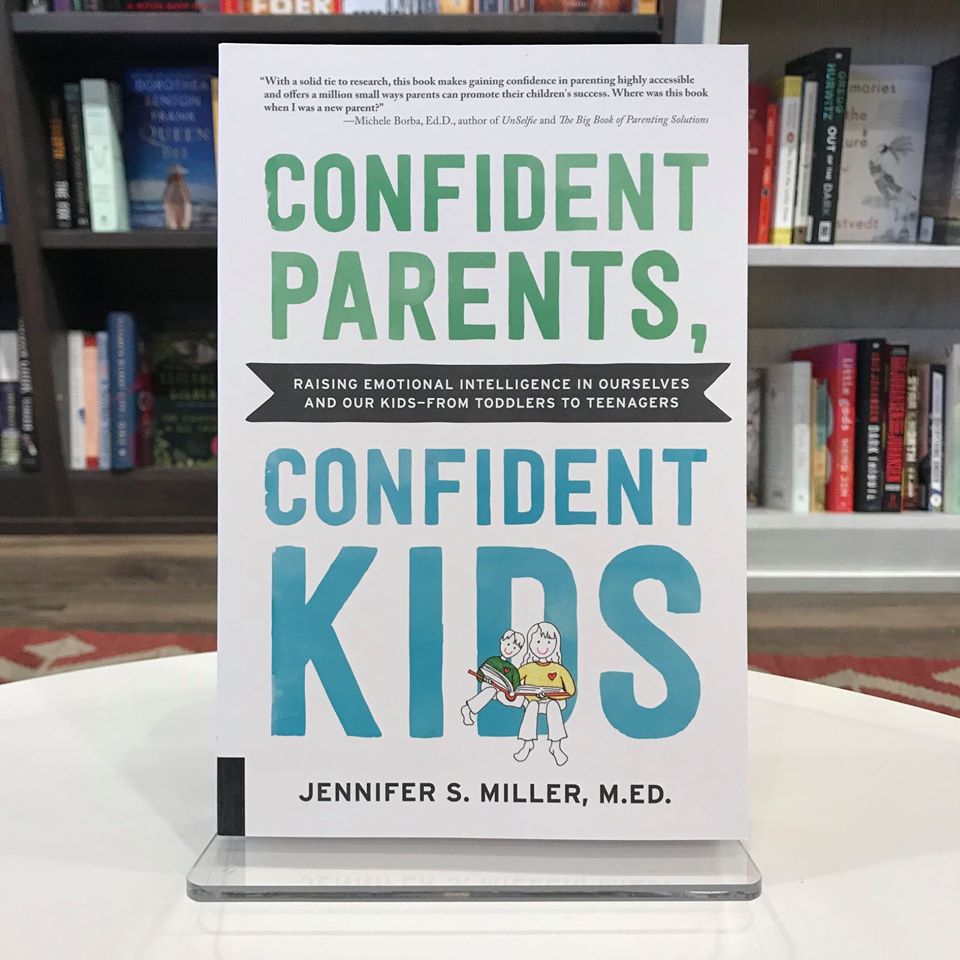
It is with great pleasure and delight that I announce the very first book from Jennifer S. Miller and this site: Confident Parents, Confident Kids: Raising Emotional Intelligence in Ourselves and Our Kids — From Toddlers to Teenagers.
When I asked fifty parents in a neighborhood Mom’s Club the question: “what one issue do you want to read a parenting book about?” – they responded: big feelings – mine and my child’s. How do we deal with them and promote confidence and emotional intelligence? So that’s precisely what this book is about.
Here are some numbers that tell a bit about the journey I’ve taken to publishing a book. I’ve:
blogged each week for over seven nearly eight years for a total of 481 posts;
developed nine distinctly different, full book proposals (about one per year) over that time;
surveyed countless (and of the ones I did count – 150!) parents to learn what they care most about and what keeps them up at night;
researched, wrote, and sent out specifically targeted query letters to 46 literary agents with mostly rejections, no response, or non-committal interest;
landed with my 47th – Tina Wainscott of the Seymour Agency – I am so grateful for you!!!!
conducted research with partners Shannon Wanless and Roger Weissberg to demonstrate the essential link between parenting and social and emotional learning (which is highlighted in this book);
expanded audience reach from family, friends, and collaborators to 22,000 followers and views in 152 countries and growing; and
engaged in countless collaboration discussions and projects with readers, contributors, researchers, educators, and other professionals who care about making a difference in the lives of families.
Last summer, I entered into a partnership with literary agent Tina Wainscott who took a look at my book proposal and instead of trying to reshape it to fit a pop culture view of what works in publishing, she encouraged me to deeply infuse it with everything that Confident Parents, Confident Kids has always been about. So I’ve been able to write and fully illustrate the book of my dreams, the one in which I tell the stories of our community, of our dialogue with one another about ways in which we can become more confident in our parenting and raise confident kids with small, simple, everyday practices that are tied to research. These practices promote kids’ and parents’ social and emotional development and as a result, offer ways to cultivate their inner resources and thrive. Quarto Publishing and the Trade Winds Press team not only loved the content and its potential to help parents but also, loved the illustrations and supported the development of a full-color book!
Thank you, Tina Wainscott, Amanda Waddell, Todd Conly, David Martinell and the whole team at Quarto/Trade Winds Press for making this possible — and doing it collaboratively. I am also especially grateful to my family – extended and immediate – who supported me through this intense process. I am grateful to CASEL and Roger Weissberg for the rigor and research you put into the social and emotional learning framework that is the backbone of this work. I am grateful to partner Shannon Wanless for her heart and mind and passion in collaborating on moving this work forward. I am grateful to the NBC team – Esta, Jamie, and Gabbi – for your rich partnership and expanding my reach! And to the many other CPCK collaborators pictured here, I thank you! And thank you, reader, for your role in making this possible! This book would not exist without your readership and participation in this critical dialogue!
I hope you’ll share this great news with anyone you know who is interested in reading about parenting! Here’s more on the book:
Confident Parents, Confident Kids lays out an approach for helping parents—and the kids they love—hone their emotional intelligence so that they can make wise choices, connect and communicate well with others (even when patience wears thin), and become socially competent and confident human beings.
How do we raise a happy, confident kid? And how can we be confident that our parenting is preparing our child for success?
Our confidence develops from understanding and having mastery over our emotions — and helping our children do the same. Like learning to play a musical instrument, we can fine-tune our ability to skillfully react to those big feelings that naturally arise from our child’s constant growth and changes, moving from chaos to harmony. We want our children to trust that they can conquer any challenge with hard work and persistence; that they can love boundlessly; that they will find their unique sense of purpose; and they will act wisely in a complex world. This book shows you how.
With author and educator Jennifer Miller as your supportive guide, you’ll learn:
The myths we’ve been told about emotions, how they shape our choices, and how we can reshape our parenting decisions in better alignment with our deepest values.
How to identify the temperaments your child was born with so you can support those tendencies rather than fight them.
How to align your biggest hopes and dreams for your kids with specific skills that can be practiced, along with new research to support those powerful connections.
About each age and stage your child goes through and the range of learning opportunities available.
How to identify and manage those big emotions (that only the parenting process can bring out in us!) and how to model emotional intelligence for your children.
How to alter challenging patterns we fall into responding to turnaround even our toughest moments into teachable ones.
Available for Pre-Order on Amazon and Barnes and Noble NOW. The actual release date will be November 5, 2019.
Shannon Wanless, Director of the Office of Child Development in the School of Education at the University of Pittsburgh and Jennifer Miller of Confident Parents, Confident Kids will be presenting a workshop in Baltimore at the end of the month. Come join us! We’ll be presenting at the national Social and Emotional Learning (SEL) Conference which brings together practitioners and some of the top SEL thought-leaders in the nation to learn best practices and strategies for effective implementation. The conference is targeted for professionals who work on behalf of children and youth –school administrators, state and federal officials, national experts, educators, psychologists, policy-makers, program coordinators, youth development workers, student support specialists, and counselors. It will be held May 20-22, 2019 at the Renaissance Baltimore Harborplace Hotel in Baltimore, MD. Registration is still open so check out this link to learn more or sign up!
Here’s the workshop Shannon and Jennifer will be presenting:
Two findings from a recent study conducted with 90 social-emotional learning professionals, who were also parents, concluded that parents care about their children’s social and emotional development and care about using social-emotional strategies in their own parenting practices. In this session, participants will learn how to communicate about social and emotional learning (SEL) when talking to parents, practitioners and scholars. While these groups are not far from each other in their values, sharing ideas and working together can, at times, be challenging when their words and examples are not aligned. Participants will explore vignettes gathered from SEL experts, who are also parents, that highlight the connections and the disconnections across settings. Additionally, evidence from school-based SEL research will be shared in terms of its applicability to parenting and ways the field might be informed by this rich body of work while adapting to the unique needs of parents. Participants will enjoy plenty of dialogue and interaction working to identify ways to translate best practices to parenting from varying cultural backgrounds and a wide range of family histories.
Today was “bring your child to work day.” And up until yesterday, I hadn’t planned on bringing my own child to work despite the fact that I’ve written about the concept in the past. My child, E came home from school saying other kids were going to their parents’ work. Couldn’t he come with me? I hesitated. “Won’t he be incredibly bored since I am either writing, illustrating or talking with others in meetings?” I thought. But I began considering how to involve him in those activities and realized that a.) it wasn’t that difficult to find ways to involve him; and b.) I could actually make it interesting so that he could learn about what I do. I found myself feeling grateful that I could help him understand the work that is so meaningful in my daily life.
I thought, since today is blog publishing day, that I would interview him about his perceptions on parents, on teachers, and on what he wants to learn about related to social and emotional skills. We took a selfie and from it, he drew this beautiful (keeping-it-forever) illustration of the two of us.
I also had a video conference meeting with the Making Caring Common Project at Harvard’s School of Education in which they were examining activities that could promote empathy. In advance of the meeting, my son helped review those activities and had numerous ideas to share.
It was well worth the short time it took for me to reframe my perspective from “all I do is sit in front of a computer all day” thinking to a full day’s work agenda that substantively involved my son and gave him a genuine sense of what I do all day. I encourage you to think about it. Any day can be “bring your child to work day”! How can you give your child an authentic experience of what you do?
Here’s my interview with eleven-year-old E Miller.
What does your Mom do for work?
She does parenting work and helps moms and dads better understand kids and helps them be better parents.
2. What do you think parents need to know and understand about kids?
Kids are very active. They are always excited and full of energy.
3. If you became a parent someday, what would be important to you to learn in becoming the best father to your son or daughter?
Punishing doesn’t help anything. Instead talk to him or her about why she or he did that and find a solution.
4. What do you think teachers need to know and understand about students?
They get bored at school easily and they do not know what to do about it so they play in their desks or start talking with their friends because they are not doing anything active. Punishing does not help anything so what I would do is make learning fun and make a game out of it.
5. If you became a teacher someday, what would be important for you to learn in becoming the best teacher for your students?
I would make learning fun.
6. What motivates you to work hard?
It’s different doing something you want to do versus something you don’t want to.
7. What do you think kids need and want to learn about their feelings?
If I’m really upset, I sit down to relax and calm down.
8. What do you think kids need and want to learn about making friends?
How to get friendships and how to keep friendships.
9. If you could offer one bit of wisdom to any and all parents, what would it be?
Be a kind person to kids because they are more delicate than you think.
10. After visiting your Mom’s work, is your impression of what she does the same as what you thought it was or different? In what way?
Different. I always thought you had a boring on-the-computer, editing job. Not doing fun stuff. But now, I see that you have a really fun work that you can do a lot of stuff. Super fun.
Hope you try out this worthwhile experience with your child!
“Mom, come quickly!” E says practically jumping up and down. “There’s a bluejay in our yard!” And this scene has played out over and again but with varying creatures – bunnies, beetles, and butterflies – oh my! If you have a patch of grass outside your door, there’s an opportunity for your kids to explore nature. Take them to a park and no screens, toys or equipment are required for discovery. In Spring, it seems we are all feeling “nature-starved” and ready to get out to experience the beautiful weather.
There’s strong evidence that points to a range of benefits for children who get outside and play. In schools, teachers have worried that taking kids outside will result in misbehaviors and a lack of control. But when they’ve tried it out, such as leading students through a park while creating field journals or tending a community garden, they found just the opposite. Students were more engaged and held greater focus on the learning taking place. (1)
And for families, there are significant benefits for discovering nature together including greater:
family connectedness
cooperation skills
empathy and perspective-taking skills
caring
sense of awe and wonder
motivation to learn (2)
One study compared a group of preteens who spent five days in nature with no screen time with a demographically similar group of preteens at home who engaged in regular activities including daily screen time.(3) That study showed that the children who spent the time in nature after only five days were more skilled at taking social cues including nonverbals and understanding each others’ emotions. That short time spent with peers in nature enhanced their abilities to connect and communicate with one another.
The experience of being in nature, appreciating and discovering and learning together as a family, is an incredibly simple and yet, powerful way to spend time together. You really only need to go for a walk together outside. But sometimes, we appreciate and can use a bit more structure and inspiration. So in celebration of Earth Day, here are some ideas for exploration at various ages and stages.
Preschool
Discover Bugs; Play Hide and Peek!
This game involves lifting up and peeking under any and every rock you can find and explore the world of bugs that lives underneath. Preschoolers will be thrilled by the pill bugs, worms, slugs and more that are just waiting to be discovered. The nine- and ten-year-old in the photograph below still find it exciting!
Track Animals
Go on a nature walk and look in the dirt for tracks. See if you can follow and attempt to identify various paw prints you see in the mud. And be sure to leave your own!
My son and his friend excavating behind the garage in search of bugs!
Early Elementary
Go on a Nature Scavenger Hunt
Print off one of the many checklists on Pinterest and head to the park or a woods nearby. Some lists are fairly simple and straightforward such as, find a stick, a stone, and a ladybug. Some are more involved such as, find litter, find an animal hole, or find a group of mushrooms.
Plant a Garden
Designate a small spot in the yard to dig up and allow your child ownership over the lot. Help her line the edges with rocks to divide the space. Pick out seeds at a local garden shop and consider all of the requirements for growing – sun, soil, water? Plant, tend, weed and marvel. If you plant herbs or vegetables, incorporate the crop into family dinners and your child can feel proud to have grown what you are eating.
Create a Habitat
You may select a cardboard box or else find a small place in your yard for your child to create a habitat. Consider what animals might want to live there and what they require to be happy? Will they need a water source? What kind of food will they gather? Help your child make a habitat for a local chipmunk, ant colony or mouse.
Middle to Late Elementary
Create a Nature Journal
You’ll need a few items in order to create a nature journal. Get a blank notebook. Fill a pencil pouch with colored pencils and a glue stick. And pack your camera (or camera phone if that’s the only option) too. Now head to a natural setting. The challenge is to recreate the natural setting in your notebook by drawing, taking pictures of and writing about the different aspects of the habitat you are experiencing. Draw pinecones. Write about the smell in the air. Glue pine needles onto your pages. Imagine getting it back out in the middle of winter. Would your notebook place you right back where you are? This activity can enhance a child’s discovery and appreciation of a place while adding their own creativity to the mix.
Assemble a Nature Art Collage
Go on your nature walk together with an empty bag for collecting. Pick up natural treasures along the way such as seed pods, buckeyes, and flower petals. Then, find a suitable backdrop like cardboard or even, a wood plank. Now arrange and glue (an adult may need to help if a hot glue gun is necessary).
Go “Creeking”
As adults, we can forget or simply underestimate the incredible lure of a trickling stream. You need no instructions for kids here. Just let them go (and make sure their shoes can get muddy and wet!). Skipping rocks, looking for crayfish, and finding fossils are all on the agenda here. In my experience, we have to practically drag our child away when it’s time to leave.
Middle to High School
Identify
Check out a field guide from your local library or bookstore. Find a natural subject that most interests your son/daughter. There are guides for fossils, rocks and minerals, plants, wildflowers, birds, woodland creatures, trees and more. Now head to the park or hiking trails and see what you can identify together.
Camp
Camping as a family does not have to require major equipment or planning. In fact, you can pitch a tent in the backyard or at a nearby nature preserve and enjoy the bonding that occurs because of it. Make a bonfire and share ghost stories. Take a hike. Pick out the constellations in the night sky. Leave your electronics behind.
In addition to all of the aforementioned benefits of getting out in nature with your children, it can have the added impact of calming us down and changing to a slower, more steady pace in contrast to our daily lives. Use this Earth Day as a reminder to find simple ways to appreciate nature with your kids and enjoy the many benefits of exploration together.
(1) Scott, G., Colquhoun, D., (2013). Changing spaces, changing relationships: The positive impact of learning out of doors. Australian Journal of Outdoor Education, 17(1), 47 – 53.
(2) Garst, B. A., Baughman, S., Franz, N. K, Seidel, R. W., (2013). Strengthening families: Exploring the impacts of family camp experiences on family functioning and parenting. Journal of Experiential Education, 36(1), 65-77.
(3) Uhls, Y. T., Michikyan, M., Morris, J., Garcia, D., Small, G. W., Zgourou, E., Greenfield, P. M., (2014). Five days at outdoor education camp without screens improves preteen skills with nonverbal emotion cues. Computers in Human Behavior, 39, 387-392.
This article responds to the question: “How can you become an ‘ask-able’ adult?” Whether you are a teacher or a parent, how can you be sure children are coming to you with their important questions and confiding in you with their problems and worries? This article is one of a six-part-series focusing on parenting with social and emotional learning including one article on each of the five research-based social and emotional competencies. This series is sponsored by the Montana Center for Safety and Health Culture and their helpful site: https://parentingmontana.org which offers many more tools and resources for building relationship skills! Here’s how this feature article begins…
“It’s sad our girls aren’t talking. How are they going to work anything out that way?” said Tara, the mother of Janie’s teenage daughter’s best and oldest friend. “I didn’t know they were fighting,” replied Janie as she walked away wondering why she hadn’t heard first hand about her daughter’s friendship woes. When she returned home, Janie asked her daughter about it. “Oh, it’s nothing,” was her daughter’s response. She recalled just last evening noticing the light on under her door late into the evening and could see her daughter’s tired, worn expression. “I can see you’re upset. And Mrs. Anderson mentioned that you and Cara aren’t talking. Won’t you tell me what’s going on?”
As Janie wondered why her daughter chose to struggle in silence, she thought about their conversations about Cara over the past months. Janie didn’t approve of how Cara pressured her daughter to take risks she might not otherwise take and had made that well-known to her daughter. Had her comments about Cara created a barrier between her and her daughter? Was she now not safe to confide in? Her frustration mounted as she tried to figure out what she might do or say to get her daughter talking again.
How does an adult become “ask-able” – the kind of adult with whom children and teens are comfortable coming to and confiding in? Parents and educators need to be able to help with smaller, everyday issues like when children and teens face simple friendship problems and the big upsets that accompany them... READ the full article here!
One reader and President of a Mom’s Club in Gaithersburg, MD writes, “on first reading...phenomenal! Exactly what I needed right now. I just started checking out books again, feeling like I was doing "something" wrong. I just wasn't feeling great about some of my interactions and felt like I needed a jump start. This blog is putting me back in the right mind frame. It is informative, supportive, yummy! It just makes me feel capable..and like I am talking to my best friend about it!”
Maurice Elias, author of Emotionally Intelligent Parenting and Psychology Professor at Rutgers University writes…
Confident Parents, Confident Kids “merits the attention
of anyone working in social, emotional and character development who wants a place to send parents for ideas and advice and dialogue.”



 next stage of moral development in which the care of others and their social relationships takes priority. This is also a time when children begin inventing their own rules among their peers through games. They weigh social values when decision making like belonging to a friend group, contributing to a team, or meeting parent and teacher expectations.