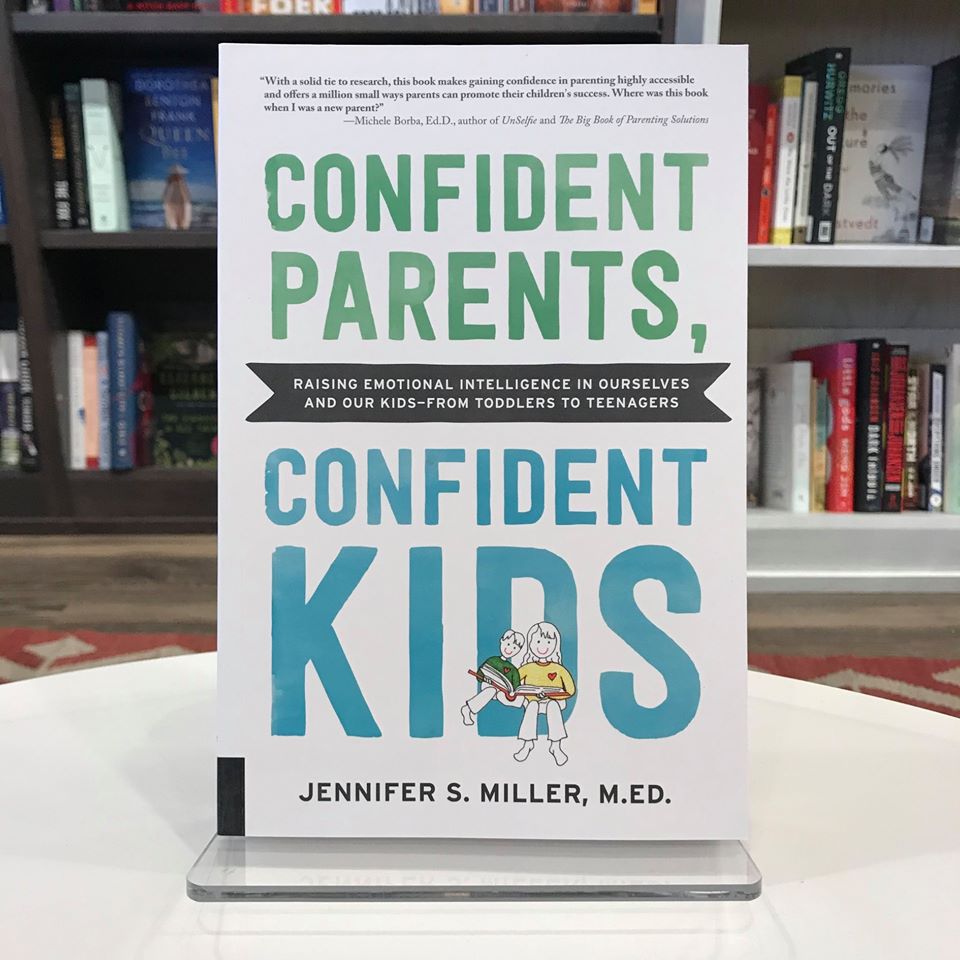
Join Confident Parents, Confident Kids’ Founder Jennifer Miller for a FREE online series hosted by Kristin Bednarz titled The Power of Purposeful Parenting beginning July 6, 2020 to discover how you can BREAK FREE from overwhelm and BE EMPOWERED to raise connected, confident, and compassionate children! Find the support and guidance to transform even the most challenging situations into opportunities for growth. Experts facing the same challenges you face each day will encourage you to let go of your expectations and give yourself grace when situations don’t always go as planned. You’ll be coached to respond to your children, rather than react, building a relationship based on mutual trust and respect. Best of all, you’ll join a village of trusted experts you can turn to when your questions arise and feel supported by a community of like-minded individuals.
Here’s what you’ll get out of these interviews:
Learning how to implement mindfulness and stay grounded as a parent.
Understand your child and how to nurture their growth and development.
Key strategies for dealing with strong-willed children and setting clear boundaries.
How to stop the fighting with your children.
Inspiration on ways to transform challenging behavior on a daily basis.
Handling strong emotions and building resilience in our children.
I particularly love the style of this conference because Kristin plans to run the conference videos each day for 21 days starting on July 6, 2020 so there’s plenty of time to take in this helpful content free!
Many parents and caregivers are spending more time with their kids these days. Wouldn’t it be nice to try a new family activity and receive a gift card while you’re at it?
Our friends at Harvard’s Making Caring Common are here for you! They are looking for parents and caregivers of kids ages 4-10 to join their parenting research project by Monday, July 6.
In 2018, I was invited to join the Parenting Advisory Board for Making Caring Common. Their team was in the early stages of developing new research-based activities for parents and caregivers, and they were hoping to learn from experts in social and emotional learning, early childhood development, and parenting. The goal was to create simple, fun, connecting activities for parents to use that could promote three areas research confirms are essential to children’s success including empathy, gratitude, and diligence. Since then, Making Caring Common has been developing and testing its activities, and now they are ready to hear from you!
I hope you’ll consider participating in the research and sharing your candid feedback with the Making Caring Common team. Participation involves one intake survey (link provided below) – which will include the list of activities to choose one from – and a weekly feedback survey for a month. You’ll get $5 per feedback survey completed, and an extra $20 if you do all four! MCC will also interview some parents, and give an additional $10. You just need to have one child between the ages of 4 and 10 to do the activity of your choosing with – ideally every week, for four weeks!
KEEPING YOUR RESPONSES TO STRESS, UPSET AND UNCERTAINTY HEALTHY
“It was all your fault,” I hear either as a real statement or the sub-text of an accusation from family members and with my whole body, I want to run. “I’ve gotta get outta here!” I think with a sense of pressing urgency. My survival personality is the runner. I don’t want to fight. I have great difficulty in the heat of a moment responding with words (yes, freeze is another of my survival responses) so my instinct with danger is to exit stage left. Yet, in family life, leaving may not be practical or possible. Running away may even escalate the problem along with the upset feelings if family members feel ignored or stonewalled by my quick escape. So, I’ve asked myself, how can I ensure my reaction – my words and actions – are constructive and healthy when I find my survival persona taking over?
When stress runs high or anger and frustration rule, individuals – adults and kids alike – become emotionally “hijacked,” a term coined by Daniel Goleman, author of the bestselling book published in the mid-90s, Emotional Intelligence.1 Our primal brain assumes full command control and our thinking centers on fight, flight, or freeze. And this reflex is rigged for our survival. If we met a tiger in the woods, one of these strategies might keep us alive. But we have to consider how these reactions play out in family life since, if we follow these impulses without consideration, they could potentially lead to harming others. As we know from experience, it’s can only be a short trip from following those impulses to regret and shame.
Friend Jared says that his instinct is to fight. He admits when tensions run high, he attempts to control everyone and everything to get a handle on the situation. And when he’s unable to control others’ choices, he lashes out with his words, criticizing or judging. Placing blame outside of him, finding someone who is responsible for his anger or sadness, is what he believes will make him feel better impulsively. When triggered, he struggles to control his impulses to attack back.
On the other end of the reactionary spectrum, Alyssa confesses not only that cannot she not think, but she cannot take any action. She freezes and feels stuck in the swirl of upset and stress. While others are fighting around her, she is silent and tunneling down a pit of a lack of control and helplessness.
Our instincts will change depending upon the situation that presents us with a threat. Our child becomes defiant and refuses to do their school work. Our urge is to fight. Our spouse is angry about a loss at work and his irritability makes you want to run. But our home life triggers are common and often, predictable. At times, they can catch us by surprise particularly as our children grow, change and challenge in new ways. But also, there are a number of triggers that return time and again. These are life’s do-overs. And if we view that in that way – a do-over – then, we always have a next chance to work on our reactions and manage them in ways that offer us a sense of agency – self-power – while building up – or at least not cutting down – our closest family members. If we use those predictable triggers as rehearsals for healthy responses, then we may just prepare ourselves for any of the surprises our children can and will toss our way.
Recognizing the Pitfalls and Assets of Your Own and Your Children’s Survival Persona
Because each of the primal brain’s survival reflexes were established to protect us from harm, they can each serve us in critical ways if we recognize and focus on healthy expressions of those reflexes. There are two well-worn paths, though, that can lead us down a destructive road. These are:
1.) Self-beating — If we’ve fallen into unhealthy versions of those survival stances in the past, we may be ready to mentally beat ourselves up for our reflex. “How could you think that, feel that, or act that way?” you may recite to yourself after a particularly stressful and upsetting battle with your child. But that self-beating won’t produce the kind of turnaround we need. In fact, guilt turned to shame whittles away at our self-confidence and our ability to feel a sense of agency. We become victim to our internal states and our external influences. And if we allow this to continue over and again, we can fall into a pattern of giving away our power leading us into anxiety or depression or both as we succumb to the forces inside and around us.
2.) Other-blaming – Though we may point the finger at our child’s defiance, or our partner’s insensitivity, or our neighbor’s rudeness, we can only control our own reactions to those behaviors. If we point to others for our stress and upset, we again give away our sense of agency. The power lies in “their” hands to determine our worth, our well-being, our experience. In fact, it’s only when we accept our role, our part we play in the problem and in the solution, that we can begin to feel control and power in any given challenge.
So in these uncertain times when many forces are out of our control — like when a vaccine will be successfully tested and widely distributed for COVID-19, like when systemic racism will be fully acknowledged by each human and addressed, like when we will be able to interact with other members of our community, friends, and family without barriers like political disagreements, fear of illness, or fear of safety — how do we recover our sense of agency? How do we recognize the assets of our survival mechanisms and take control of them, so that we only use those aspects of our impulses that are helpful and not harmful? “Agency is, fundamentally, the ability to slow things down, focus, and size up your current situation and make good decisions,” write Paul Napper and Anthony Roa in the book, “The Power of Agency.”2 In order to do this, self-awareness is a required first step. So consider the following questions for yourself (then, go back through the questions and consider how those you are closest to — your children, your partner, or intimate others — might respond to those same questions).
1.) Think about the past few weeks. When did you feel a sense of overwhelm, of a lack of control? What were the specific precipatating events that contributed to your feelings?
2.) Consider moments when you were put on-the-spot with upsetting interactions. Maybe you were attacked verbally by your child. What was your first impulse — fight, flight, freeze or a combination?
3.) When upsetting events occurred, what was your self-talk saying? Were you pointing the finger at others? Were you blaming yourself?
4.) If you’ve named a few events that have been upsetting or overwhelming, can you discover a pattern consistent between those events that contributed to giving away your power — or sense of agency?
What did you learn through these questions about your moments of intense upset about your impulses? These reflections are vital to understanding how you can play on your strengths, minimize your limitations, and practice healthy responses that do no harm to yourself or others. Let’s examine further those strengths to build on…
Harnessing the Assets of the Flight Response. Whether it’s your own or your child’s response to flee from the scene of conflict, this can be a significant strength if reflected upon, planned for, and utilized in healthy ways. Certainly if your child is in a dangerous situation with a peer where their safety is at stake, you want them to leave and quickly. But what if your child has incited a power struggle with you? If you leave the room without a word, that could be considered stonewalling or a passive aggressive response. They will feel the force of your removal and may get scared or feel rejected and hurt or both. Use this strength by preparing your family in advance that this is your survival super power. Decide on how exactly you will leave. What few short, memorable words will you plan to utter — like, “I need a minute.” — to exit the room and cool down before responding further. Practice with small incidents since you’ll need the rehearsal for the bigger, more heated moments in life. If you let your family know this, when you are in conflict, they will recognize you are taking care of your needs and may not feel the same kind of fear or rejection because you have prepared them. Now your response can be healthy and strong and you can regain a sense of agency.
Harnessing the Assets of the Fight Response. Though fighting has a mixed reputation – the thrills when we watch a movie with fighting, the fear and chills when we witness fighting, the fear of ourselves when we engage in fighting — we can learn the assets of fighting and use it to our advantage while ensuring that all stay healthy and safe through our responses. Yes, it’s possible. First, physical fighting in family life is never fair. There are only winners and losers in a family physical fight and we never want to put our intimate loved ones in the position of losing. So for any who have an impulse to hit or an impulse to throw things, how can you pause and manage your reaction so that you do not lash out? Maybe fleeing is the best option? But what about our words and our tone of voice and volume? In the heat of the moment, we may be ready to yell or we may impulsively want to criticize, blame, or name-call. These can be destructive to any relationship. And in fact, yelling will only increase your bodies’ anger as it feeds the hormones required to fight when you increase your volume. But we said fighting could be an asset and it can. The trick is to convert that fight impulse into assertive, confident words and actions. And the only way we can do that if fight is our reflex is to engage in the absolutely vital pause. Stop long enough for thinking to wash over impulse and feeling. And then ask, “what can I do here to not harm myself or others?” Or “how would I feel if I were on the receiving end of the words and tone I’m considering using?” Healthy family relationships require that we assert our own needs and boundaries clearly and specifically but in non-blaming, non-judging terms. Our reflections and planning for those moments can mean the difference between strengthening our family’s resilience or tearing it down.
Harnessing the Assets of the Freeze Response. In the animal kingdom, a number of creatures will play dead when they are being stalked or attacked and the tact often works. In our lives, the freeze impulse can further annoy or frustrate the individual who is already upset since their ability to think seems impossible and they cannot do anything in a heated moment. Yet in family life, sometimes freezing is precisely what is needed to initiate the deescalation down the heated ladder. As your child is throwing you a zinger, you are stopped in your tracks and paralyzed in that moment. If you know this about yourself, reflect on what you can do in those circumstances to take care of yourself and those around you. Maybe you need to plan to plop down right where you are standing, close your eyes and return to center? Perhaps you need to tell your family in advance that your typical impulse is to freeze and when you are in that state, you’ll utter the word “freeze” and ask your family members to respect that you’ll need time to recover in those upsetting times. If you do, you’ll use this freeze impulse as your super power and model for your children a powerful self-management strategy.
At the beginning of summer, I held a webinar for the Collaborative for Academic, Social and Emotional Learning CASEL Cares Initiative about the COVID pandemic and how we can support families. At the start, I asked participants to offer up how they were feeling. The most common response was overwhelmed. It’s no surprise that we are feeling that way since no one has been able to escape the stressors of this year. But we can become reflective about our responses to stress. If we do, we take back our sense of agency. Victor Frankl, author of Man’s Search for Meaning and concentration camp survivor wrote, “When we are no longer able to change a situation, we are challenged to change ourselves.”3 This is our challenge. This is our opportunity.
References:
1. Goleman, D. Emotional Intelligence. New York: Bantam Books, 1995.
2. Napper, P., & Rao, A. (2019). The Power of Agency; The Seven Principles to Conquer Obstacles, Make Effective Decisions, and Create a Life on your own Terms. NY: St. Martin’s Press.
3. Frankl, Viktor E. (Viktor Emil), 1905-1997. Man’s Search for Meaning; an Introduction to Logotherapy. Boston :Beacon Press, 1962.
Widen Your Family’s Circle of Concern through Children’s Literature
When we consider our child’s daily interactions with others, they may not get the kind of exposure to various skin tones, cultures, differing belief systems, or other income levels to expand their circle of concern. We want to raise socially aware and inclusive kids who are able to make connections with or act kindly to a person of any age, gender, ability, color, culture, or creed, but our neighborhood may not be conducive to forging those important connections. Ah, but the world of children’s literature can…and in the comfort of our very own homes.
Consider that story can act as a central builder of empathy, the skill of seeking to understand others’ thoughts and feelings. And empathy can be exercised and practiced and honed in our kids. In addition, the conversation of racial injustice can become uncomfortable with an accompanying range of big, complex feelings so books help provide a gateway aiding us in those necessary conversations. Deepen your own trusting relationship by reading and discussing together. Yes, point out differences and be certain to articulate the strengths of those differences. And then, also discover how many truly important commonalities there are between these characters from all parts of your city or the world and you!
Discover what daily life is like for kids all around the world! Meet children from over 40 countries and explore the differences and similarities between their daily routines. Over 24 hours, follow a wide variety of children as they wake up, eat, go to school, play, talk, learn, and go about their everyday routine in this stunning retro-style illustrated picture book. Gorgeous illustrations! This book is a must have. Published by Quarto Group.
By Michael Tyler, Illustrated by David Lee Csicsko
With the ease and simplicity of a nursery rhyme, this lively story delivers an important message of social acceptance to young readers. Themes associated with child development and social harmony, such as friendship, acceptance, self-esteem, and diversity are promoted in simple and straightforward prose. Vivid illustrations of children’s activities include a wide range of cultures.
Yes, this really is a kids book about racism. Inside, you’ll find a clear description of what racism is, how it makes people feel when they experience it, and how to spot it when it happens. This is one conversation that’s never too early to start, and this book was written to be an introduction for kids on the topic. This book helps young children learn about racism and how it hurts people and supports parents in raising this vital conversation in the preschool years.
By Patricia Hegarty, Illustrated by Ryan Wheatcroft
Through illness and health, in celebration and disappointment, families stick together. Some families are made up of many people, and some are much smaller.
Sometimes family members look like each other, and sometimes they don’t! But even though every family is different, the love is all the same. Illustrations many varied types of families.
Max wants to visit a beautiful boutique that sells handmade dolls, but he worries that other children will tease him. When he finally finds the courage to enter the store, Max meets Senor Pepe who has been making dolls since he was a boy in Honduras. Senor Pepe shares his story with Max and reminds him that, “There is no shame in making something beautiful with your hands.”
Lola loves writing in her diario and playing soccer with her team, the Orange Smoothies. But when a soccer game during recess gets “too competitive,” Lola accidentally hurts her classmate Juan Gomez. Now everyone is calling her Mean Lola Levine! Lola feels horrible, but with the help of her family and her super best friend, Josh Blot, she learns how to navigate the second grade in true Lola fashion–with humor and the power of words.
In Chinese, “peng you” means friend. But in any language, all Anna knows for certain is that friendship is complicated. When Anna needs company, she turns to her books. Whether traveling through “A Wrinkle in Time,” or peering over “My Side of the Mountain,” books provide what real life cannot—constant companionship and insight into her changing world.
Thoughtful, strong-willed sixth-grader Merci Suarez navigates difficult changes with friends, family, and everyone in between in a resonant new novel from Meg Medina. In a coming-of-age tale full of humor and wisdom, award-winning author Meg Medina gets to the heart of the confusion and constant change that defines middle school — and the steadfast connection that defines family.
A Newberry Honor Book, this moving story of one girl’s year of change, dreams, grief, and healing. Inspired by the author’s childhood experience as a refugee–fleeing Vietnam after the Fall of Saigon and immigrating to Alabama–this coming-of-age debut novel told in verse has been celebrated for its touching child’s-eye view of family and immigration.
When a tornado rips through town, twelve-year-old Ivy Aberdeen’s house is destroyed and her family of five is displaced. Ivy feels invisible and ignored in the aftermath of the storm–and what’s worse, her notebook filled with secret drawings of girls holding hands has gone missing. Mysteriously, Ivy’s drawings begin to reappear in her locker with notes from someone telling her to open up about her identity. Ivy thinks–and hopes–that this someone might be her classmate, another girl for whom Ivy has begun to develop a crush. Will Ivy find the strength and courage to follow her true feelings.
Life is quiet and ordinary in Amal’s Pakistani village, but she had no complaints, and besides, she’s busy pursuing her dream of becoming a teacher one day. Her dreams are temporarily dashed when—as the eldest daughter—she must stay home from school to take care of her siblings. Amal is upset, but she doesn’t lose hope and finds ways to continue learning. Then the unimaginable happens—after an accidental run-in with the son of her village’s corrupt landlord, Amal must work as his family’s servant to pay off her own family’s debt.
A young girl in Harlem discovers slam poetry as a way to understand her mother’s religion and her own relationship to the world. Debut novel of renowned slam poet Elizabeth Acevedo. Xiomara Batista feels unheard and unable to hide in her Harlem neighborhood. Ever since her body grew into curves, she has learned to let her fists and her fierceness do the talking until she finds poetry.
Perfect Mexican daughters do not go away to college. And they do not move out of their parents’ house after high school graduation. Perfect Mexican daughters never abandon their family. That was Olga’s role.
Was Olga really what she seemed? Or was there more to her sister’s story? And either way, how can Julia even attempt to live up to a seemingly impossible ideal? But Julia is not your perfect Mexican daughter.
At seventeen, Mei should be in high school, but skipping fourth grade was part of her parents’ master plan. Now a freshman at MIT, she is on track to fulfill the rest of this predetermined future: become a doctor, marry a preapproved Taiwanese Ivy Leaguer, produce a litter of babies. Can she find a way to be herself, whoever that is, before her web of lies unravels?
Enjoy expanding your children’s reading possibilities while also expanding your families’ circle of concern!
* Special thanks to Kimberly Allison and her school, Columbus Academy’s SEED diversity council for her/their outstanding recommendations!
Why Social Justice and Equity Are Essential to Social and Emotional Learning
By: Shannon B. Wanless and Tia N. Barnes
There is much to be proud of in the social and emotional learning (SEL) field, but we are struck by how much work there is to be done to see, value, and address the racial and equity-related dimensions of our field. Social justice and equity play a role in every social and emotional experience, but the majority of our research and practice still takes a colorblind approach. Without directly discussing, researching, and designing initiatives with equity at the center of our agenda, we are at risk of ignoring the powerful and ever-present role that racism and oppression play in social and emotional development. On the other hand, when we do welcome equity into our focus, we have the opportunity to enrich our field and to bring its strengths to social justice challenges such as becoming aware of our biases, standing up to inequities, and disrupting systemic injustices. Below are several ways that the SEL field could embrace this challenge by centering equity and justice at the heart of SEL.
First, the field needs to recruit, retain, and value the voices of SEL scholars of color. This is particularly important as the population of children in the United States rapidly becomes less white. We need scholars of color who can bring unique experiences and solutions to further develop the field and support this changing child population. For those in academia, examine ways that you can improve your recruitment and retention efforts for scholars of color. For those in the field at large, examine whether voices of SEL scholars of color influence your work, and if not, ask yourself why. Make efforts to seek out and include a greater diversity of voices in your syllabus, on your bookshelf, and in your reference lists.
CPCK Addition for Parents/Caregivers: How can we place authors of color and books about a widely diverse racial and cultural range of innovators, leaders and role models on our own bedside table and our children’s for reading this summer and beyond?
Second, as members of the SEL field, most of us did not experience formal education in social justice and equity. This is a gap in our training and we must commit to our own personal development and learning in this area. Social justice and equity should not just be buzzwords that we throw around but principles that we infuse in our life and our work. This includes reading broadly; engaging in workshops, classes, and conferences focused on social identities that we are less familiar with; and joining communities who are learning about social justice. It is essential to engage in this work with others so that we can build our tolerance for being called out and called in. Invite colleagues, students, and practitioners to join you in these spaces and make a point to model vulnerability and a willingness to challenge yourself, even in moments of discomfort.
CPCK Addition for Parents/Caregivers: How can we seek out news sources, attend local community meetings, and find events outside of our immediate neighborhood that allow our family to interact with differing races and cultures and learn more about how to promote social justice?
Third, our conceptualizations of social and emotional skills suffer from a lack of awareness of the central role that our social identities – race, culture, class, gender, ability status, and others – play in the way we value, express, and learn these skills. Enriching our conceptualizations of social and emotional skills must occur so that our research and practice may be meaningful for the children and families we serve. It is important to note, however, that authentic conceptualization can only develop when we are conducting research with colleagues and with communities that represent a broad range of social backgrounds. Moreover, seeing the fullest conceptualization of each social and emotional skill helps us to recognize the role that those skills could play in fighting racism, sexism, ableism, and other forms of oppression.
Over time, we will be able to see how harnessing the power of fully seen social and emotional skills may help us raise a next generation that is prepared to use SEL to fight inequities (e.g., see work on using bullying prevention to address prejudice by Dr. Jasmine Williams). Examples may include
Awareness of one’s own social identities;
Management of biases;
Awareness of others’ social norms and their nuances based on intersectionalities;
Ability to build relationships with people of different identities; and
Making responsible choices to stop discrimination and inequities.
To truly support the development of all children, we need a paradigm shift that not only focuses on the challenges faced by children but also on the strengths and resilience of each child.
CPCK Addition for Parents/Caregivers: As we enter new communities, how can we deeply listen for the thoughts and feelings of those with differing perspectives to learn? How can we use our inner coach to pause when discomfort wells up knowing that we need to feel through the discomfort — to hang in it — to allow for greater understanding? How can we suspend judgement long enough to allow different ways of thinking to take hold?
Fourth, as schools move toward supporting the social and emotional needs of students, SEL programming must be culturally responsive to support equity in social and emotional outcomes for all students. To support cultural responsiveness, schools can review SEL content and determine how to make it relevant and empowering to their unique student population before delivering the content. SEL delivery cannot be one-size fits all. It includes skillfully presenting social-emotional instruction in a way that acknowledges and honors the lived experiences of students and includes frames of reference that are familiar to students so that SEL is personally meaningful.
CPCK Addition to Parents/Caregivers: This also means that authentic communication and dialogue between teachers and families is essential. Schools not only need to open the door, but create open pathways for regular, small, ongoing communication that is safe and judgement-free to offer space for families to contribute their vital knowledge – the culture of their family – to help inform any social and emotional skill building strategies.
Finally, the SEL field is playing a major role in uncovering the importance of teachers’ social and emotional skills and how to support their development. The field has given less consideration, however, to the way teachers’ social identities and experiences with privilege and oppression influence their ability to enact SEL teaching practices, particularly when teaching children of different races, classes, and identities than themselves. To provide SEL instruction in a culturally responsive manner, educators need both cultural competence and social emotional competence (e.g., see work on using SEL skills during classroom conversations about equity by Kamilah Drummond-Forrester). When we help teachers to reflect on their positionality and how it plays out in their teaching, we may be enhancing the relationships they will have with their students and families, strengthening the efficacy of their social and emotional teaching, and helping teachers see and counter the biases and exclusionary practices they are at risk of utilizing with their students of color.
We see promising signs that the SEL and social justice fields are getting acquainted. For example, at the national level, there was increased focus on the topic of equity and greater visibility of scholars of color at the 2019 SEL Exchange. And at the 2019 business meeting of the SEL Special Interest Group in the American Education Research Association, a national group that we are both part of, there was a panel of scholars speaking about the ways their SEL research links to race and equity. There are scholars who are navigating the intersection of SEL and social justice (see SEL and equity work by Dr. Dena Simmons). Locally, we also see similar movements. For example, at the Office of Child Development at the University of Pittsburgh, our SEL program (HealthyCHILD) and our racial identity program (P.R.I.D.E.) are working together to find new ways to address everyday SEL challenges in early childhood classrooms, with a racialized lens. Finally, a new tool for teaching preservice teachers about race called My Racial Journey is being woven into our preservice teacher education courses at University of Pittsburgh and University of Delaware, as a way to expand future teachers’ own racialized thinking. There are more examples of people who are linking SEL and social justice and equity, and we are hopeful that they will inspire others, as they have inspired us.
In Dr. Beverly Tatum’s book, Why are all the Black Kids Sitting Together in the Cafeteria?, she describes her efforts to teach university students to reflect on their own “spheres of influence” and to consider how they might improve the ways race is conceptualized, lived, impacted, and changed in each of those circles. As the country mourns yet another black man murdered unjustly, we are taking Dr. Tatum’s advice and reflecting on our own area of expertise: social and emotional learning. In this sphere, we can all do better than we are doing right now. Join us in committing to set aside time and make safe spaces to grapple with your colleagues about ways we can strengthen the equity gaps in the SEL field and to raise a generation of students and teachers that are prepared to use their SEL skills to fight for social justice.
Shannon Beth Wanless, PhD, serves as Director of the Office of Child Development and Associate Professor in Applied Developmental Psychology at the University of Pittsburgh. Her work focuses on the intersection between scholarship and practice. She also serves as faculty fellow for Pitt’s Center for Urban Education and Motivation Center. Shannon’s research draws on her experience as a former Head Start teacher and Fulbright scholar. Her research agenda addresses real-world challenges in diverse, applied settings, around the world. Applying this approach to a specific field of study, her research focuses on helping early childhood educators use social and emotional teaching practices to improve children’s sense of psychological safety to learn at school. Specifically, the lab focuses on implementation science, social and emotional learning, and increasing teacher capacity to help children of all races and cultural backgrounds to engage in learning. Shannon is a mother to a rising sixth grade son and a rising eighth grade daughter.
Tia Barnes, PhD, is an assistant professor in Human Development and Family Sciences. In her current role, she teaches early childhood preservice teachers and conducts research surrounding social emotional well-being for minoritized populations. Dr. Barnes received her doctorate in August 2013 from the University of Florida where she majored in special education with an emphasis on emotional and/or behavioral disorders (EBD) and minored in research and evaluation methodology. She then worked at the Yale Center for Emotional Intelligence where her work focused on classroom environments for students with EBD and examining social emotional learning through a culturally responsive lens. She has published work in several journals including Infant and Child Development, the Journal of School Violence, Aggression and Violent Behavior, and Education and Treatment of Children. In her free time she loves to read, listen to podcasts, and play with her little ones. Find her at drtiabarnes.com or on twitter at @drtianbarnes.
A toolkit to help foster productive conversations about race and civil disobedience
“In a racist society, it is not enough to not be non-racist, we must be anti-racist” – Angela Davis.
Say Their Names. George Floyd, Breonna Taylor, Ahmaud Arbery, and the countless others that came before.
If you are planning on talking to your students or children about the recent racial violence or civil disobedience, please first read “Don’t Say Nothing” by Jamilah Pitts. This piece illustrates how vital it is to engage young people in conversations about race and racism, and Ms. Pitts lays out the argument better than we ever could.
We hope that you take this time to read, reflect, and engage with both the young people and adults in your life in conversations around how we can confront racism every day. Safeguarding our young people means that we all must do the work to think and act equitably, show up for our Black students and colleagues, interrogate our own biases, and live an actively anti-racist life.
Below are suggestions and strategies for educators and parents on having conversations with young people in school and at home about race, racism, racial violence, understanding biases, and how to take action for racial justice…
Are you asking the question, “What can I do?” Here’s your answer. This toolkit provides resources for each and every person who wants options on what they can do. Read and print this toolkit.
Thank you, Chicago Public Schools Office of Social and Emotional Learning and partner, Collaborative for Academic, Social and Emotional Learning for sharing!
The NBC TODAY Parenting team did extensive research to tell the stories of what families are going through during the COVID-19 pandemic. They examined what children are feeling and how stay-at-education and social distancing might impact their development. And finally, they asked experts like Jennifer Miller of Confident Parents, Confident Kids what we can do to support them through this tough time of uncertainty, fear and stress. Hope you’ll check out the following articles filled with insights from numerous families and numerous experts including Nadine Burke Harris, author of “The Deepest Well; Healing the Long-term Affects of Childhood Adversity,” pediatrician, educator on childhood trauma and Surgeon General of California. Here’s the three-part series:
“I feel like I fail all day, every day.” For parents in the coronavirus crisis, juggling work and parenting has never been tougher.
Some days, Ruth Milston-Clements feels like she’s doing well in quarantine. She and her two daughters are baking, going on bike rides, gardening and reading together. They’re slowing down, connecting and enjoying more family time.
Other days, she feels like she can’t do everything — or even anything — well…Read the full article.
There’s no question the coronavirus shutdown has been disruptive for children. How they weather the disruption may depend on the response they see from their parents, says California Surgeon General Dr. Nadine Burke Harris.
“They really get their cues about what this means from their caregivers,” says Dr. Burke Harris, a pediatrician and expert on child stress. “And so there’s an incredible opportunity… Read the full article.
Before coronavirus, 5-year-old Willa Carmenini wasn’t worried about monsters under her bed. Now she’s asking about them every night at bedtime, and she doesn’t like going outside her New York apartment.
“She says it’s the mask,” says her mother, Andrea Saraffian, though Saraffian suspects it’s more than that. It’s the rules about touching elevator buttons or avoiding friendly neighbors in the lobby. It’s the stress that her parents try so hard to hide.Read the full article.
In Uncertain, Stressful and Dangerous Times, How Can We Make the Best Choices for our Family?
“We rented a vacation home with one other close family friend thinking that situation could be low risk. But then, they surprised us when several of their cousins showed up with them.”
“The whole group of girls, friends from middle school, are riding bikes, going to each others’ houses and even hosting overnights. Our daughter feels like the odd one not going and is so we’ve said no.”
“Our family who lives out of town is hosting birthday parties and other gatherings and expecting us to be there. It’s heartbreaking to opt out of special occasions.”
Perhaps one or a similar scenario is one that your family has faced as we cope with a global pandemic with dangers still present while many stores, restaurants and businesses re-open. No matter your political leanings, no matter your perspectives on the pandemic, or on the economy and how it’s all being managed by leaders, a core issue for every family right now is understanding and dealing with responsible decision-making, a core social and emotional skill.
Responsible decision-making is defined by the Collaborative for Academic, Social, and Emotional Learning (CASEL) as “the ability to make constructive choices about personal behavior and social interactions based on ethical standards, safety concerns, and social norms. The realistic evaluation of consequences of various actions, and a consideration of the well-being of oneself and others.
Identifying problems
Analyzing situations
Solving problems
Evaluating
Reflecting
Ethical responsibility.”
This represents one of the most complex skill sets parents are required to tackle and also, involves our thorniest dilemmas. When we face a problem like the one above in which family or friends are challenging our comfort, our safety or our principles, we not only deal with the problem at hand. We have to confront our own impulses and desires. We have to deal with our own frustrations and upset and that of other’s close to us. Somehow, we have to manage our relationships and keep them healthy even when we are setting boundaries. And we have consider whether or not it’s a time to go along with other’s wishes or stand our ground. And of course, there are consequences to any of the choices – risks and rewards.
We are living in a time that is testing our courage. And how we respond is and will be our children’s model for responding to tough times. How will we show up as our best selves? As we dive into a new season with all the expectations of fun and connection that summer bring, it’s worth considering how we’ll respond when challenges arise.
Ethical decision-making is a full line of inquiry and models from business and leadership literature can become intricate and involved to help support top leaders in companies who must navigate highly complex social structures and make decisions without all of the information needed and with major implications to a full workforce. But we, as leaders in our own families, also require guidance and support as we face ethical dilemmas that test our practical sense and wisdom and rattle our trust as a family. In fact, research confirms that trust-building can be accelerated through consistent ethical behaviors and choices.1
In family life, we don’t have time to deal with complicated decision-making models. Yet we face extremely complex decisions regularly and our family’s trust is predicated upon whether or not we can make those decisions ethically and responsibly. Roger Weissberg, Chief Knowledge Officer of CASEL developed a simple social problem-solving process for schools to use in training children in responsible decision-making. The traffic light model is simple enough that we can use it as a guide in our family life to model adult choices and guide our children in their choices. Dr. Weissberg writes about the model that it promotes “consequential thinking.”2 Children and adults begin to think through the consequences of their actions prior to choosing how to act. And that kind of thinking promotes responsible decision-making.
This problem-solving model helps families deal with their impulses and with their big feelings, and allows for critical thinking before acting. This involves a host of social and emotional skills including self-awareness (what am I thinking and feeling?), social awareness (what are others thinking and feeling?), self-management (how can I manage my impulse to dive in when there are consequences and risks involved?), relationship skills (how do I preserve my relationships especially when needing to resist social pressures?), and finally, responsible decision-making (how can I do no harm to myself and others). Check out this simple, powerful model with guidance for parents on their own responsible decision-making. In addition, I’ve included ways in which parents can teach their children to use and rely on this process too. Print it out for your refrigerator to use as a helpful guide.
RED LIGHT
Stop! Calm down and think before you act.
No problem-solving is going to occur, no feelings repaired until all involved calm down. So take the time you and your family members need to calm down. Breathe! It’s critical for us as adults to do this as much as it is critical for our children. When you pause to breathe, you return your brain to full thinking capacity and can feel a sense of satisfaction that you are teaching your children how to do the same in tough situations.
Teaching children: Proactively practice deep breathing with your child this summer to reinforce your memory to use it and also, teach a valuable skills. You can use easy-to-use teaching methods to help kids practice deep breathing such as bubble blowing, ocean wave or teddy bear belly breathing (see “Understanding Anger” article for descriptions of each). Take a moment for some quiet time in your own spaces. Then…
YELLOW LIGHT
Caution. Feel. Communicate. Think.
Say the problem and how you feel.
Perhaps you and your partner, after pausing and removing yourself from a tense social situation, take time to discuss your choices. Share how you are feeling. In this examples above, there were a range of uncomfortable feelings from guilt to frustration to embarrassment. After you’ve accepted that you are feeling this mash-up of emotion, describe to one another your thoughts about what is happening.
Teaching children: Parents can model this by saying, “I am feeling frustrated that you and your brother are arguing. How are you feeling?” It helps to have a list of feelings at the ready so that if your child struggles with coming up with a feeling, he can pick one off of a list that best represents how he’s feeling. This practice alone will expand his feeling’s vocabulary and he’ll be better equipped the next time to be in touch with and communicate his situation.
Ask “what are our core principals?” Now, set a positive goal.
Yes, we need to have some core principals as a family that guide our decision-making. Some to consider for our current context might be:
We bring difficult decisions to the “we,” or discuss with one another before making a choice that impacts our family.
We seek out factual information (from medical experts and others) to understand risks.
We consider each family members unique level of risk (age, pre-existing conditions).
We prioritize safety, health and well-being including both physical and mental health.
We consider our impacts to others involved and the ripple effect consequences of our actions on other families.
We act in ways that promote trust among our family members.
We need to articulate our values with one another and which ones, despite all pressures, are worth standing up for. After you’ve become clear on your principles, then how can you use those to set a positive goal for your problem-solving together? For example, “we want all of us to remain mentally and physically healthy with our choice and not to harm others.”
Teaching children: With your child, have them think about what they want for themselves and the others involved. The goal may be as simple as, “I just want to get along with my brother,” or “I want to keep my toys safe.” Weissberg writes that setting a positive goal for kids simply means “How do you want things to end up?”
Think of lots of solutions.
We recently brainstormed as a family and it was the adults who struggled. We skipped to judging our ideas so quickly. So it takes some self-management skills to stop judging and only listen and offer potential ideas. But if we do, we’ll discover solutions we may not have come to otherwise. Take the time with your partner or in a family discussion to lay out many ideas before picking one.
Teaching children: Use a common everyday problem and before jumping to one solution, think of lots. “I could hide my Legos where my brother can’t find them.” “We could agree to ask one another before playing with the others’ toys.” “We could promise to repair anything we break.” Involve all who were a part of the problem to generate solutions. Children who understand there are many choices in a problem situation are less likely to feel trapped into making an unhealthy decision but can step back and examine the options.
Think ahead to the consequences.
“What are the risks if we say no to the family birthday party? What are the risks if we go?” Understanding the risks and potential consequences for our adult decisions may require research. What are the medical experts saying about risks and how to mitigate them? How can we show support for our family and maintain healthy relationships? If weighed carefully, we are much more likely to make a responsible choice and one that all family members can trust (even if there have been disagreements) and feel confident it’s been well-considered.
Teaching children: With the everyday conflict, parents can ask, “What if you tried hiding your Legos from your brother? What might happen?” Think through the realistic consequences with your children of their various solutions – both long and short term. “It might work tomorrow. But what happens when you forget in a few weeks and leave them out on your bedroom floor? Then what?” This is a critical step in helping children think through the outcomes of their choices before making them – important practice for later problems when the stakes are higher.
GREEN LIGHT
Go! Try out your best plan.
If we’ve discussed our feelings and our options as a family, if we considered our values and the potential consequences of our actions, we can proceed as a unified team trusting one another as we proceed. And we can return after the choices have been made to find out how it went and see if the process worked for us.
Teaching children: Maybe your children have agreed to ask one another before they play with the other’s toy. Try it out right away. See how it works. If it does not work, then talk about it and make slight adjustments or decide on another plan altogether that might work better.
Family meetings can be an ideal time to use this Traffic Light model too. Bring a problem to a meeting that concerns everyone. Select a fairly low stakes problem for the first one to raise at a family meeting. Gain practice with the model and with all family members collaborating on a solution. Watch as your skill as a family progresses and you are able to bring hotter issues to the table.
Though each family is experiencing their unique set of struggles whether financial, health or social, we all need to consider how our decisions are impacting ourselves, our family, and our community. Every challenge in our lives is an opportunity for learning, a chance for us to hone our own social and emotional skills and build those essential inner resources in our children. May you seize the chance to reflect on those inner strengths and ways in which you can model and build them. Have a safe, healthy and happy summer!
References
1. Hosmer, L. (1985). Trust: The connecting link between organizational theory and philosophical ethics. Academy of Management Review, Vol. 20(2) 379–403.
2. Weissberg, R.P., Jackson, A.S., & Shriver, T.P. (1993). Promoting positive social development and health practices in young urban adolescents. In M.J. Elias (Ed.). Social decision making and life skills development: Guidelines for middle school educators (pp. 45-77). Gaithersburg, MD: Aspen Publications.
Creating Reflective Opportunities to Support the Transition during #COVID-19
Motivation to engage in school work may just be at an all-time low as public places slowly begin to reopen, the sun shines a bit brighter, and the end of distance learning for the 2019-2020 draws near. Children may be excited about the freedom of summer ahead. Parents may be eager and ready to shed the pressures of supporting school assignments each day at home. It’s tempting to race blindly forward without looking back.
Our strange loss of a sense of time during stay-at-home education comes from the lack of daily transitions that move our bodies and minds from home to work or school and back home again. We are coming up on a similar moment where there will be a major life transition yet without a change in physical location or any of the celebratory events that help children and adults signify the end of another school year. And that can be disorienting for all family members. So there is a significant value in taking a moment to reflect on the growth of the past year – friendships, academic progress and newly developed interests and also, specifically how we’ve grown and changed as a family during our quarantine.
“We do not learn from experience. We learn from reflecting on experience.”
– John Dewey, Renowned Educational Reformer and Psychologist
Your child will never experience this grade level again during a global pandemic. Children may be sad to leave their teacher, their connection to class friends and the predictability of the school-at-home routine. Despite the stress of distance learning, they may worry about the loss of the stability and consistency that the school schedule and connection provides over the summer. They may also fear the uncertainty to come including reentering public places with the danger of the corona virus still present and the unknowns of how summer might be fundamentally different from years past because of the many public restrictions and virus risks.
There are some small, simple steps you can take to ease the transition and also deepen the lessons of their year and also, the last several months through reflection. Here are a few suggestions.
Reflect on Defining Moments.
Retell the defining moments. Be sure to discuss in what ways your family was resilient and strong during stressful times. In your ________ grade year…
What was the most surprising thing that happened?
Did you make any new friends?
When did you feel embarrassed?
What made you belly laugh?
What were you most proud of learning?
How was it challenging? And what helped you get through all of the changes?
Reflect on Learning from Home.
During our COVID-19 distance learning experiment over the past couple of months…
Do you recall the first day or week of learning at home? What were you thinking? What were you feeling?
How is our family different from life before COVID-19?
What have you found that has been joyful or connecting during our quarantine?
How have we helped one another?
How has connecting with friends changed? Are there any new ways of connecting that you enjoy?
What school projects or assignments were you most proud of accomplishing?
What unexpected benefits came from stay-at-home education?
How did you deal with your fears and stresses?
What bigger life lessons did you learn during this time of sustained crisis?
Reflect on Big Feelings and the Opportunity of Now: Practicing Resilience.
If we tried (in the pre-COVID world) to hide the fact that we have all-consuming, intense emotions at times, then we cannot hide anymore. The seismic shifts globally and the uncertainty of a threat that lurks right outside of our door has been enough to rattle our sensibilities, every one of us. If the not-so-hidden opportunity of this moment of quarantine might be practicing and promoting resilience in times of trial, how can you take time out to seal in and ensure that learning by reflecting on it?
No, none of us managed our big feelings throughout this process perfectly. In fact, for most of us, there was a lot of mess. But if we talk about our big feelings, accept that there’s been fear and stress, and consider how we reacted and how we might react better, we just might learn important lessons that will assist us as we move into an uncertain summer. Some specific questions to guide you in this discussion might be:
What have been our fears throughout COVID-19 and distance learning?
What have we done to acknowledge or manage them?
When did our fears get the best of us (or we reacted in ways we didn’t like)?
When were we proud of how we handled ourselves and/or worked together as a family?
How can we learn more about managing our fears?
What can we do in the future when one or more of us is feeling fearful or stressed?
Share Your Gratitude for Your Teachers.
Yes, teachers also experienced a wide range of big feelings as they had to change their mode of teaching and learning in the blink of an eye. Though parents were in the midst of scrambling ourselves to figure out how to manage our household, our work responsibilities, the dangers of COVID19, and how to support distance learning, we may have not seen the challenges teachers faced. Yet, we know they indeed endured their own set of struggles. No matter how they managed the situation, they put their time, effort and considerable worry into reaching you and educating your children. So now more than ever, it’s critical we offer our thanks. Consider creating a simple family video of your thanks to show your appreciation. Your sincere words will mean much more than a potted plant or a gift card this year.
Talk about it a bit before getting your video rolling. You might ask your child: “What were some of your favorite activities you remember from this year? Why is your teacher so special? Do you remember a time when your teacher was especially kind?”
Go on a Digital Parade Walk or Create a Temporary Museum of Learning.
You likely have a pile, a bin or a busting-at-the-seams binder (as we do!) of school work from the past year. Before recycling or filing away, why not use the accumulated papers as evidence of learning and growth and a tangible way to reflect on that progress? Use your home as a museum. Place the school work in the order of the school year starting in the fall. Line them up across chairs, the couch and on end tables for display. I line the dining room with rope and post papers and artwork with clothespins.
Walk around as a family and talk about what you notice particularly when you note positive developments. With a little support from you, your kids may be excited to put together the museum themselves. With multiple children, use different rooms of the house and you may have a full academic museum for an evening.
Is your child’s work all online from the past months? Then do a digital parade of work and gather around the computer. Go through her assignments, comment, laugh, reflect and bask in the glow of your collective hard work as a family getting through distance learning together!
Do the big book line-up.
It’s likely that most of the books your child read this school year are hanging around your bookshelves. Why not create a temporary display? What a sense of accomplishment to see a book sculpture with all of the stories you’ve read, learned from and enjoyed since the school year start. It may even spur conversations and reflections on your favorite characters and stories! It may also encourage further reading this summer and inspire a new stack for the coming months.
Create a time capsule.
A terrific early summer activity might be to generate a time capsule in memory of this past school year. There will likely never be another school year quite like this one! Use this free printable time capsule to help guide you. Or work with your child to find and decorate a shoe box or other container and mark with the name of the child and dates of the school year. Now ask your child to consider their older self. What if he came across this time capsule hidden in the attic years later? What items would help him remember the unique attributes of this past school year?
Celebrate learning.
Show how much your family truly values the process of learning. Celebrate together the accomplishment of a school year filled with hard work. Make a picnic in your backyard. Bake a special treat. Decorate as if it’s a holiday. Take a moment to recognize this major change.
“Great is the art of beginning, but greater the art is of ending.”
“Reread and reflect on the childhood stories that shaped you and see what they say about your life today,” was one of the instructions from an online class on clinical psychiatry my husband was been taking during the #COVID-19 Quarantine. This was an easy assignment since he had begun reading “The Hobbit” by J.R.R. Tolkien with my twelve-year-old son the moment we were asked to educate at home.
Reading about the bravery required by the hobbit Bilbo Baggins to master his own fears in the cave before reaching the dragon made my husband and I pause as we considered our current situation. Dangers abound the moment we step outside of our door and into the world of the pandemic where any person may be a carrier of a disease that is rendering some injured, some recovered, and others dead. And each of us, as the world begins to reopen will need to access our own inner wisdom if we are going to face the dragon. How will we need to be brave? How we will need to consider ourselves, our family, and the greater good in making decisions about going in public and connecting with others? Leaving the shire was terrifying for Bilbo but he knew he had to do it. But how he proceeded on his dangerous journey was key. Indeed he relied on friends and wise teachers as guides along the way but there was a pivotal moment when he had to face the darkness alone. Read the full article on the TODAY Parenting Blog.
NBC Learn and the NBC Parent Toolkit have merged with TODAY Parenting so all of the past helpful resources are being relocated and all of the new articles will be on the TODAY Parenting Blog. Hope you’ll check it out!
One reader and President of a Mom’s Club in Gaithersburg, MD writes, “on first reading...phenomenal! Exactly what I needed right now. I just started checking out books again, feeling like I was doing "something" wrong. I just wasn't feeling great about some of my interactions and felt like I needed a jump start. This blog is putting me back in the right mind frame. It is informative, supportive, yummy! It just makes me feel capable..and like I am talking to my best friend about it!”
Maurice Elias, author of Emotionally Intelligent Parenting and Psychology Professor at Rutgers University writes…
Confident Parents, Confident Kids “merits the attention
of anyone working in social, emotional and character development who wants a place to send parents for ideas and advice and dialogue.”