The Chance to Wait

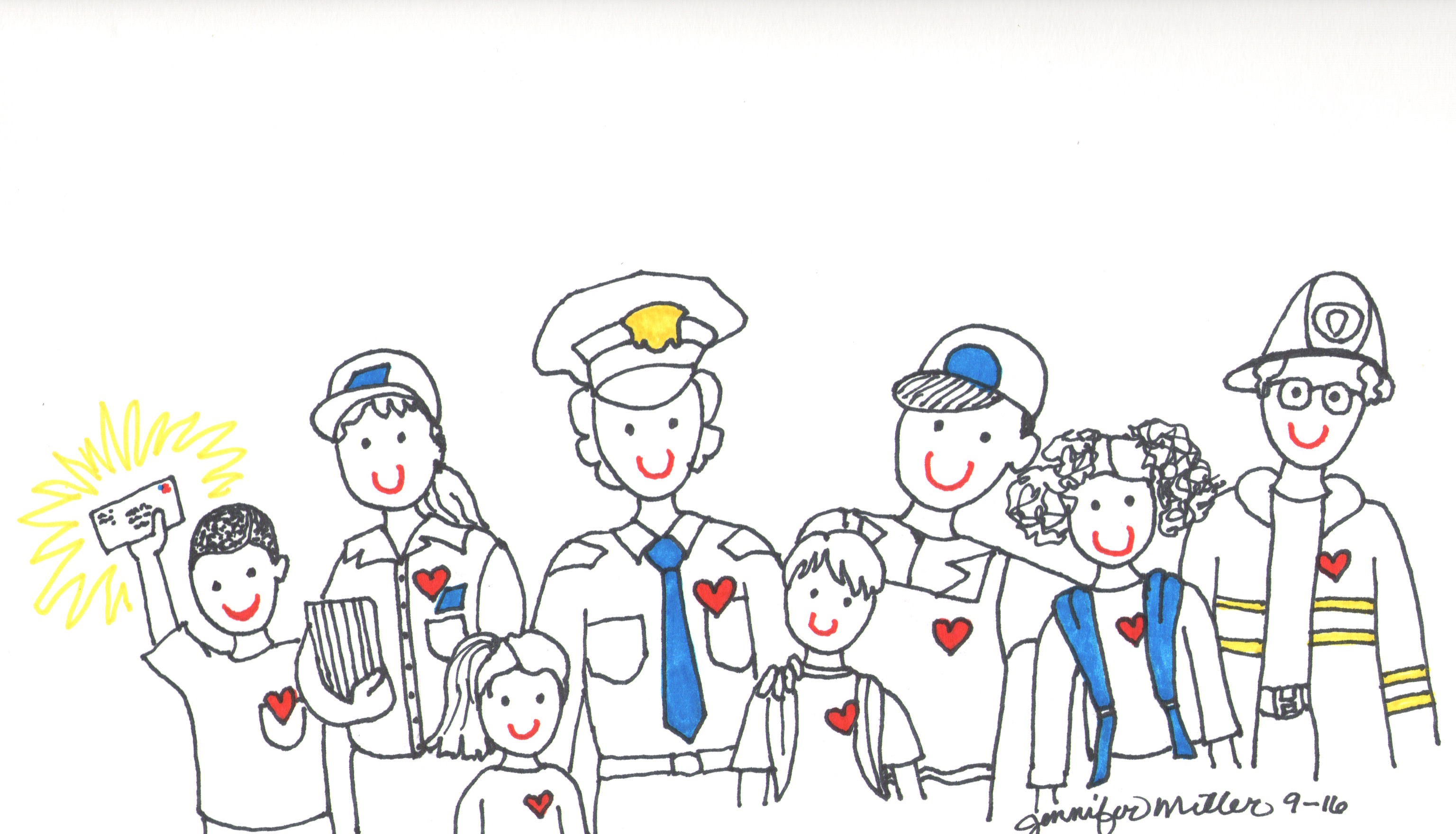
Wait for It Illustration by Jennifer Miller

I grew up with six brothers. That’s how I learned to dance – waiting for the bathroom.

– Bob Hope

“Are we there yet?” This is the common refrain from the backseat on the long road trip to Grammy’s house. We “moo” at the cows. We examine the red barns. We talk about the funny words on signs like “Woussickitt.” My smart phone, e-reader and laptop are all safely packed away. We don’t need them. We are practicing waiting.

First, you may ask, who cares and why is waiting so important? Even the word “waiting” may strike an annoying chord within you because it involves patience and self-control. But it’s worth the effort because it can allow for reflection and deeper, more creative thinking and support the delaying of gratification in order to pursue higher goals. It can promote family connectedness and even impact academic achievement.

Educators have been using wait time since the 1970s to prompt better listening, thinking and involvement with questions in the classroom. A teacher’s typical response time to a student’s comment is one second. But if teachers ask a question and allow more wait time, student’s responses begin to evolve with the use of logic and higher level thinking processes. Also students in classrooms with shorter wait times were found to be more restless than ones with longer ones.1 Though it may seem counterintuitive, slowing the pace and allowing empty space creates opportunities for children’s minds to focus.

As with any learned skill, children need practice. They will have limited ability at first. Set a timer and create a “wait challenge.” The reward only need be the accomplishment of waiting for the time you allot. At a time when your children normally watch a video, you may say, “Let’s set the timer for one minute and see if we can wait that long before we watch television.” The true test is if you can wait alongside your children without engaging with your phone or other device. That modeling will be necessary if you ask them to do it. The following are additional examples of how waiting may fit into your busy family life.

After School Catch Up
“How was your day at school?” you ask genuinely hoping for something, anything to give you a clue about his experience. When a sliver of silence creeps in, you continue “What did you do? Did you have gym last period? How’d that go?” Your tired boy responds, “Fine.” And then, you move on to the next activity. But what if you had let the first question hang in the air and patiently waited? Maybe he will have time to remember that he played an exhilarating game of huggie monster tag at recess.

Running Errands
“I just know he’s going to have a melt-down right in the middle of the Kohl’s return line. It’s just easier to give him my iPhone and let him play a game.” You may have similar thoughts as you try to accomplish tasks with children in tow. And yes, he may have a melt down the first time you don’t provide entertainment. You may even have to leave the store. But be consistent, and he will accept that waiting is to be expected.

Kids’ Requests
The next time you hear, “Mooooooom, I need a snack!” from a room away while you are up to your elbows in dish soap, you may want to let your child know that you’ll help him when you are finished. Each person in a family has needs which should be respected. Dropping everything is not necessary in order to be a responsive parent and in fact, may add to your own feelings of resentment over time.

Perhaps the biggest challenge for you, or any of us who require caffeine to get through the day with children, will be the self-discipline to model waiting and become a regular practitioner. If you succeed, the payoff will be great. It will come when you least expect it. That moment when your car tags are about to expire and you view the epically long line at the BMV, you and your children will be ready. They will know waiting is a part of “the way things are.”

Like a pencil in a backpack, your children will bring the skill of waiting to school with them. It will extend their ability to focus. And they will bring their best selves to academic problems since they won’t need constant entertainment to remain stimulated. If we offer children the chance to wait, the space to focus and think for themselves, we offer them the chance to develop a critical tool for success. They will be prepared to be thoughtful and contributing individuals.

Rowe, M.B. (1986). Wait time: Slowing down may be a way of speeding up! Journal of Teacher Education. Sage Publications: 37; 43.

Originally posted on May 14, 2014

The Power of Parenting with Social and Emotional Learning

GS_SmartParentsNonTech-400x400_08Jan2015

Check out the latest article by Confident Parents, Confident Kids author Jennifer Miller on the “Smart Parents” blog series published by influential educational reformer, Thomas Vander Ark and his team at Getting Smart. The article will also appear on the Huffington Post Parents blog later this week!

The Collaborative for Academic, Social, and Emotional Learning (CASEL), a field leader in advancing the science and practice of social and emotional learning in education, has begun a collaboration on “Parenting and Social and Emotional Learning” with experts Roger Weissberg, Chief Knowledge Officer of CASEL, Shannon Wanless, Assistant Professor of Psychology in Education at the University of Pittsburgh and Jennifer Miller, author of Confident Parents, Confident Kids and Contributor to NBC’s Parent Toolkit. This is the first article written for this collaborative project with more to come.

Here’s the introduction…

The Power of Parenting with Social and Emotional Learning

On the one hundredth day of school, my son’s teacher morphed each first grade child’s photograph into an elderly individual with the facial lines of life experience and asked, “What do you want to be like when you are 100?” My son wrote in response, “I want to be kind to kids.” And I immediately thought, “Yes, me too.” It seems simple. But is it? As parents, we want to prepare our kids to be successful in life but figuring out what that means and what steps can be taken toward that intention each day seems anything but simple. Yet the question of what it takes to prepare kids for success is worth asking. A recent survey from NBC’s Parent Toolkit using the Princeton Survey Research Associates International found that the majority of U.S. parents interviewed ranked social and communication skills as the most important to build success for school and life even beyond academic grades. National experts would agree and offer greater detail on what those skills are.

Social and emotional learning (SEL) involves acquiring and effectively applying the knowledge, attitudes and skills to understand and manage emotions, set and achieve positive goals, feel and show empathy for others, establish and maintain positive relationships, and make responsible decisions (CASEL, 2013).

Follow this link for the full article. 

Thanks Thomas Vander Ark, Bonnie Lathram and Smart Parents for the chance to contribute!


Empathy, Kids and Nature

Feeding Backyard Animals 2 by Jennifer Miller

We must widen… “our circle of compassion to embrace all living creatures and the whole of nature in its beauty.”

– Albert Einstein

“Feed the birds, Mom. Don’t forget today,” E tells me with fervor on one of the last freezing cold days of Winter while the birds chirped longingly for Spring. He heard them on our short walk to our car before school and recognized their need for food. And I appreciated the prompting. Empathy, though crucial to our very survival, is not unique to human beings. Researchers have documented the origins of empathy in numerous animal species. 1 And if you have ever had a pet dog or cat, you likely have experienced this firsthand. When a family member is crying, a cat will come over, sit on the person’s lap, purr and generally, offer comfort. Empathy, our ability to feel another’s feelings and take another’s perspectives, is evidenced from our earliest days when infants cry at the sound of another’s crying. In primates, it’s true as well. But when outsiders pose a threat (in the primate and human worlds), the feeling changes to defense and sometimes aggression. The greatest challenge of our time, writes Frans de Waal an expert on primates, is the “globalization by a tribal species.”1 In other words, empathy, moral thinking and collaboration are more supportive of our global inter-dependence in contrast to competition, defense and us-and-them thinking.

Though we have a natural proclivity toward empathy in conducive circumstances, the skills and thought processes of empathy can be cultivated and honed throughout childhood. In fact, children who demonstrate empathy also show greater social skills, healthy friendships and academic achievement.2 There’s strong evidence to support parents’ significant role in the development of empathy. Parents who are responsive and non-punitive help children develop higher levels of prosocial behavior.3 In addition, there are numerous ways parents and schools can influence the development of empathy. Talking about feelings, exploring consequences to actions and facilitating caring behaviors all contribute.

Springtime is a perfect opportunity to connect to the natural world around you and involve your child in the practice of caring and empathy for other living creatures. My son has been gently moving an extended ladybug community in our bathroom to the outdoors. Even the smallest act can demonstrate the seeds of moral development. Get outside with your children. Explore and while doing so show your respect and care for other living beings. In addition, here are some other ideas to try.

Plant a seed.
E and I have been busy planning for the new vegetable garden we are putting in this year. He cannot wait to plant pumpkin seeds, tend to them and reap the harvest in the Fall. Simply planting one seed whether it’s in the yard or in a cup in your window will give children the experience of tending to a seedling, caring for it and watching it grow.

For more specific ideas and guidance, check out http://www.kidsgardening.org from the National Gardening Association.

Take a nature treasure walk.
Kids don’t have to be convinced to look for natural treasures on a walk. On our walks in central Ohio, we can easily find buckeyes, rocks – some with fossils, bird feathers and more. Along the way because of your careful observation, you might spy interesting creatures running up trees or under rocks. Create a box or other repository for your treasures and at season’s end, display your collection.

Care for your backyard animals.
We fed a resident bunny with carrots over the long, cold winter and delighted in watching the carrots disappear overnight. Putting out nuts for squirrels and chipmunks or birdseed to attract local birds can be a delight and a process of discovery for a child.

Pick up litter.
Doing any activity to clean up the environment will help show care. Wear gloves and go to your local park and pick up trash. Talk about the effects of litter on animals that might live there. Perhaps, take a picnic snack to enjoy at the end of your efforts to bask in the beautiful environment to which you’ve contributed.

Create your own species list.
Avid “birders” create a “life list” in which they note every type of bird they have the chance to view. Do this over the Spring and Summer. Take a notebook on your walks and note the different species you observe. If you find a creature you cannot identify, look it up together and learn more about it.

Photograph or draw beauty.
With a camera in hand or a drawing pad at the ready, you and your child may notice details you had not previously observed. Participating in nature as an artist helps enhance your own sensitivity to the environment. Your keen observation can also contribute to feelings of empathy.

In this season of rebirth and new life, being intentional about the experience of nature with your child can enrich your experiences and deepen your connection. It can also help widen your family’s circle of compassion.

References

1. Waal, F. D. (2010). The Age of Empathy: Nature’s Lessons for a Kinder Society. NYC, NY: Broadway Books.

2. Bonner, T. D., & Aspy, D. N. A Study of the Relationship Between Student Empathy and GPA. Humanistic Education and Development. 22/4 (1984): 149- 154.

3. Eisenberg, N. (ed.). Empathy and Related Emotional Responses. No. 44 in New Directions for Child Development series. San Francisco: Jossey-Bass, Inc., 1989.

Elements of a Confident Kid…Artistic

Elements...Artistic by Jennifer MillerElements of a Confident Kids by Jennifer Miller

– exhibiting sensitivity

Art

– the creation of works of beauty or other special significance

– the exercise of human skill

– imaginative skill as applied to representations of the natural world or figments of the imagination

Being artistic is a human desire, one we all possess by virtue of the fact that we want to be known and accepted for who we truly are. We are all born artists though we develop our outlets for self-expression in diverse ways. It remains a mystery why a child gravitates toward any one interest sometimes fully of her own accord when others around her are not involved in that particular subject. Being artistic brings feeling, thoughts and actions together. A child acting on artistic impulses feels a passion or enthusiasm for a subject or medium and without inhibition explores that desire.

“Listen to this!” Michael says each time he comes over to play. He may be plunking out notes on the piano, strumming the guitar or expanding and contracting our toy accordion. Whatever the instrument, he initiates playing music while our son never touches any of our music making tools. “Do you have paper?” Theresa will invariably ask. She wants to draw animals and will do so regardless of the play others are engaging in. E instead will design elaborate train track systems or line the entire living room with a patchwork of pillows following his own aesthetic sense.

Developing the artistic side becomes increasingly more challenging as a child grows. There are numerous ways self-expression is squashed or discouraged. “Trees don’t look like that,” a teacher might say. Or a dad might comment, “That doesn’t sound like music to me.” Though trial and error is part of the learning process and an important part of artistic exploration, some children never have the opportunity to explore because the peers and adults around them frequently tell them they are wrong. For a child who is keenly attuned to learning social and cultural norms from other’s cues, those comments can shut down exploration indefinitely.

And why is artistic exploration important for any child? Because a journey of discovery helps a child understand his own sense of identity, being artistic is an essential part of development. Denying intense feelings exist has detrimental consequences for the individual. He puts up walls that do not allow others access to his true self. And in doing so, prevents the establishment of healthy, intimate relationships. Suppressing artistic pursuits makes children, and adults for that matter, feel that some aspect of who they are is unacceptable, unworthy of expression.

In addition to the ability to explore one’s identity through artistic expression, a recent article in The Washington Post articulated ten critical skills children learn through the arts. They are creativity, confidence, problem solving, perseverance, focus, non-verbal communication, receiving constructive feedback, collaboration, dedication and accountability. In addition, a number of research studies are confirming that doing art has a calming effect and is increasingly being used as therapy with children diagnosed with ADHD or Autism.

Promoting Your Budding Artist

Listen, Observe and Provide Opportunities
Children will tell and show you exactly what they are interested in pursuing. The trick is to really listen and observe. What kinds of activities do they engage in with their whole self? Often the play that consumes their focus and puts them in a sense of “flow” will indicate the kind of self-expression they desire. Provide the tools of the trade, camps, classes or experiences that allow a forum for expression.

Step Back
Often our toughest role as parents is holding our comments. We are tempted to save or correct as mistakes occur or children are less than we hope they might be. But it’s critical to remember that giving them the chance to falter will also give them the chance to improve. The best policy with children’s self-expression is to resist commenting – positive or negative. Artistic expression is a subjective experience. If you offer judgment, you risk your child losing passion for the art itself.

Facilitate Creative Thinking through Open-Ended Questions
Creative thinking is a powerful life skill that can enhance relationships, increase problem solving abilities, and even impact academic performance. Children who are practiced at thinking of alternatives to a problem will perform better on high stakes tests and work more effectively in collaborative environments in which there are multiple stakeholders with multiple opinions. Creative thinkers are able to see others’ perspectives and know that there are always numerous options in any given situation. So ask before you answer. Question before you jump in and solve. “Too often children are given answers to questions rather than problems to solve,” wrote Roger Lewin. If your child wants to know what to do about a problem ask, “What choices do you have?” “What could you do?” Then follow through with “If you do that, then what happens?” Allow them the opportunity for a creative thinking process and you will not only encourage self-expression but also responsible decision making as they being to consider cause and effect.

Parent’s Relationship with Art Education and Evaluation
Certainly with any art form, there are technical aspects to master. Those skills often take instruction, practice and time. And hopefully, art teachers will support the development of those technical skills while simultaneously promoting self-expression. It’s a delicate balance for arts educators to not quell the passion or vulnerability. And for parents, it’s a delicate balance too, particularly if a parent has mastered the technical skills of an art form. So what’s a caring parent to do? Though it may be challenging, avoid excessive praise or criticism. When an art project is brought home, helpful comments that could encourage future explorations and skill development could include:

“What were you feeling when you made this?”
“What were you hoping to express?”
“What do you appreciate about it?”

Allow children to come to you for help or instruction if you possess an expertise that they are interested in and want to learn instead of initiating a teaching session. Placing an emphasis on self-evaluation can help children develop their own reflection skills. Here’s a Self Evaluation from First Gradeterrific example from E’s first grade teacher. The benefit is that it not only helps a child self-reflect on their own learning experience but also serves as a helpful reminder to a parent using it to refrain from their own judgments.

We as adults struggle with the ability to connect with others, fit into our social and cultural circumstances and allow for our own self-expression. Often those goals work in conflict so finding our own footing can be a great challenge. But we want more for our children so it’s worth exploring how we can facilitate their development in a way that they grow up able to express who they are, develop the associated skills necessary to help them shine and connect with others fitting into their social surroundings. By its very definition, a confident kid is one who is able to express herself. Promote confidence with your children by giving them the chance to think, feel, act and reflect for themselves.
Related:
The Inherently Creative Family

Reference
Online Dictionary. Retrieved on 3/31/15 from http://dictionary.reference.com/browse/art?s=t. British definition

Strauss, V. (2013). Top Ten Skills Children Learn from the Arts. Washington, DC: The Washington Post.

Feedback That Leads to Change

Feedback that Leads to Change by Jennifer Miller

Feedback is the breakfast of champions.

– Ken Blanchard

I walked out of my front door, hot tea in hand and a light jacket, on the first sunny, balmy 55 degree day signaling the beginning of Spring. I took a breath of fresh air as I examined the tulips that were sprouting just a half an inch above the soil, when a hoard of kids, my own in the mix, ran right through the flower bed squashing the seedlings. “Don’t trample my flowers!” I yelled instinctively sounding like the elderly ladies from my own childhood neighborhood. But that instinct didn’t serve me well as, a mere five minutes later, I sat and watched them run right back through the same garden patch heading in the opposite direction. I decided I had to either change my tactics or allow all of my hard work planting bulbs last Fall go to waste.

I reevaluated and thought about my options for providing feedback that would actually work this time. I came up with many solutions in my head, some simple and some as elaborate as building a little fence around the garden. Ultimately, I decided I would first pave the way for the kids’ success and then, provide feedback in the most constructive way I could. Then, I’d sit back to see if it worked. There were two stone pavers through the garden that offered a pathway for the keen observer but I fully filled in that pathway with stones to offer an obvious route through the garden. Then when the kids came back to our yard, I got down on my knees and called them over for a huddle, as if involving them in a conspiracy. “Glad to see you guys are having so much fun. I’ve created a kids-only pathway for you to run through the garden safely. Can you use it?” I got a resounding “Yes!” as they took off across the pathway. As I sat and sipped my tea, I watched as they ran back and forth using only the new passage. I made eye contact with each one discreetly giving them a “thumbs up.” That’s all it took. My tulips are now a good four inches high and the kids received the feedback and translated it into a change in their actions. This might not have happened had I kept yelling, “Don’t trample my flowers!”

In the workplace, managers work hard to learn ways to give feedback that will be well-received and used constructively. And since we often give feedback to family members, it’s helpful to think about how we can use it in a way that contributes to learning and improvement. Our reactive feedback may not tend toward the constructive. We can slip into blaming. “It takes you forever to get on your shoes!” you may be tempted to say though the child might hear, “Wah, wah, wah, wah, wah!” like Charlie Brown’s teacher. Nagging or blaming can effectively shut down communication. A child’s defenses go up. And you have lost your opportunity to truly influence his behavior for the moment. Instead you could say, “Our routine seems to slow down when we put on shoes. What can we do?”

Think about a circumstance in which you gave feedback quickly, as in my flower garden example, that was not received well and did not result in a change of actions. Play out that example as you read through the following tips and see if you might find some alternatives for directing your family members (other grown ups included!) toward positive action.

Calculate your timing carefully. It can mean the difference between success and failure, receptivity or deaf ears. Wait until the heat of the moment has passed. If your child is upset, angry or frustrated, pursue calming techniques with her first. Waiting can be tough in those moments where you are eager to get your child to change. But your self-control can ensure that the feedback you are trying to provide is received.

Prepare. Think through what you are going to say and how you are going to say it in advance. It may only take a few minutes. But stopping to plan what you are going to say can help you frame your comment constructively.

Notice and specifically reinforce the positive without qualifying. If you are trying to Superboy illust 001change a particular behavior like running through the flower bed, look for chances to
reinforce positive behaviors without qualifying or following up with a criticism. Instead of subjective terms like, “I like…” you might say, “I notice you were trying to avoid the flowers when you were running.”

Give specific and brief redirection using a warm tone. Sharing feedback with a respectful tone will allow the adult to remain in control and keep the lines of communication open. Providing direct and succinct feedback can help prevent a tendency toward lecturing or nagging. “Use the path to keep flowers safe.” is one way you could say it.

Invite child reflection. If you involve your child in solving the problem, she will have more ownership over the successful implementation of the solution. So you might ask, “How can you move through the garden with your friends and keep the flowers safe?”

Provide a simple reminder to support the change. If a habit has developed, it can be challenging for a child to remember not to act on his impulses but to follow the alternative you’ve given him. We all need reminders when we are making changes. So here are three ideas for simple reminders.

1. Use a one-word statement 1. That one word will help remind him and serve as a
clue to your expectations without any nagging necessary. You might say, “Path.”

2. Post a visual reminder. You could draw a picture together or write words and post it near the challenge. If the problem relates to getting on shoes, post a picture right by where shoes are kept and point to it before you encounter the challenge again.

3. Set up nonverbal signals. The nonverbal signal can be a great way to provide a
reminder without risking a tone of voice that may sound like fault-finding. I used a
thumbs up in the garden example to reinforce. But also, you can remind in advance of
the challenge by establishing a code signal between you and your child and using it
each time. You might use a high five or what we call, a “foot five” (bumping feet) before getting on shoes.

Let go. Give your child the chance to show you they can do it. Step back though sometimes that can be difficult. Then, be sure and notice their efforts.

Feedback can be a useful tool for parents to guide behavior change and learning. Try these suggestions,reinvent the way you communicate and you might change influence habit changes with your family.


References

Faber, A., & Mazlish, E. (1980). How to Talk So Kids Will Listen and Listen So Kids Will Talk. NY, NY: Simon and Schuster.

Elements of a Confident Kid… Cultural Awareness

Elements...Cultural Awareness by Jennifer Miller

Elements of a Confident Kids by Jennifer Miller

– the beliefs, customs and arts of a particular society, group, place or time. 1

About Cultural Awareness

Culture is who we are, how we act and how we communicate. It defines our membership in multiple communities whether they are professional or personal, spiritual or practical.

Our families are a culture. “Michael doesn’t have to wear a coat? Why do I have to?” said E this past week as we teetered between chilly and warm temperatures. You likely hear similar comments in your household. If some other child can do it, “Why can’t I?”, children often want to know. And the answer is simply that each family has different rules and expectations. And it’s a critical lesson for kids to learn. Children must “code switch” as they enter varying environments. Schools have different rules than restaurants than churches than amusement parks.

Being culturally aware means that a person accepts that there are differing rules, practices and ways of being among groups of people and in various environments. The work and opportunity of a new person introduced to any culture not his own is to learn with an open mind and work toward empathy and understanding. It may be as simple as your child spending the night at a friend’s house. In those circumstances, not only do parents have expectations of his behavior while away, but also the host family has expectations of the child’s behavior while in their home.

Cultural awareness requires self-control. Because we are hard-wired to size up people immediately, we may find ourselves quickly passing judgment. The culturally aware individual notices that judgment occurring in her thinking. She realizes that critical thinking creates distance and puts up walls that may prohibit her from feeling empathy and certainly does not allow for the creation of a relationship. She manages her opinions and works on listening for understanding. She knows that if she remains open-minded, she may learn about the other person. And more importantly, she may discover something about herself that will help her better understand her own identity.

Promoting Cultural Awareness

Be curious and encounter cultural diversity
Perhaps the most important way we, as parents, can help our children learn to be culturally aware is to expose them to diversity. Drive a little further once a month to grocery shop in a community outside of your own. Attend summer festivals held by a cultural group other than your own. Try out foods from various countries. Extend yourself to people who are unlike you to expand your own view of the world and your children will notice and learn. Express your curiosity about people who look and act differently and your children will show their curiosity too.

Dialogue
Talk about other cultures and your children’s impressions and experiences. “What did you think of the way she was dressed?” I asked students I was working with after attending an Indian Pow-wow in Oklahoma. If children are learning discriminatory biases from the cultural around them, asking open-ended questions begins the conversation. You can share your own opinions about the richness of any culture you may be encountering.

Diversify your reading
There is not a holiday that goes by that I don’t buy a book for my child. It’s part of our family tradition to give books in addition to toys or candy. We also make regular library trips. When looking for a new children’s book, consider finding stories from other cultures. Not only will it add interest to your bookshelf, but also it will help your efforts to promote a culturally aware child. The Delightful Children’s Books blog has an incredible list of children’s books from around the world. It’s a perfect place to start! I’ve also listed some of my favorites below.

Practice catching judgments
I find myself hesitating to show acknowledge my own negative thinking in front of my son. After all, I am supposed to have everything under control as Mom. But catching ourselves in the middle of judgment can be an incredibly powerful teaching experience for a child. As I am talking mindlessly criticizing another Mom who is yelling loudly at her son in public, I remember that this is not the model I want to establish for my son. I say to him, “I really don’t want to say that. What I want to say is that I wish her the best. Maybe she is struggling with stress we are unaware of and that’s why she is yelling at her son. We can’t know the circumstances.” Turn your words toward compassion and empathy. Your child will witness your use of self-control and learn that even adults need to exercise it in order to get along and connect with others.

Practice perspective taking
Trying to understanding another’s perspective is often a struggle for adults. We all require practice since we cannot truly know someone else’s feelings and interpretations of experience. Practice whenever you get the chance. Whenever it comes to mind, ask “What do you think that Dad is feeling while he’s pushing his child on the swing?” or “What do you think the boy is thinking about?” Your child will become experienced thinking about other’s thoughts and feelings.

Prepare for new experiences
Though we are constantly adjusting and learning about appropriate boundaries according to the environment we are in, parents can support children by helping clue them into the new expectations that come with each new environment. If you are going to a friend’s house for dinner or attending another’s religious ceremony, think ahead to the expectations they may have for children. Then prepare your child in advance. “In this new environment, people are expected to listen and whisper only if they have a need.” Children can learn to act in accordance with the new setting if they are well prepared by their parents.

Cultural awareness does take a commitment to exploring realms outside our comfort zone. Facing those who are different can make us feel awkward or even disturbed as it forces us to examine our own self-identity. Showing that struggle to our children, though we may feel vulnerable, is the way they will learn that it is worth the effort. And it’s required if we truly want to grow as individuals and as part of a global community.

Sites:
Photos of Classrooms Around the World
The World’s Harvests – photos of farmers harvesting their crops all over the world
Where Children Sleep – photos of bedrooms of children from around the world
Hungry Planet, What the World Eats – photos of typical meals around the world
A Global Family Portrait – photos of 30 statistically “average” families around the world

Picture Books:
Whoever You Are by Mem Fox
All Kinds of Families by Mary Ann Hoberman
All Kinds of Children by Norma Simon
The Skin You Live In by Michael Tyler

Activities:

The Story of the Maligned Wolf

Read the story of the “Big Bad Wolf” from the wolf’s perspective and discuss with your children what they think of the different perspective. Talk about a time when they might see things differently than you, a peer or a teacher. 2

Young Lady, Old Lady

Remember this picture? What do you see first? Can you see both the old and the young lady? View this with your children who likely have not seen it yet and help them understand that each individual sees with a different perspective.
______________

For Educator’s:

How I Talk to my Kindergarten Class on Race by Madeleine Rogin

References
1. Merriam-Webster Dictionary. Retrieved on March 24, 2015 on http://www.merriam-webster.com/dictionary/culture

2. Educators’ for Social Responsibility. Originally developed by Uvaldo Palomares et. al., A Curriculum on Conflict Management. San Diego, CA: Human Development Training Institute adapted from Fearn, L. (1974). The Maligned Wolf. San Diego, CA: Education Improvement Associates.

Results from NBC Parent Toolkit’s New Parent Survey

ENGLISH-PROMO_socialskills

This week, NBC Education Nation’s Parent Toolkit released the results from a “State of Parenting” survey they conducted in partnership with Pearson and Princeton Survey Research Associates International (PSRAI). Eight hundred and three American primary caregivers, parents and guardians of children ages 3-18 were interviewed by phone in English and Spanish last Fall. The results provide insight into what these surveyed parents think about education and what they value most for their children now and in the future. Particularly interesting results included that a majority of the participants ranked social and communication skills as the most important for their children’s development.

Some of the key findings are listed below but it is also well worth going to check out the full report illustrated with easy to read graphics on their site.

Key findings…

Parent surveyed confirmed that more than ever, they need a variety of skills and talents to effectively balance the demands of their own lives and the challenges of raising well-adjusted children. Slightly less than half said they need skills in patience and understanding most. One third said they need support in setting rules and guidelines in family life. And 17% expressed a desire to get involved in their children’s education.

When parents were asked which skill they think is most important for children to develop, 54% said good social and communication skills. Almost a third said grades were most important. But only 9% said an understanding of technology was most important. And a small percent listed specific qualities such as moral values, respect, motivation, drive and focus.

Nearly four in five parents said their family has dinner at home together most days of the week.

ENGLISH-PROMO_parent-involvement

Respondents were divided in how satisfied they were with their own involvement in their children’s education. Over half said they are satisfied with their involvement but 47% wish they could do more.

Over half of parents say they spend more time with their children than their own parents did with them.

You can learn more about this new study by visiting the Parent Toolkit site.  And you can access the Spanish report. 

Poll-Share_79-es


Spring Growth

Spring Growth by Jennifer Miller

Teachers arise from somewhere within me that is beyond me, the way the dark soil that is not the root holds the root and feeds the flower.

– Mark Nepo

“How old do I have to be to be a grown up?” E has asked a twice over the past few weeks. Sometimes to small people who have little say over so much of what they must do each day, being a grown up seems like a luxury filled with freedom. Children have an innate sense of their own development. When it’s time to start walking, they work their muscles through crawling and pulling up and cruising the furniture. When it’s time to start reading, they notice text everywhere they go and start asking what words say and mean. If we, as parents, become aware of the changes they are undergoing, we can support them through our empathy and our sensitivity to the emotions that arise with change.

With the great hope of spring coming soon when the natural world is focused on birth, there is an opportunity to reflect on our own children’s development. E is reaching his seven and a half year point this month and his interests have changed considerably since the start of the year. In fact, in the fall he was deeply engaged in fairly sophisticated Lego building and has recently regressed to building train tracks, an interest of his toddler and preschool years. And I know this regression signals development. It provides great safety and comfort as he enters unfamiliar territory. Learning to read, losing and growing new teeth, learning another language, questioning friendships and losing his teacher to maternity leave have all been enough challenge to keep him occupied and long for the comfort of old pleasures.

Last year, I examined the particular social and emotional traits of sixes and sevens in anticipation of the coming year’s development. Here, we’ll take a look at late sevens and eights in order to understand where they are and if you have your own seven or eight year old at home, you can learn along with me. These traits have been documented by researchers looking at commonalities when studying a number of children in the same age group over a period of time. If your child is seven or eight and does not exhibit some of the traits below, it is no cause for worry. If you do not recognize most traits in your child, then asking your child’s pediatrician for guidance would be the best course of action.

Being Seven

Chip Wood of Yardsticks; Children in the Classroom Ages 4-14 writes,

Seven is an age of intensity. Individualized activity consolidates new cognitive structures and feelings. A balance between hard work and self-assessment produces a sense of competence, setting the stage for greater self-direction at older ages. 1

A seven year old may

  • have greater curiosity about the world and what they are learning through exposure to new things.
  • have longer attention spans than six year olds.
  • enjoy solitary, focused work and play (as opposed to group work).
  • have greater sensitivity to peer and teacher critiques or implied criticisms.
  • question friendships or may decide friends are not friends anymore.
  • be moody or touchy and may not share feelings though you can tell they are upset.
  • calculate risks of failure. May not engage if they feel they could make mistakes in front of people.
  • have stronger, well-defined preferences.
  • care about organizing their own stuff.
  • be more creative problem solvers.
  • be better at understanding other’s perspectives.
  • be still working on understanding rules so may “tattle tell” as a way of advancing their own understanding.
  • enjoy jokes and humor as a release from the serious learning and development agenda.
  • feel teacher relationship is critical and can greatly impact sense of well-being. Changes in teachers can be challenging.

Being Eight

Chip Wood writes of eight year olds,

The eight-year-old is exploring his potential. He may be struggling with feelings of inferiority as he tries out one new area after another in an expanding awareness of the broader world. 1

An eight year old may

  • have a solid sense of school rules and routines so they are more flexible with changes.
  • often have a larger friendship group, enjoy socializing and having fun.
  • love cooperative work or group activities preferably with their own age and gender.
  • grow in their problem solving abilities and want independence because of it.
  • be quick to assert what they know.
  • measure themselves against their peers and worry about areas they aren’t as skilled in.
  • desire increased privacy.
  • have a shorter attention span than seven year olds.
  • be developing a sense of moral responsibility beyond themselves and are curious about other cultures. This is an ideal time to expose them to other cultures whether its through community events, restaurants, traditions or travel.

Of course, I have been a proud contributor to NBC Universal Education Nation’s Parent Toolkit. They have a relevant application that can be downloaded. You can enter your children’s ages and it will keep you updated on their development. They have information for each grade level on academic, health and wellness including nutrition and physical development and social and emotional development. They also include specific ways parents can support those developmental milestones. If you haven’t checked it out yet, do explore this outstanding resource!

ParentToolkit_250x250

Great Schools best known as the go-to source for all basic information on schools around the country has now produced a video series entitled “Milestones.” It provides specific guidance for parents on understanding academic expectations at each grade level, K-5.


And finally, the WNYC New York’s NBC Affiliate has produced a terrific video entitled “Being 12; The Year Everything Changes” featuring a series of twelve year olds talking about what it’s like to be their age.


At times, it can seem difficult to keep up with constant growth. Do we need new shoes again?! Keep these resources at the ready. Make reading about developmental milestones a part of your change of season rituals. You’ll be better prepared with empathy, patience and support as your kids undergo changes. And that will add to your confidence as a parent!

References

Wood, C. (2007). Yardsticks (3rd. Edition): Children in the Classroom Ages 4-14. Turners Falls, MA: Northeast Foundation for Children.

Elements of a Confident Kid… Service Minded

Service Minded by Jennifer Miller

Elements of a Confident Kids by Jennifer Miller

– noticing others or environmental needs, feeling empathy and desiring a role in contributing to their or its well-being.

About being service minded

A service-minded person is both self and socially aware. She must know her own strengths and limitations. She sees what contributions she can make and how they relate to other’s unmet needs. She gives freely in order to assist others. And in her social awareness, she is empathetic and compassionate. She works to understand others’ perspectives. She relates and makes honest and trusting connections with them. But she does not make the other’s sorrows and pains her own. Her ability to serve lessens or may be taken away if she does. Individuals who are successful contributors are skilled problem solvers but also realize that the best and most sustainable solutions are generated directly by those who have the problem. Children who engage in service have the opportunity to exercise every social and emotional skill in an authentic setting. They can find a sense of strength and purpose as they discover they are able to significantly contribute to the people and places they encounter daily.

Promoting service mindedness

So how do we promote a service mindset in our homes with our children? The origins of a service mindset exist in the heads, hearts and actions of parents themselves. When you look around at your daily interactions, who has unmet needs? And how are you contributing the best of who you are to those in your own home as well as your neighborhood, school and community? As spring emerges and we focus on rebirth in the natural environment around us, we are reminded to reflect on our involvements and if and how we are contributing our strengths. Children in your household will see, hear and begin to understand that your engagement in your community is a part of being a responsible person. Be certain to bring them along when you take gently used clothing to The Salvation Army or you deliver a prepared meal to a friend who is sick. Let them see you engaged in thinking about others and giving. Here are specific, practical ways to bring service mindedness into your family’s life.

Providing opportunities to serve at home can be one of the best ways to promote service mindedness. Be certain that all family members are not only aware of ways they can contribute to maintaining your caring home environment, but also prepare children for any new roles. At various ages and stages, children can take on new responsibilities in everyday life such as setting the table for dinner, making their beds or cleaning up after themselves. These do not need to be attached to rewards or punishments but can be expectations of who we are and how we contribute to our home as a family.

When introducing a new responsibility, try interactive modeling as a way to teach your child how to contribute. We, as parents, often forget that children are still learning many ways of doing things that we take for granted. Interactive modeling can be a way to ensure you are doing what you can to help your child learn the actions necessary to meet your expectations. From author Margaret Berry Wilson’s book, Interactive Modeling; A Powerful Technique for Teaching Children, we can learn from the seven step process that teachers use in schools. 1

1. Say what you will model and why.
2. Model the behavior.
3. Ask your child what he noticed.
4. Invite your child to model.
5. Ask what he noticed with his own modeling.
6. Practice together.
7. Provide specific feedback starting with strengths using “I notice…”

The following is an example of how this might look between a parent and child. Be certain and pick a time to do this when you do not have time pressures.

1. You might say, “Watch how I play waiter. You can try it after me!” You could wear an apron like a waiter might or put on a name tag.
2. Now set the table as you would like it and as your child watches and you go through the motions, be sure to notice any areas that may pose difficulties for your child such as getting out and placing knives at each place setting. Address those directly. “Since the knives can be dangerous, I’ll do that part of the process each night and you can do the rest.”
3. Ask, “What did you notice when I was acting like a waiter?”
4. You might say, “Okay, your turn to pretend to be the waiter” Dress him up in the apron and name tag to maintain the fun.
5. After he plays his role ask, “What did you notice when you did it?”
6. Now practice it together. Don’t skip this! It’s important that your child gets the chance to work alongside you and you cooperatively go through the process.
7. In providing feedback, be specific and start with strengths. “I noticed you handled the silverware carefully. Terrific! When you put the napkins down, be sure to count so that each person gets one.” If you share too many issues, your child might tune out so pick your top few areas for improvement and stick with those.

Announcing to your child, “You are going to start contributing around here and we’ll start with you making your bed.” could incite a power struggle. Telling your child what to do without their engagement at the outset certainly does not engage a child’s motivation to contribute. Many parents and teachers use reward stickers or charts to guide home contributions. Though it may seem an easy solution, it does not help children internalize their role as a family member and contributor. Instead, it serves as bait and sometimes may not be enticing enough to keep the motivation high. Why not engage their intrinsic motivation for feelings of autonomy, belonging and competence and work with them on the skills and processes necessary to be successful?

Prepare your confident kid with the mindset of service and contribution. If you get started when your children are young, they will already be eager to find ways to help out and contribute. Though it will take patience on your part and may extend the length of time getting chores accomplished, it will pay off in the long run as it becomes a part of the ways we do things as a family.

On one of the many snow days off school this winter, I offered my son the option of two different games or helping me sweep and clean our hardwood floors. To my pleasant surprise, he chose the latter (true story!). And after I did the interactive modeling, we worked side by side. I noticed I had to hold myself back from going behind him and filling in areas he didn’t finish thoroughly. But after teaching him, I needed to let him feel that he was doing the job competently. “This is fun!” he said and that memory will stay with both of us the next time we have a family chore to accomplish.

It’s never too late to begin to engage all family members in contributions. Go through these steps. Do the work together for the first few times. Create a routine in which you do the work at the same time each day or each week. Mark it on the calendar as a reminder to you both. Ultimately, contribution is hard work. But the feeling of being able to significantly impact others is one of great power, freedom and connection that can only come from the service experience. Try out this interactive modeling process and both you and your child can feel confident that he knows exactly how to contribute to your home and family.

There are many other ways to promote service mindedness. For additional ideas on how you and your family can get involved in your neighborhood, school and community, check out “Citizen Kid.”

References

1. Wilson, M.B. (2012). Interactive modeling; A powerful technique for teaching children. Turners Falls, MA: Northeast Foundation for Children.

Stop, Think, Go!

Traffic Light by Jennifer Miller

If you have a problem, don’t muddle through.
Here’s a simple rap about what to do.
Stop, calm down before you act.
You’ll think more clearly – that’s a fact.
Say the problem and how you feel.
Set a positive goal (and try to be real).
Now for some “brainy” contributions,
make out a list with lots of solutions.
Slow down, though, and use some sense
‘cause you gotta consider each consequence.
Now if you’ve done your thinking and you’re planning ahead,
you can face your problem with a little less dread.
So knowing you’ve done everything you can,
go ahead – try the very best plan.

– Terri Kazmier, New Haven (CT) Middle School Music Teacher

“He messed with my stuff while I was gone. My Lego set is broken. Moooooooom!” cries Zachary about his brother. Sibling rivalry is a common family problem. Mom could fix it. “Go help your brother fix his Lego set.” Or she could help her children learn valuable skills in problem-solving. These opportunities for practicing critical life skills happen daily if you look for them. Collaborative problem-solving is not one skill alone but requires a whole host of skills including self-control and stress management, self-awareness of both thoughts and feelings, perspective-taking and empathy, listening and effectively communicating, goal setting, anticipating consequences and evaluating actions.

Roger Weissberg, one of the top leaders in the field of social and emotional learning and Chief Knowledge Officer for the Collaborative for Academic, Social and Emotional Learning (CASEL) and my mentor, ongoing collaborator and friend agreed to share the Traffic Light model that he and his colleagues created at Yale University with the New Haven Public Schools. The Social Development Project affected the lives of countless children, drawing from one of the lowest income communities in the country. Students learned, practiced and used these skills in role playing and real life settings over and again making the development of these social skills a part of the culture and expectations of that school system.

In addition to using this model to promote problem-solving between students in schools, it was also used for discipline purposes. If a child’s behavior merited an in-school suspension, then those children spent the time reflecting on the problem, how they felt and what actions they chose. They brainstormed ways they could act differently. And they created a positive plan for how they might act the next time they were in that situation. You too can use this as a discipline tool in your home. When your child has acted in a destructive way – either hurt someone’s feelings or property spend time reflecting on what they did and the impact it had on those around them. Then ask, “What if you made a different choice in that same situation? What choices do you have? And what would happen as a result of those actions?”

Dr. Weissberg writes that this promotes “consequential thinking.” 1 Children begin to think through the consequences of their actions prior to choosing how to act. And that kind of thinking promotes responsible decision making. This New Haven Public Schools training was used to prevent high-risk behaviors like drug and alcohol abuse, teen pregnancy and violence in the adolescent years. Imagine if your children were engaged in developing these skills prior to that time of high peer pressures. They would be ready and prepared with well-rehearsed tools when they are tempted by their friends and you are not there at that moment to protect them.

The beauty of this model is in its simplicity. Hang up a picture of a traffic light or print out the following one-page handout from Dr. Weissberg — Social Problem Solving Curriculum Traffic Light by Roger Weissberg et al. or use my illustration as a reminder. 2 Try this out first as a game when there’s not a problem. Role play through it. Make it fun and dramatic. Adults can stand and be the stop light. Call out a problem or better yet, have kids call out a common problem they have had. Children can run toward you, the stop light. Hold your hand up and signal “Stop!” Everybody can breathe loudly to emphasize the practice and add to the fun. Now on yellow, place your hand straight out and kids can take gentle steps standing in one place while you talk through the yellow light steps below. As they become adept at the game, ask them to tell you what the yellow light steps include. Have them think out loud. Now put your hand down and announce, “Go!” They can run forward and then, try out their solution. Here’s the process.

RED LIGHT
Stop! Calm down and think before you act.

No problem-solving is going to occur, no feelings repaired until all involved calm down. So take the time you and your child need to calm down. Breathe (Remember hot chocolate breathing? or in the summertime, do bubble blowing as a way of practicing deep breathing). Take a moment for some quiet time in your own spaces. Then…

YELLOW LIGHT
Caution. Feel. Communicate. Think.

Say the problem and how you feel.

Parents can model this by saying, “I am feeling frustrated that you and your brother are arguing. How are you feeling?” It helps to have a list of feelings at the ready so that if your child struggles with coming up with a feeling, he can pick one off of a list that best represents how he’s feeling. This practice alone will expand his feeling’s vocabulary and he’ll be better equipped the next time to be in touch with and communicate his situation. I’ve listed below this article three resources for feelings’ lists.

Now, set a positive goal.

Before moving to “Go,” have your child think about what they want for themselves and the others involved. The goal may be as simple as, “I just want to get along with my brother,” or “I want to keep my toys safe.” Weissberg writes that setting a positive goal for kids simply means “How do you want things to end up?”

Think of lots of solutions.

Before jumping to one solution, think of lots. “I could hide my Legos where my brother can’t find them.” “We could agree to ask one another before playing with the others’ toys.” “We could promise to repair anything we break.” Involve all who were a part of the problem to generate solutions. Children who understand there are many choices in a problem situation are less likely to feel trapped into making an unhealthy decision but can step back and examine the options.

Think ahead to the consequences.

Parents can ask, “What if you tried hiding your Legos from your brother? What might happen?” Think through the realistic consequences with your children of their various solutions – both long and short term. “It might work tomorrow. But what happens when you forget in a few weeks and leave them out on your bedroom floor? Then what?” This is a critical step in helping children think through the outcomes of their choices before making them – important practice for later problems when the stakes are higher.

GREEN LIGHT
                                                                                                                

Go! Try out your best plan.

Maybe your children have agreed to ask one another before they play with the other’s toy. Try it out right away. See how it works. If it does not work, then talk about it and make slight adjustments or decide on another plan altogether that might work better.

Parents can use logical consequences in concert with this model. For example, if Zachary has harmed his brother, then he can generate solutions to repair the relationship. He may offer a sincere apology. He may spend time fixing the broken Lego set. He may help find a place to keep the Lego set safe. Children need parents’ support in repairing harm done. They need to know that there are multiple options for not only repairing a physical object but also, repairing hurt feelings. So brainstorm options and help kids implement them.

Family meetings can be an ideal time to use this Traffic Light model too. Bring a problem to a meeting that concerns everyone. Select a fairly low stakes problem for the first one to raise at a family meeting. Gain practice with the model and with all family members collaborating on a solution. Watch as your skill as a family progresses and you are able to bring hotter issues to the table.

One positive goal I have set for my own life is to not have regrets. Acting impulsively, making quick unexamined decisions can certainly lead to regret so I particularly appreciate that this Traffic Light model includes examining consequences before acting. These are skills I hope my son will cultivate so this Summer, as the weather gets warmer and we can run out on our driveway, we’ll be practicing our “Stop!,” “Think,” and “Go” as we work through heated first-grade issues. “E has the coolest crayons. I want them!” We’ll laugh together and learn together. And I’ll feel great about how I am giving him skills that will last a lifetime.

* A big thank you to Roger Weissberg for sharing his model and for his excellent work. You can learn more about Collaborative for Academic, Social and Emotional Learning (CASEL) by visiting their website.

Feelings Vocabulary Lists

How are you feeling today? Poster by Jim Borgman

Children’s Feelings List from the Children’s Center, University of California, Santa Barbara

Feelings Inventory from the Center for Nonviolent Communication

References

1. Weissberg, R.P., Barton, H.A., & Shriver, T.P. (1997). The social-competence promotion program for young adolescents. In G.W. Albee & T.P. Gullota (Eds.), Primary prevention exemplars: The Lela Rowland Awards (pp. 268-290). Thousand Oaks, CA: Sage.

2. Weissberg, R.P., Jackson, A.S., & Shriver, T.P. ( ). Promoting positive social development and health practices in young urban adolescents. In M.J. Elias (Ed.). Social decision making and life skills development: Guidelines for middle school educators (pp. 45-77). Gaithersburg, MD: Aspen Publications.