From REACH Across Johnson County, I was delighted to join Shari Phillips and Jennifer Heggland who are working hard to promote the social and emotional health and well-being of families in their community. I presented a two-day in-person workshop with a large group of prevention professionals last year with them in Waxahachie, Texas and learned about their important work. Join us for our conversation on what social and emotional learning means and how it can be applied in family life!
This week, we partner with Chandler Unified School District, the third largest school district in Arizona to discuss the stress children and teens are feeling along with sharing some strategies for parents to offer support. As this district moves from several months of remote learning to in-person learning with all of the new rules and routines necessary for schooling during a pandemic, the stress and major adjustments continue in this school year. In this conversation between Brenda Vargas, Director of Counseling and Social Services for Chandler Unified School District and Jennifer Miller of CPCK, we deep dive into ways in which to raise a child’s self-awareness and build self-management skills with a few specific, practical strategies. We also specifically discuss teen development and the pressures they feel and how a parent might support them. Check it out!
CPCK is also partnering with Yucaipa-Calimesa Joint Unified School District in Yucaipa, California this week beginning a webinar series in English and in Spanish. We are grateful for their partnership!
Our families need a lot of support right now as they manage remote learning at home and cope with the many stresses present. If you are a part of a school district and are interested in webinars for your family community, please get in touch with Jennifer Miller, confidentparentsconfidentkids@gmail.com!
I was delighted to be joined for this Mindful Monday by Mike Wilson, podcast host of “Making After School Cool” with the Harris County Department of Education in Houston, Texas. I loved his story of two dogs and what we could learn from observing them and their relationship with their owners. The purpose of Mindful Mondays is to provide a model for adults – educators and parents – of a brief gathering they can hold with their own families to help transition between family life and the school day. How can we prepare our bodies, minds and hearts for the learning ahead? Check out this week’s Mindful Monday!
“I’m excited to share music from Pakistan and Iran with you today and learn about the instrumentation used,” said Teacher Jason (a.k.a. “Dad”). Today, as we do each morning, we began the day outside in our backyard with coffee, juice, and a go-around of what we are looking forward to learning and experiencing in the coming days and weeks. We are in the third week of our homeschooling experiment that we never ever imagined would be a reality. We believe in being a part of a school community so the thought of only learning with our family seemed to go against our core values. But life changes have created just the right circumstances for us to try out homeschooling. Our son has asthma and our concern over COVID led us to attempt the remote learning option. We found that the teachers could not focus attention on both the in-school classroom and the learners at home (we recognize teachers are highly capable but also, human), we decided this could be a unique chance to fill in some gaps we’ve experienced in his education (and there always are gaps no matter how wonderful the school).
So many of us are faced with a reality for our children’s education that is far beyond our wildest imaginings. Many of our children and teens are learning at home part or all of the week whether still attending their own school or homeschooling as we are. And this learning is often taking place while parents are attempting to hold down full-time and/or part-time jobs or keep a business going. There are pod cooperatives where families have joined together, perhaps hired a tutor and are schooling in a small community. Whichever your circumstances, there is a unique opportunity for us to include social and emotional learning into our children’s educational experience in a way that we haven’t had the chance prior to this global pandemic. Families can now learn research-based practices that teachers use in schools to inspire, to motivate, to connect and to build invaluable life skills such as self-awareness, self-management, social awareness, relationship skills and responsible decision-making.
Though it is a true privilege to have the time and flexibility throughout the day to homeschool or. actively support remote learning, even those who are stressed and pressed for time managing a full-time workload while at home can look to certain social and emotional learning practices to support their entire family in cooperating, in working hard and in managing the stress that is surely felt by all. The following ideas note specific ways that families can build rituals and routines into their day with special notation for those which are coping with the busiest, most consuming parenting schedules.
This is a moment in our history that we will reflect back on time and again and ask, “How did we manage under these tremendous social, political, and economical pressures?” If we are willing to all become students in our household, then together we can learn new ways to connect, to communicate, to build trust, to argue in fair ways that grow and not destroy our relationships, to problem-solve, to grow our empathy and patience and show compassion for each other. What if we emerged from these tough times stronger together? Social and emotional learning just might be the gateway to deeper family intimacy and meaningful learning.
Check out these around-the-clock ideas for social and emotional learning rituals and routines:
Morning Gathering
After the business of the morning has been accomplished (breakfast, dressing, brushing teeth), how can you create a transition into the school day when there is no walk or ride to school? Rather than slumping from the couch to the desk chair, create a family routine of gathering and connecting before all launch into the work of the day. It need not take long. Responsive Classroom, an evidence-based social and emotional learning curriculum, offers a base agenda from which I have built and adapted for family life.
a. Greeting – Greet one another with hugs or high fives or other ways to show love and connection.
b. Sharing – Ask a question that will prompt personal reflection. It could be as simple as, “How are you feeling really?”, “What’s one thing you are looking forward to over the coming week?” or “What do you love about the Fall season?”
c. Group Activity – This could be a walk outside to breathe in some fresh air or note a flower blooming or the change in the color of the leaves. You could line up for shoulder massages (my personal favorite!). You could stretch the kinks out. With young children, you could imitate your favorite animal.
d. Anticipate the Day’s Learning Goodness – What can your children look forward to learning today or engaging in with school and you with work? It could be as small as seeing a favorite teacher on Zoom or reading an enjoyable book.
e. Mindful Breathing – Take a few moments at the end of your morning gathering to imagine blowing up your lungs like a balloon and then, slowing allowing that air out. There are many ways to engage children in breathing (there are a few number of ideas in this article). Taking just a minute to deep breathe will prepare your entire family with the calm center all require to focus on work and learning.
2. Feelings Check-In
A recent post described using the feelings check-in. With the anxiety we are all feeling, there’s an even more compelling reason than usual to share our feelings. As we share, we feel heard and often, more understood by family members. It’s a simple step we can take to build empathy as we cope with a range of emotions.
3. Brain Breaks
Research confirms that short breaks help a person’s brain refresh and process. Staring at a screen may not produce any new thinking in your child and in fact, staying there when irritated can burn valuable fuel and decrease motivation to put in the hard work necessary to get through the learning process. Work with your child to set particular brain break times throughout their learning day as a part of your routine. And discuss when they can take a brain break if they feel frustration growing while learning. Use a timer and limit to 5-10 minutes depending on their age and need. Talk about what they can do to renew during that time whether it involves getting a drink of water, walking outside for fresh air, or listening to music. For more, check out our article on Brain Breaks.
4. Coaching to Support a Learning Mindset
“I can’t do this!” my son growled while attempting to write an essay. This might have been a moment for a brain break if it had escalated. But instead, I turned to coaching. “It sounds like you are feeling frustrated and a bit stuck. Do you know every person has a strong inner critic, that voice inside that says you’ll never figure this out? What does that voice say to you?” Coaching attempts to reflect back the feelings and thoughts of the learner while also, challenging the individual to reframe and think differently about their problem. You might coach your child to accept their feelings and then, politely say “no” to their inner critic and replace that voice with an inner coach, one that says “You’ve got this. You can figure this out.”
5. Social and Emotional Lesson Messaging
What new mantras need to become a part of your family conversations, a regular saying in your household? It may be “We work hard to achieve our goals,” “We recognize all learning requires mistakes and failures,” and “We offer one another grace and space as we learn.” Also, you may raise the question with family members, “How can we discover joy in learning?” If we approach remote learning as drudgery, then it will become a painful task for every family member. But if we look for opportunities to incorporate small moments of joy in each learning day – a ritual hug passing in the hallway? A special treat in our child’s desk or note of encouragement? – then we will be thriving in the midst of challenging circumstances.
6. Routine Co-Creation
Structure to our day creates psychological safety not merely for young children but for all ages and all family members. We need to know what comes next on the agenda and how we play a role in order to feel a necessary sense of control over our lives. Family members – children, teens, and adults alike — may feel like they have less agency with remote learning as schools offer content and lessons while our children do the learning and require support from parents and caregivers at home. Sitting down when not in a particular routine and talking about your plan for that routine together can eliminate so many conflicts as all determine their roles and responsibilities and a family plan is created. What is your most challenging time of day? Is it morning, homework, dinnertime, bedtime or school time? Involve your family is problem-solving through how you can take care of business sharing responsibility and also, connecting. For more details on how to do this, check out this Creating a Smooth Morning Routine video which can apply to any routine you are challenged by in your household.
7. Closing School Day Reflection
If you’ve ever been to a professional development training, it’s likely you’ve engaged in a closing circle where a facilitator asks, “What’s one takeaway from today?” or, “What did you learn? What did you enjoy or appreciate? And what was challenging for you?” John Dewey, a game-changing educational philosopher and reformer claimed, “We do not learn from experience. We learn from reflecting on experience.” Why not take a few minutes at the end of a school day (work break?) Or at the end of your work day when family has gathered to reflect on the learning day? What went well? What didn’t? What do we have control of? How can we make things better tomorrow? That time for reflection alone will offer your family a sense of greater agency. We can support what’s working and work together on ways to improve what’s not.
Of course, for children’s whole person development, be certain that you’ve scheduled movement and non-screen time throughout the day. It’s critical for their bodies and brains that they move and engage in life outside of screens. For short movement activities (yes, more screens so do also, get away from screens!), Go Noodle has a wealth of videos for kids. Also, it helps to make a list with your family of favorite off-screen activities so that your children can refer to it (and not to you!) each time they transition off of screens.
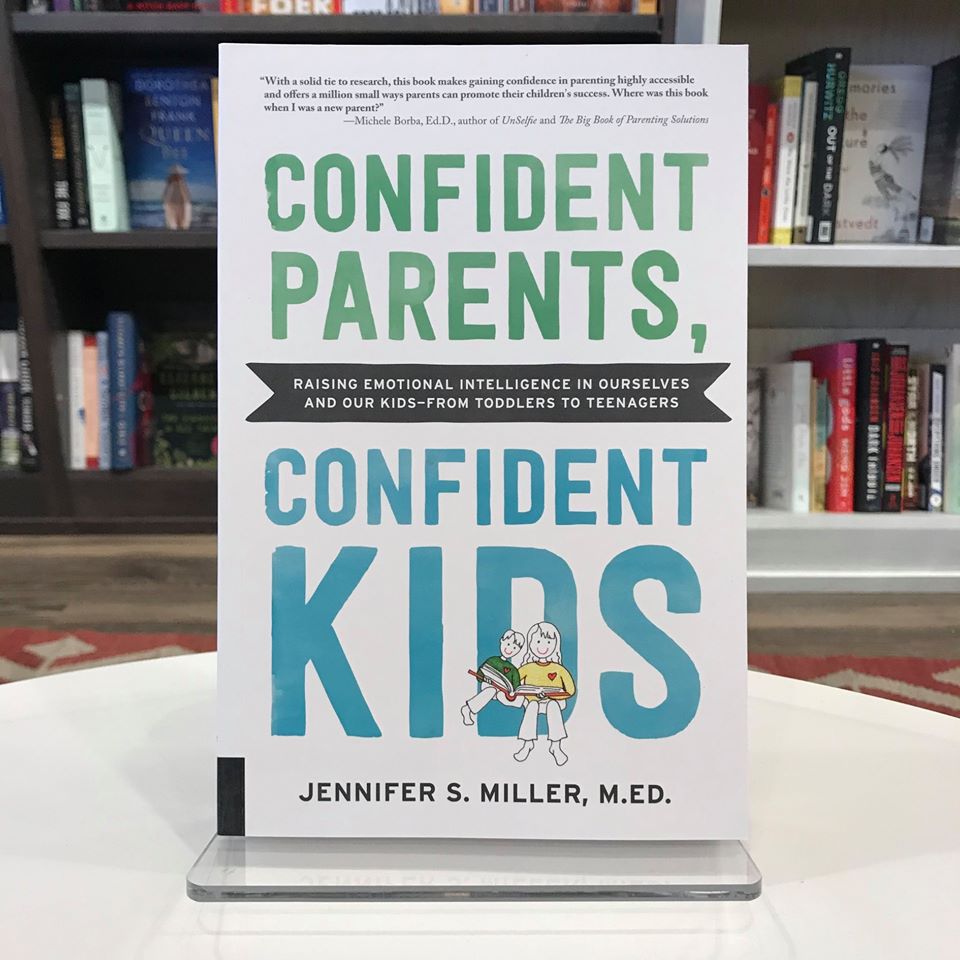
In these particularly trying times, we need support for our roles. As Confident Parents, Confident Kids enters into its eighth year of offering free resources to families, we hope you’ll take advantage of the many tools, tricks and tips on this site to advance your learning and feel like you are not alone. We are in this together!
I’m excited to invite you to the Happily Family Online Conference coming up from October 5-9, 2020! The conference is FREE to attend!
This event is part of a global movement of families and professionals who embrace a conscious and mindful approach to raising kids to be resilient, motivated, calm, and connected. The Happily Family Conference focuses on how to help kids manage their feelings, get along with others, and do their best.
You will see interviews from some of the finest teachers, authors, researchers, and thought leaders in the world of parenting and education such as:
Dr. Daniel Siegel – Author of The Power of Showing Up
Julie Lythcott-Haims – Author of How to Raise an Adult
Dr. Tina Payne Bryson – Author of Bottom Line for Baby
This event will bring thousands of parents and professionals from all around the world to explore how we can raise kids who are struggling a little more with their feelings and the pressures of growing up in an anxious world.
If you’ve signed up for Mindful Mondays, the time has changed to 11:00 a.m. EST (8:00 a.m. PST). This opportunity is for whole families to join together and prepare their bodies, minds, hearts and spirits for the learning week ahead. Bring your children or teens! Or if you are a professional who works with families or an educator supporting remote learning, join to gain a model you can use for your own work with children! See you there!
If you still want to join, there’s a sign up on the site (look for the Mindful Mondays post!) and you’ll be sent a Zoom link to connect. And for those who are unable to join live, you’ll be sent the recording.
Hope it’s a week of safe, healthy and rich learning experiences for you and your family!
Though my family is not entering a school building each day and attempting to assess any signs of illness in ourselves or our child each day, we are going to school — at home. And we do need to check each of our temperatures as a matter of routine for our emotional wellness. No matter what shape or form your school year is taking, no one is escaping that low level of anxiety that lives right under the skin. Each of our worries is personal and unique but the social, political, health, environmental and economic crises of the moment are impacting us all.
That anxiety that is a nagging companion may just be hindering our ability to be effective. We may struggle to bring our full patience and support to our children who are remote learning. And our children may struggle to bring their full attention to the learning that teachers are trying to facilitate. Indeed teachers are facing daily their own hosts of concerns. So our ability to learn in this context can be compromised considerably if we do not take steps to support our emotional well-being.
First, it’s helpful to understand anxiety and put it into context. The threat response we feel is a critical function of our nervous system including our brain heightening our focus to the danger around us. In this time of sustained crisis, we can count on those feelings to support our ability to protect ourselves and our loved ones when we are going out in public and need to take safety measures for many, to avoid illness, for many, to keep careers alive and income flowing, and for many, to assert the need for social and racial justice.
Authentic learning requires trust and caring relationships. When ethnographer Angela Valenzuela interviewed and carefully listened to immigrants in Texas – Mexican-American parents and students – and dug into the meaning of the Spanish word “educacion,” (in English: education) they understood it to mean “caring before learning.”1
This means that teachers whether they are teaching through masks or through a screen, whether they are affiliated with a school or serve as teacher and parents/caregivers too, all need to create a sense of care in the learning environment. Children and teens need to feel seen, heard and valued. In fact, we all do if we are going to get through the work at hand, internalize the valuable lessons of the moment and learn to thrive in this challenging time.
This is my twelve-year-old son’s favorite way to check in with our family.
Here are a couple of temperature check tools. Using post notes works well because emotions change with the ebb and flow of the day and these charts are able to change as the days go by. Encourage family members or students to add new words as they come to better understand the complexity of their feelings and the fact that we often have multiple and sometimes, contradictory feelings at once.
Instituting a feelings check-in as a regular part of your morning routine can promote your child’s ability to self-regulate throughout their school day. In naming their emotions, they are seeking understanding from other family members and are sharing what is truly going on inside. Rather than shoving it down and holding onto it, they express what’s in their hearts and don’t have to hold so tight to the secret of those big feelings. Over time, they’ll grow more comfortable with articulating their emotions adding to their resilience.
This is just one simple step you can take in family life to build trust between family members and promote emotional intelligence in your children. Wishing you emotional well-being this back to school season!
Reference:
Valenzuela, A. (1999). Subtractive schooling; U.S.-Mexican Youth and the Politics of Caring. NY: State University of New York Press.
Confident Parents, Confident Kids’ Jennifer Miller has been a regular partner, presenter and friend of the Happily Family Conferences over the years. Cecilia and Jason Hilkey have a unique ability to create a global learning community that feels so connected despite the large number of participants. This is one not to miss!
Jennifer will be speaking in the pre-conference session starting Thursday, September 17th at 2:00 p.m. EST (11:00 a.m. PST). And check out the other excellent pre-conference speakers.Sign up here free!
Mark your calendars for:
– Thursday, Sept 17th, at 11 am Pacific, featuring Jennifer Miller – Can We All Just Get Along? Using Fair Fighting to Build Family Harmony
– Tuesday, Sept 22nd, at 11 am Pacific, featuring Mercedes Samudio – Shame-proof: When Families & Communities Move Beyond Shame
– Friday, Sept 25th, at 11 am Pacific, featuring Dr. Joseph Lee – Decreasing Anxiety by Being a “Good Enough” Parent
The conference itself begins October 5-9th with exceptional speakers including: Julie Lythcott-Haims, author of How to Raise an Adult, Janine Halloran, founder of Coping Skills for Kids, Christine Neff, researcher on compassion and more.
If you’ve signed up, see you very soon for Mindful Mondays! Join Confident Parents, Confident Kids Founder Jennifer Miller today at 1:00 p.m. EST (12 CT, 11 MT, 10 PT) on Zoom beginning today — September 14th, 2020 for a half hour of mindfulness and connection for the whole family. If you’ve already signed up, we’ll see you very soon!
If you haven’t signed up, it’s not too late to join for future weeks. The time will change to Mondays from 11:00 a.m. EST (8 a.m. PT) to 11:30 EST (8:30 a.m. PT) each week.
Start your week each Monday of this Fall preparing your child and your own brain and body for learning. Mindful Mondays will include a greeting to say hello from all corners of the world, a sharing question to get our hearts and brains engaged, a guided mindful activity to promote a sense of presence, focus and calm, a recitation of the Global Pledge of Allegiance, and one social and/or emotional skill goal for the week.
Free! We’ll send you a recurring Zoom Link and a reminder so you and your family can join us!
Author and Friend Nikkya Hargrove talks about the many complexities of living through a pandemic, supporting remote learning, sheltering at home while advocating for racial and family justice. Jennifer Miller of CPCK was honored to contribute. The article begins…
There’s an overwhelming expectation in our society that moms are naturally better caregivers than dads and they’re expected to be able to handle more of it as a result. This leads to a mental load imbalance in two-parent heterosexual households. But the reality is gender does not define parenting abilities and raising kids in a same-sex, two-mom household has its own share of burdens to navigate.Read the full article on Parent.com!
Thanks for the opportunity to collaborate, Nikkya!
Don’t Forget – The Back to School Webinar Series Begins Tomorrow!
How to Set Up the Physical Environment for Learning Success at Home
Friday, September 11, 2020 at 12:00 p.m. EST – 1:15 (11 CT, 10 MT, 9 PT)
How to Set Up the Emotional Environment for Learning Success at Home
Friday, September 18, 2020 at 12:00 p.m. EST – 1:15 (11 CT, 10 MT, 9 PT)
How to Set Up the Social Environment for Learning Success at Home
Thursday, September 24, 2020 at 12:00 p.m. EST – 1:15 (11 CT, 10 MT, 9 PT)
One reader and President of a Mom’s Club in Gaithersburg, MD writes, “on first reading...phenomenal! Exactly what I needed right now. I just started checking out books again, feeling like I was doing "something" wrong. I just wasn't feeling great about some of my interactions and felt like I needed a jump start. This blog is putting me back in the right mind frame. It is informative, supportive, yummy! It just makes me feel capable..and like I am talking to my best friend about it!”
Maurice Elias, author of Emotionally Intelligent Parenting and Psychology Professor at Rutgers University writes…
Confident Parents, Confident Kids “merits the attention
of anyone working in social, emotional and character development who wants a place to send parents for ideas and advice and dialogue.”


 CPCK is also partnering with Yucaipa-Calimesa Joint Unified School District in Yucaipa, California this week beginning a webinar series in English and in Spanish. We are grateful for their partnership!