Today, Mike Wilson, podcast host of “Making After School Cool” and Outreach Coordinator for the Harris County Department of Education in Houston, Texas and I discuss the challenges of 2020 including the pandemic and it’s impact on education and our children and the killing of George Floyd and other black Americans. We also focus on what happens in our families or in our neighborhoods when we disagree and how we can continue to show care and empathy while speaking of hot issues. We have a new animal spirit guide this week from the Native American animal totem tradition. And we set some important social and emotional goals for the week. Check it out or better yet use it to start your learning day with your family!
Understanding Group Dynamics to Improve Your Family’s Collaboration and Resilience
By Guest Authors Julea Douglass, Ph.D. and R. Keeth Matheny
Think back to a memorable team experience. It might have been a sports team or a project at work. Every team has its own unique group dynamics.
In basketball for instance, each player and the coach are essential to reaching the team goal: scoring points, defending the basket, and ultimately winning the game. Also like basketball, each game is different. New opponents bring new challenges. Teams have to prep for their next game, play to their strengths, and prepare for opposition and opportunities.
Family Group Dynamics
Did you realize every family has its own group dynamics? Like sports teams, each family member plays an important, but different, role in contributing to the group dynamic. And those roles change and evolve over time.
Your role as the parent is different when your children are toddlers than when they are teenagers. And will be different again when they leave home for college and/or a job. If you have multiple kids and/or a spouse, each family member is constantly contributing to evolving roles within the family dynamic.
During COVID-19 Times
Now imagine you are on a sailboat in the ocean with you and your family members. There is not a boat captain—just you and your family—and you’ve never been on a sailboat before! You’ve seen sailboats on TV, but you’ve never tried to steer one before. This is definitely uncharted territory. COVID-19 effects are a similar kind of curveball, an unexpected twist that requires new skills and strategies.
With mounting concerns about COVID-19 consequences, pressures have been building up worldwide and likely within your family group dynamic. Sharing space, computers, TV, food, and all day and evening can take its toll. You need new skills to navigate this new terrain, and you’ll need to work effectively with your family to weather this storm.
Tuckman’s Team Development Model
Luckily, there are decades of research in effective team strategies. Your sailboat comes with a guide. Tuckman’s Team Development Model gives insight for your family about what you need to steer your boat and navigate the course ahead.
The first step to success is a map of where you’ve been and where you’re going. You’ll need this “bird’s eye” view to prepare for your journey (Tuckman’s Team Development Model below).
All teams go through the first two phases of Tuckman’s Team Development Model: 1) forming and 2) storming. Unfortunately, some teams get stuck in “storming” and never make it successfully to 3) norming and 4) performing.
For your family sailboat to navigate this storm successfully, you are going to need all four phases:
1) Forming: In the first days of a new team or situation, each member is trying to find his or her role within the group and looking to the coach for leadership and teammates for reassurance.
2) Storming: Inevitably, team members can struggle to feel valued, included, and confident in a new setting. Some members might jockey for the best spots, while others withdraw and underestimate themselves.
3) Norming: Here’s where teams can turn it around if they thoughtfully plan how they will treat each other and how they will work together to reach their goal. Without proactive plans, they will fail to get to the next stage.
4) Performing: Together, the team maximizes their abilities and collaborates to reach a shared goal. They are conscious of each other’s needs and all do their best to contribute. They are better together than any of them are on their own.
Though your family is not a “new team,” you are in a new circumstance (COVID-19) that requires starting at stage 1 (forming) and then very purposefully going through stage 3 (norming) to get to the goal of performing well and creating an environment in which everyone feels supported and valued.
Family Discussion Questions:
Which stage of Tuckman’s Team Development do you think your family is in? And why?
What might lead to “storming” in your family dynamic? What are potential unmet needs for you and/or your family members?
How have you or could you do to agree on family norms for a) how to treat each other, b) how to share time and space during COVID, and c) how to resolve disagreements?
Family Activity:
Try School-Connect’s free EQ @ Home or School lessons. Each lesson includes family discussion questions and activities (school-connect.net/digital-solution-sample).
About the Authors: Julea Douglass, Ph.D. & R. Keeth Matheny
Julea Douglass, Ph.D. is co-founder and co-author of School-Connect: Optimizing the High School Experience, a social emotional learning (SEL) curriculum for grades 6–12 (www.school-connect.net).
R. Keeth Matheny is a 20-year teacher, co-author of School-Connect, and founder of SEL Launchpad, a SEL professional development firm that trains and inspires educators nationwide (www.sellaunchpad.com).
About School-Connect: They creates and distributes School-Connect: Optimizing the High School Experience, a research-based middle and high school program for boosting students’ social, emotional and academic skills. They speak nationally on the importance of school connectedness to adolescents’ personal growth and engagement in learning.Learn more!
*CPCK Note: We are so grateful to Julea and Ruldoph Keeth as well as the School-Connect organization for your partnership and collaboration!
How Can Parents Support their Children through Anxiety and Build Strength, Resilience, and Confidence?
As we face so much uncertainty in our lives whether it involves election stress, pandemic worries, job fears, or school difficulties, parents and children alike are feeling the mounting pressure. It’s critical for families to continue their learning about how they can deal with the stress so that it’s managed each small step of the way. Otherwise, we’ll work ourselves up into an explosion of upset that can hurt those we love. Because emotions are contagious, our children and teens will pick up on our anxiousness and feel it themselves.
In addition to the stressors parents and caregivers are feeling, children and teens have their own set of worries that show up as they grow and change. In fact, the Highlights Magazine survey of 2,000 children ages 6-12 simply asked, “do you worry?” And 79% of children responded “yes.”1 Worry is normal and actually increases with our children’s awakening social awareness particularly starting around the age of nine. As they work on empathizing and taking the perspective of others, they also become self-conscious. “What if I’m criticized? What if I’m rejected?” These are common concerns of the pre-teen and teen years. So then the trick becomes, how can children, tweens, and teens learn to manage that worry in healthy, constructive ways so that they can identify their feelings and use them as assets. If they do not learn healthy coping strategies, feelings can take them over and they can begin to turn to unhealthy coping strategies.
So there is a significant opportunity for parents and teachers alike to support them in learning how to manage these big worries. Check out the following ideas along with a few pitfalls to avoid along the way!
Anxiety is contagious! Manage yourself first.
When your child is upset and anxious, the first instinct of a caring parent will be to dive in and fix that problem. But in reality, if you dive in with your own stack of worries, you could (and will likely) escalate your child’s worries. That’s because your own raised heartbeat and furrowed brow can’t hide. Your child and you are deeply connected (in good times and in bad) so that they will “catch” your worry and elevate their own. Tina brewed some tea and sipped on it before she went in to talk with Alyssa. Find ways to pause, breathe, get some fresh air and a fresh perspective (“This is not the end of the world nor will it determine my child’s long term success.”), and then talk to your child.
Normalize big worries.
When you do talk, be sure and let your child know that worrying is a normal part of being human and growing up. Don’t allow him to perpetuate the myth that he’s the only one who’s sure he’s going to be left alone or ridiculed on the playground. Help him identify his feelings – “I see you are feeling really worried about going back to school tomorrow. Tell me more.” Listen to his responses while reserving your own judgment or fears. Also, talk about the roles of stress – that it can be a positive force for keeping you sharp during a test but you have to learn ways to manage it so that you are in control and it doesn’t control you.
Learn together.
Be sure you understand what the worry truly is concerning. So often we make assumptions about our child’s fears only to discover later that she really didn’t care about being invited to the birthday party but merely wanted to play on the playground. Actively listen and reflect back thoughts and feelings before jumping to any conclusions. Be sure that you are open to learning from your child what concerns are there so that you can be most helpful.
Empathize together and choose compassion.
When a child or teen has social anxiety, she is focusing on herself and what others think of her. If she begins to consider how others are experiencing worry or pain, if she considers how she might ease others’ challenges, then she cannot focus on her own. Help her consider: “Amanda said some hurtful words today. What do you think could be going on with her? Is her home life okay? Does she feel accepted at school?” Often these questions uncover hurt that another child is undergoing. You might follow up with, “what could you do or say to help her feel more comfortable and accepted?” These questions shift your child’s focus in a positive, healthy way.
Tackle in the smallest increments.
When your child is feeling overwhelmed by expectations or the amount of work, sit down together and break it down into the smallest pieces possible. Then, simply just focus on one at a time. How can that one issue be tackled? Then, make a plan or set a positive, specific goal together for how she’ll tackle each one of the other issues. Set a clear timeframe and be there to support her through it.
Practice healthy coping strategies.
On a sunny day when emotions are not running high, grab a blank sheet of paper or markers and newsprint and do the “Feeling Better” challenge (yes, we all love a challenge that is entertaining and game-like). See how many healthy coping strategies you can list together. Remember: the smaller and easier, the better! You want to be able to use them anywhere, anytime you or your child is upset. Practice some deep breathing like ocean wave breathing, or making the sound of the ocean and imaging waves coming in and out with the rhythm of your breath. Discuss other ideas like walking in nature, tensing and releasing toes and fingers, or pretending to blow bubbles.
Stop rumination and find a new thought.
Rumination is worry run-amok. When you hear your child mentioning the same concern over and again, they’ve moved into rumination. And it’s never productive. Why? Because it’s a vicious hamster wheel turning the same thoughts and feelings over and over without any new thoughts changing the perspective. Share that the churning we tend to do does not prevent horrible events from occurring and in fact, only weighs a person down and prevents them from finding positive solutions. When ruminating, tell yourself, “Stop.” And coach your child to help them tell themselves “stop.” Then ask, “what’s one new way you can look at this situation that you haven’t considered?” “What can you learn from this?” Also, if you can, ruminate a bit on the positive. Are there new friends that await at a new experience? Are there kind teachers? Are there interesting exploration opportunities with new subjects? Swirl around in the goodness of all that’s to come this school year.
Create a small experiment.
In other words, if your child is really scared to go on a class overnight field trip, can you set a small goal to go the first night and then call and talk and you’ll come get her the following day if it’s too much but she’ll try and make the best of the first night? Usually kids find that they can make it all the way through but the whole event seems overwhelming so offering small checkpoints or smaller goals helps reduce anxiety. If you set a small goal to tackle a homework challenge, then decide on when and how you’ll take a break or what small piece you’ll accomplish together. Celebrate with a high five or simply reflect on how they were able to get that small piece finished. Recognize together how tackling one step at a time made – what seemed like a monumental task – manageable.
Support Sleep.
Sleep is not only critical for learning the next day but it will also offer the self-control a child needs to get through his anxieties that day. But worries can keep a child up at night. So what can you do? First, be sure and stick to a consistent routine that gets business accomplished (bath, brushing teeth) and is also connecting (reading, snuggling). Make sure that there’s a calm down period with low lighting, low noise, and no screens. Let her know that worrying at night is rumination and will not accomplish anything so it’s important to leave it behind. You might try the following:
Have you seen the Mexican worry dolls? You tell the dolls your worries before bedtime, put them in their box, and they work on your worries while you sleep. You can do this with a favorite stuffed friend. Assign him night duty. Allow her to share her worries with you and her stuffed friend (or just with the stuffed friend) and then assign the task of taking care of her worries overnight so that she can put them away. Make sure she only says them once because repeating them turns into rumination and her stewing won’t change her thinking so rumination doesn’t get her anywhere. Teens can write worries down in a journal and then, place the journal in a safe location overnight where they won’t look at it.
You may also want to try a guided sleep mediation for children. Check out these from New Horizon. Visualize a calming, happy memory together from your summer vacation. Or you can simply play nature sounds (I like this simple Family Mindfulness App) and listen carefully in the dark together as you take deep breaths.
Instead of fueling one another’s worries, we can channel the energy gained from the mounting pressures into an important opportunity to promote healthy ways to manage stress and reframe perspectives. As we teach our children, we simultaneously help ourselves. Taking positive action allows us to move toward the changes we want to create.
Check out this delightful and practical picture book:
Today, Mike Wilson, podcast host of “Making After School Cool” of the Harris County Department of Education in Houston, Texas and I discuss the mounting tension and how we deal with it. He introduces his own animal spirit guide that gives him a sense of meaning and important life reminders this week from the Native American animal totem tradition. We do a bit of mindful stretching and breathing with this animal in mind. And we set some important social and emotional goals for the week.
The purpose of each Mindful Monday is to offer a brief set of reflections to help you and your children begin their week with their bodies, hearts, minds and spirits ready for the learning ahead. It can serve as a model you can replicate or watch and follow along together. Either way, wishing you a week of healthy, safety, justice and calm amidst any storms!
Building Empathy and Perspective-taking Skills (One Week Prior to U.S. Elections in a Highly Divided Nation) May Just Be the Vaccination for Our Spirits
Though the pirate, princess, and fireman may or may not be going out trick or treating this year due to the phantom pandemic, it’s likely your kids are dressing up and celebrating in some big or small way nonetheless. Though fear may abound with kids worrying about spooky specters and parents worrying about COVID transmission, there is more to the Halloween experience than just candy and frights. Children are encouraged to be someone or something else for one night a year. They are not only permitted but emboldened to become a character from their imaginings. Halloween gives them a chance to think and feel from another perspective. The skill of perspective-taking is one that has been found to assist in problem-solving, communication, racial and multi-cultural understanding, empathy, and academic performance.
As I examine my own reaction to this holiday, look at the posts on Facebook and talk to friends, it seems we are all longing for the traditions of the past that have given us and our children joy. But drastically changed times call for a full reexamination of what we can expect and even what could hope will give us joy in a completely new context. In our deeply divided times in which so many are feeling isolated from loved ones, or school communities, or neighbors – some because of physical separations but also many because of philosophical separations – what the world needs now is empathy. How can we take the perspective of any one person in the world who lives inside a different skin tone, in a differently-structured family, and in another community where there is less money or more money, less opportunity or more opportunity? How can we wear the costume of that other person and attempt to feel and think as they do? What’s important to them? What keeps them up at night? Why should I have compassion for their position in the world?
As a parenting coach, I am asked to listen to stories without judgement. At times, those stories contain details from people’s lives that, if I didn’t have my coach hat on, might make me cringe or even feel outrage by my own sense of justice. Yet I listen because individuals need to feel heard and understood. And each time I do, I grow more generous, more open, and more compassionate of the stressors that all of us are under, regardless of belief system. The common ground I never have to search hard for and always discover is that all of us as parents are doing the best we can in this moment to raise our children with love.
So what if this moment we find ourselves in happens to be life-shaping for ourselves and our children? Crisis precedes transformation. So if we are intentional about the social and emotional lessons we are promoting, we just might raise a generation who are ready to work together in authentic collaboration to creatively solve our world’s complex problems. But they’ll have to know how to actively and openly listen to others’ perspectives and learn from the differences. Building those skill will require practice.
Perspective-taking involves interpreting another person’s thoughts, feelings, and motivations for action (see references for more on the Theory of Mind and Relational Frame Theory). This skill uses multiple executive functions of the brain including self-regulation, empathy, and cognitive flexibility (seeing a variety of solutions) making it a skill set that is now recognized as critical for school readiness and when in school, success in achieving academic goals.1
Researchers have been able to determine that three-year-olds can begin to take another’s perspective and some are even able to detect that another may hold a false belief about an observation.2 For example, the teacher says there is an apple in the bag. Many children believe this but one child might know by watching the teacher’s subtle nonverbal cues that the apple is under the table. As children begin to form relationships with peers, teachers and other care providers, they will become more adept at communicating their own needs, thoughts and feelings if they are attuned with the other person. A teacher’s facial expression may give away the anger they are feeling with an administrator. If your child reads the expression correctly, he may choose to wait for a better moment to bring up the fact that his homework was eaten by the dog.
So how can parents encourage and support their children in understanding another person’s perspective? I’ve included some general simple ideas first and then, added more specific ideas related to children’s stages of development.
One easy way to promote perspective-taking skills is to ask open-ended questions to prompt thinking. Extend the learning by using perspective-taking as a “Guess what…” game at dinnertime or on a car trip when your family is together. Parents I work with have had success with doing this by engaging their family in fun and productive conversation. Each person has the opportunity to guess what another was feeling or thinking at some point that day. It may be an opportunity to reflect and laugh about more stressful moments in the day. For example, “I could see that Dad was angry when I grabbed his newspaper this morning.” The person who is being commented on has to say whether or not the feeling the family member guessed is accurate and if not, what they actually were feeling. Over your macaroni and cheese, watch with great satisfaction as your children become more adept at articulating your perspectives and their own with practice.
I tried a second variation of this game at my own dinner table and found we laughed and enjoyed the fun of it. This one was “If ___ came to dinner, he would say _______.” We inserted famous people and family members and our six-year-old came up with remarkable responses and he instigated using the various voice intonations of those people. Here’s a brief sampling of our conversation:
Me: “Your teacher, Mrs. Art is here for dinner. What does she say?”
E: “This is a nice dinner.” (read in a sweet, high-pitched voice)
Dad: “Your three-year-old cousin…”
E: “I don’t like hot dogs.”
Me: “Your cool Uncle Jeremiah…”
E: “E, man, how ya doin.”
Me: “Emperor Palpatine, Ruler of the Dark Side…”
E: “I’ll kill you after dinner.”
Of course, children have differing abilities to take others’ perspectives as they develop. Primary school age children will not be ready for multi-cultural diplomacy at the United Nations’ mediation table just yet but plant the seeds and they will get there. The following are Robert Selman’s five stages of perspective-taking with my own practical suggestions for how you can support your children’s development through the years.3
Undifferentiated perspective taking
Ages 3-6
Children have a sense of their own thoughts and feelings and the fact that their actions cause others to react but sometimes may confuse others’ thoughts and feelings with their own.
Easy practice: Look for chances to identify different kinds of emotions when looking at social media. “Look at that woman’s expression. Her face says to me she’s frustrated.” The posters with multiple facial expressions are great for expanding a feelings vocabulary. Check out this one. My son’s favorite is “lovestruck!” On Halloween, attempt to have your child take the perspective of the character or costume they are wearing. How can you act as Darth Vader would act? What is he thinking? What is he feeling?
2. Social-informational perspective taking
Ages 5-9
Children understand that different perspectives may mean that people have access to different information than they have.
Easy practice: When you are reading books with your child, stop when you find a belief, perspective, motivation or course of action that would differ from what your daughter would choose. Talk about the character’s perspective and motivation and from where it may have originated. Become intentional about selecting books authored by writers of differing colors and cultures and whose characters’ bring differing perspectives than your own. For book ideas, check out “Diversifying your Parent-Child Reading.”
3. Self-reflective perspective taking
Ages 7-12
Children can view others’ perspectives by interpreting others’ thoughts and feelings and recognize that other people can do the same.
Easy practice: Guide your children through a conflict situation by asking them, after cooling down, to tell what they are thinking and feeling and then, asking them to interpret what the other person is thinking and feeling. For more on reenacting a conflict, check out “Dramatizing the Drama.”
4. Third party perspective-taking
Ages 10-15
Children are able to mentally step outside of their own thoughts and feelings and another person’s and see a situation from a third person, impartial perspective.
Easy practice: This is a perfect time for a child to read biographies about other people’s lives that might interest them. Select a person together because you know something about the person’s life. Or read it yourself and talk about it with your child. My thirteen-year-old son and I are starting to read “The Diary of Anne Frank,” as he learns about the Holocaust in World History. He’s discovering a whole host of commonalities between his own life living through a pandemic and that of young Anne hiding in an attic through a genocide. And from the many differences in her life and his own, he is building an appreciation and a gratitude for all that he has including his freedom and cultural acceptance.
5. Societal perspective-taking
Ages 14-Adult
Begin to see that the third party perspective can be influenced by larger systems and societal values.
Easy practice: Offer opportunities to learn and experience other cultures reflecting on differing perspectives and values. Visit images and sites online of churches, synagogues or other places of worship outside of your belief system. Send letters of well wishes to a nursing home or homeless shelter. When you hear your children are interested in another culture, government or belief system, explore the opportunity through books, videos and other online resources. When possible, expand to in-person opportunities to interact such as volunteerism, festivals, travel and other mind-expanding experiences.
Halloween is a holiday that helps us explore our fears in a safe way. It allows us to think about our mortality and our belief systems while having fun. In addition, it gives us permission to be and think differently. While wrestling with your own feelings of worry or disappointment, why not channel that energy into purposeful action engaging your children in skill building? Though it’s tough to take care of ourselves when times are stressful, we may just nurture our own spirits when we focus on boosting our children’s strength to connect with others in meaningful ways that help your whole family grow. In the coming week, instead of spreading the virus of division, why not contribute to wellness by practicing perspective-taking with your children? Have a safe, healthy and happy Halloween!
Center on the Developing Child at Harvard University (2011). Building the Brain’s “Air Traffic Control” System: How Early Experiences Shape the Development of Executive Function: Working Paper No. 11. Retrieved from www.developingchild.harvard.edu
3. Selman, R.L. (1975). Level of social perspective taking and the development of empathy in children: Speculations from a social-cognitive viewpoint. Journal of Moral Education. 5 (1) 35-43.
Adapted from the original published on Oct. 24, 2013.
Perhaps you volunteer in your child’s classroom and are helping plan the annual Halloween party. Maybe you are a teacher looking for ways to both entertain, celebrate, and build skills on the holiday. Or you could be planning an indoor celebration with siblings or a small friend pod since the pandemic is raining on trick-or-treating plans. Whatever your role or goal, the following ideas are sure to make your little ghouls or goblins laugh with delight as they collaborate with their peers, approach scary characters in an entertaining way and build social and emotional skills. I’ve listed which ones could be used over Zoom for an online classroom or group experience. To ensure a fun time, go over Zoom rules first including muting yourself until it’s your time to speak and using hand signals like raising a hand or using the sign language for clapping so that all are prepared to contribute. Check out these games appropriate for eight-years-old and up!
Monster Back Story
Materials: Monster masks, or construction paper, glue, markers and large popsicle sticks (to create monster masks)
Gather on Zoom or in-person. Hold monster masks up to your face. You can either create them together as a craft at home prior to the event or ask children to bring any mask they might have to share. The leader can introduce one monster at a time. “This is Dracula. He’s a vampire who survives by sucking peoples’ blood. But he wasn’t always as he is today…” Then go around the circle and ask each child to provide a detail from his childhood explaining why he came to be the person he is today.
Be sure to offer the “pass” option if a child cannot think of an addition to the back story.
Social and Emotional Skills Practiced:Collaboration, Empathy, Perspective-taking
Witches’ and Wizards’ Charades
Materials: Index cards, marker, stick or wand
Gather on Zoom or in-person. For Zoom, create slides with each of the magical enchantments below. If in-person, make index cards prepared with the illusions listed below, one per card. Ask each participant to bring a stick or better yet, a wand for casting spells. Explain the rules of the game. One person is the witch or wizard and they get to select a card from the pile. They also hold the wand and cast the spell. The students seated directly to their immediate left and right will serve as their team. They read the card together and whisper a plan for acting out the illusion. No talking aloud or sounds can be made just acting. They continue to act out the illusion while the rest of the group guesses what they are doing. The person to guess correctly first is the next wizard or witch.
For the index cards, here are the magical illusions to be acted out: levitation, or a floating person or object; invisibility, person or object disappears; grower taller; shrinking; growing longer hair; changing from a person to a toad; flying on a broomstick; making it light and then, dark; making limbs disappear; disappearing in one part of the room, reappearing in another, charming a snake.
Social and Emotional Skills Practiced:Social awareness, Active listening, Collaboration, Negotiation, Problem-solving, Nonverbal communication
Cooperative Ghost Story Telling
Gather on Zoom or in-person. The leader establishes the rules to get the game started. Let the group know that each person will have a turn to contribute one sentence to the ghost story. Pass around a talking stick and let participants know that only the one who possesses the stick may talk. The others must listen carefully in order to build upon the story. The leader can begin with the classic line, “It was a dark, stormy night and…” This requires no setup and no materials. Kids will delight in the creativity and imagination involved. This is also a wonderful transition game that can be used on the spur-of-the-moment when waiting for a next class or activity.
Social and Emotional Skill Practiced: Collaboration, Creative Thinking, Active Listening
Robbery Report
This is a great one for Zoom or in-person. This one was created for Classroom Conflict Resolution Training for Elementary Schools in San Francisco, California and reprinted in the A Year of Student’s Creative Response to Conflict curriculum. It has been used effectively in classrooms. Children love it!
The parent relays a robbery report and children must remember the details of the report by listening to it. Say it once and see what they can remember. Then, read it a second and perhaps, third time and see if they’re listening improves.
Parent: “Please listen carefully as I have to go to the hospital right away. I just called the police from the gas station on the corner. Wait here and report the robbery to them. I was walking into Johnson’s Convenience Store and this guy came running out and almost knocked me over. He was carrying a white bag and it looked like he had a gun in his left hand. He was wearing a Levi jacket with the sleeves cut out and a green and blue plaid shirt and blue jeans with a hole in the right knee. He had skinny legs and a big stomach. He wore wire rim glasses and high top red Converse tennis shoes. He was bald and had a brown mustache and was six and a half feet tall, probably in his mid-thirties.” 1
Social and Emotional Skills Practiced: Active Listening
Enjoy engaging in one or more of these games with your family, friends, or students. Happy Halloween!
References:
1. Nia-Azariah, K., Kern-Crotty, F., & Gomer Bangel, L. (1992). A Year of Students Response to Conflict: 35 Experiential Workshops for the Classroom. Cincinnati, OH: Center for Peace Education.
Today, Mike Wilson, podcast host of “Making After School Cool” of the Harris County Department of Education in Houston, Texas and I discuss parenting teenagers and how we, at times, have to step in to support them and establish boundaries and how, at other times, we have to step back and give them their independence. He offers an example of how he shows his care each day with a morning and bedtime ritual that his teens’ clearly treasure. We have a very special animal spirit guide this week from the Native American animal totem tradition. And we set some important social and emotional goals for the week. Check it out or better yet use it to start your learning day with your family!
Transforming the Big Feelings of Now into Big Lessons for the Future
Frowning faces, furrowed brows, and grumpy expressions describes our family’s morning meeting on Monday (and Tuesday, if I’m being honest) as we launched into yet another week of homeschooling. Tired of the pressures of schooling during a pandemic, we are needing to rally all of the spirit we can muster on some of our days to get through the work ourselves while attempting to inspire our child to do the same. Yet, each time I meet with a group of parents whether it’s the Spanish-speaking mothers, fathers and grandparents of the Yucaipa-Calimesa Unified School District in southern California I’ve had the honor to work with (thanks to Spanish translator, Margarita Velasco), or the educational leaders of Ohio I’m meeting with in the SEL for Ohio initiative (thanks to partner and co-founder Pamela McVeagh-Lally), after discussing the stress, strain and anxiety felt by all, most will also articulate opportunities in this moment where our world feels turned upside down.
Parents have told me that their children seem more grateful than ever to connect with extended family since hugs from grandparents are a rare event in this stay-at-home, COVID existence. Parents have also expressed that they are more in touch with their child’s curriculum than ever before. We too find ourselves seeing our child’s curriculum everywhere we go. “Oh, look at that rock formation! We studied that in Earth Sciences!” Parents are able to hold deeper and more meaningful conversations about what their children are learning so that all family members are truly learning together.
There is another important opportunity of the moment if we seize it. The big feelings we are all encountering daily and weekly provide a common experience among adults and the children they love. What better chance do we have of teaching our children emotional intelligence than at a time when their emotions are running at a fever pitch? I know what you may be thinking now, reader. “How can I possibly teach emotional intelligence when I’m feeling overwhelmed, run down, and highly anxious myself?” Well, it’s a good question. And you can! Let me explain.
It helps to draw upon a research-backed framework that gives four essential factors of parenting resilience.1 They are:
Social connection and support;
Knowledge of parenting and child development;
Social and emotional competence of children; and
Ability to ask for and accept help.
This framework provides the hope that as you gain knowledge of your own role as a parent (you are doing that right now!), you can learn ways in which to promote your child’s social and emotional skills which, in turn, will offer you greater empathy, patience, and sense of agency and competence. In other words, you’ll have greater endurance for the marathon of stress we are now running together. Learning how to manage your own stress and teaching your children how to manage their own big feelings in healthy ways just may be one of the most significant opportunities of our time. Preparing this generation with the tools to be change-makers and agents of social and racial justice will require that social and emotional training.
Check out my simple ideas for transforming the drama of the moment into a vital lesson for the future.
Invest in the Pause.
No matter what is going on, no matter your level of frustration, the pause is your best friend. It will transform any immediate reactions based on impulse that may leave you with regret later. Impulse and feeling happen instantly but thought takes a moment. So allow your reaction to be informed by your thoughts by pausing in the midst of the drama. Have a hard time stopping the escalation? Say “stop” or “time out” aloud — for yourself. This will assist your whole body and brain even when highly upset in taking that essential pause. Even better, agree with your family on a word or phrase (such as, “freeze”) you’ll say to each other when there’s a need to pause the drama.
Ask, Listen, Accept.
Though we often think we know exactly what our child are thinking and feeling, we don’t. We may pride ourselves on knowing them best. Yet, the very fact that they are children or teens means that they approach life differently than we do. Though it may be tempting to assume, it’s important that we ask them what’s going on for them. Our fears and worries often are not theirs. But they can become theirs if we engage in projections and assumptions. So as you pause and take a moment to breathe before responding, be sure and ask, “What are you thinking? What are you feeling?” and listen carefully so that you address the problem they are perceiving. And then, whatever feelings they share, we need to be ready to accept them — even those that make us uncomfortable or annoyed. And there are those days when we are right on the verge of our own explosion when it feels like one more challenging feeling from our child will make us erupt. If we reach that near boiling point, go back to the start. Invest in the pause. Breathe. Write down your own feelings. Validate what’s going on for you. Then, return to your child to accept that their hearts are never wrong, that we accept their emotions helping them feel supported and understood.
Brainstorm Healthy Ways to Respond – Together.
Working together to think of healthy ways to respond teaches your child that they have options in any problem and can take steps to feel better and make better choices. Generating ideas together also takes the heavy lift off of the parent to fix the situation or figure it all out. In fact, if the parent engages in fixes, they rob the child of their social and emotional learning opportunity. But co-creating solutions scaffolds their participation in learning about healthy coping skills and making responsible decisions.
Reenact the drama.
When the heat has died down and you’ve moved on, create a moment to return to the drama for the purpose of learning. It may look a bit differently depending upon the age of the child.
For young children – Pretend play is a hallmark of young children and they are ready to engage in dramatic reenactments on a moment’s notice. So use this to help advance their emotional skills. Be sure and get down on your young child’s level to equalize power. This is important. Make it simple. “I’m so mad. I can feel my face is red. I feel hot. What do you look like when you’re mad?” Make faces at each other — the more dramatic, the better. Then ask, “What can we do or say to feel better?” Be sure that you think of options that cool the heat. In other words, don’t raise voices or throw pillows. Instead, hug a pillow, or get a cool drink of water. Discover together multiple ways to feel better.
Elementary-aged Children – You might ask, “What happens to make you mad?” Then, play act out the story your child offers. Whether it’s a classmate sneering at a joke your child makes or you telling your child to get off screens, you might offer, “let’s act it out and see how it goes.” Try out your own respective roles. “I cannot believe you are making me get off video games now! It’s so unfair!” And you offer what you might say in response, “It’s not right. You know the rules. You’ve taken more time than you are allowed anyway.” Now call, “Time out!” Stop the action. Ask some reflective questions about the moment. “What were you feeling in your body to indicate you were mad?” This raises self-awareness. You may share your own typical physical symptoms you feel when you’re mad as a model. ”I can tell my heart starts racing. I heat up too. What can we do to get to a better place?” Brainstorm together ideas for feeling better and addressing the problem at hand without placing blame or criticizing. And if justice is at issue, anger is a critical emotion to help motivate to action. Discuss what your child can do to right wrongs in ways that create fairness and respect.
Tweens and Teens – This age group is particularly interested in social dynamics and drama. So play on this interest. When friends argue or someone on social media gets mad, what does it look like? What does it sound like? Place your teen in the role of youth culture expert and learn from their experiences. Ask for the full story including what happens when a friend or social media icon “loses it.” What happens in the moment? And even more importantly, what happens later to their reputation? Then, discuss options. You might ask, “What could this person have done instead?” Be sure and reflect back that anger can be a vital emotion for moving a person to change, to take action, to right a wrong, or correct an injustice. The question to ask then is, “How can you use your strong feelings to pause and consider how to bring greater justice, fairness and respect to the situation?”
We are living through times that produce big feelings for adults and children regularly. We can offer our children and teens a pathway to building strength and resilience if we teach them how to use their anger productively and constructively. Our world requires change-makers everywhere to turn around racial injustice and a global pandemic and it is necessitating our emotional courage. Take these small family fires as opportunities to teach your children that they can be change-makers today and you’ll help prepare them for a bright future.
We had a rich dialogue today thanks to Mike Wilson, Outreach Coordinator for Harris County Department of Education in Houston, Texas and Podcaster for the show, “Making After School Cool.” Mike shares some highly relevant and relatable stories of parenting two teen girls during a pandemic. Jennifer offers a mindfulness activity connected to a Native American animal spirit guide; the seagull. Check it out and join us next Monday, October 26th from 11:00-11:30 a.m. EST. RSVP on the CPCK site!
From REACH Across Johnson County, I was delighted to join Shari Phillips and Jennifer Heggland who are working hard to promote the social and emotional health and well-being of families in their community. I presented a two-day in-person workshop with a large group of prevention professionals last year with them in Waxahachie, Texas and learned about their important work. Join us for our conversation on what social and emotional learning means and how it can be applied in family life!
One reader and President of a Mom’s Club in Gaithersburg, MD writes, “on first reading...phenomenal! Exactly what I needed right now. I just started checking out books again, feeling like I was doing "something" wrong. I just wasn't feeling great about some of my interactions and felt like I needed a jump start. This blog is putting me back in the right mind frame. It is informative, supportive, yummy! It just makes me feel capable..and like I am talking to my best friend about it!”
Maurice Elias, author of Emotionally Intelligent Parenting and Psychology Professor at Rutgers University writes…
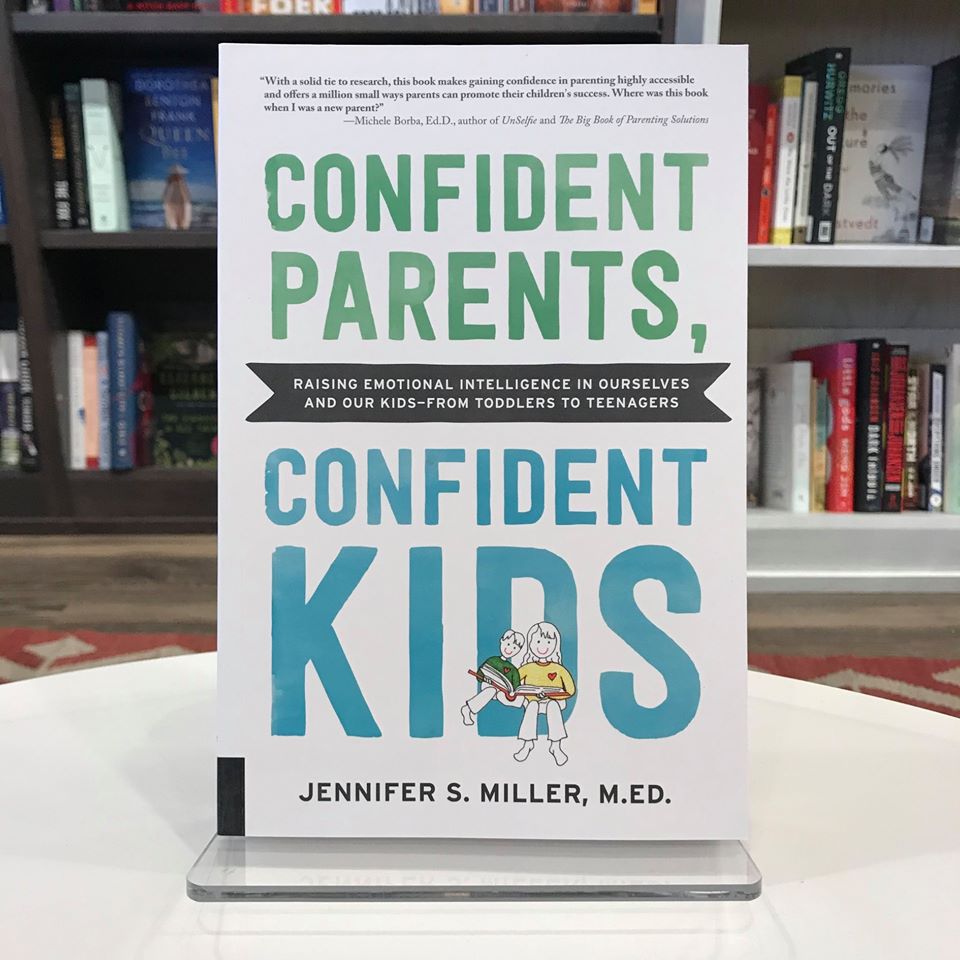
Confident Parents, Confident Kids “merits the attention
of anyone working in social, emotional and character development who wants a place to send parents for ideas and advice and dialogue.”