
confident parents confident kids
A site for parents and caregivers actively supporting kids' development


Learn SEL to Teach SEL

How Parents Can Model Social and Emotional Learning (SEL) in their Everyday Lives
by Chiara Giani, Head of Student Life at International School of Hellerup, Denmark
In March, Social and Emotional Learning (SEL) will be celebrated in schools from all over the world with a day full of initiatives that promote social and emotional development. For some parents, SEL is an acronym that does not call much to mind, but it is indeed very relevant when we talk about the new generation’s education and growth. But what is SEL? And who can actually teach it?
Increased awareness including words like well-being, resilience and holistic approach have gradually moved from the narrowed field of the academic and pedagogical forums to land on a broader and more accessible territory. Especially after the pandemic, people are more aware of the importance of promoting mental health in their everyday life. When it comes to choosing the right school for their children, more and more parents are interested in exploring how institutions take care of students’ well-being.
The Collaborative for Academic, Social, and Emotional Learning (CASEL) has identified that 88% of parents want their children to learn social and emotional skills such as respect, cooperation, perseverance, and empathy (National PTA, 2022). CASEL’s mission is to help make evidence-based social and emotional learning (SEL) an integral part of education from preschool through high school.
What Experts Say
Recent research has shown that when SEL is implemented in the school´s (and after school´s) curriculum, students are better supported in gaining important skills such as time management, self regulation, decision-making, focus, goal-setting, and collaboration with their peers in their work and play. These competencies play a crucial role in students ́ growth, from the early years until university. An education model that promotes SEL therefore has a positive impact on a wide range of outcomes, including performing academically, developing healthy relationships, and advancing mental wellness, and more.
Schools can apply modern, research-based programmes to enhance the quality of the overall school community’s well-being. These programmes provide training for educators, parents, and administrators involving child safeguarding, anti-bullying, and offer a framework of resources about creating a safe, caring learning community through social and emotional learning.
SEL at Home
Schools are not the only place where children can practice SEL. Families are children’s first resource for their social and emotional development as they set the examples that inspire younger generations for life. Therefore, it is crucial to establish a strong connection between educators and families to work together in modeling these sets of skills with our young people.
There are different ways to model SEL at home. It is not easy at first, but you can start with thinking that SEL is a subject that needs to be practiced everyday, just like playing piano or learning how to read. It requires some effort and some life-style adjustments, but it will give tangible results, as you will notice your family´s well-being flourish.

The “CASEL Wheel”
At the center are the five core social and emotional competencies – broad, interrelated areas that support learning and development. Circling them are four key settings where students live and grow. School-family-community partnerships.
Here are some simple suggestions to get started.
Be kind to yourself.
Start with taking more care of yourself. Take some time to do what you like, practice mindfulness, and make sure that your needs are satisfied. In this way, you will be more ready to model positive behavior.
Be present.
Home is the place where you finally can relax from a hard day of work, but your kids still need you. Take some time to talk with them about their day, their challenges, and their achievements. Take a break from your phone and practice active listening while you are with your youngsters.
Celebrate your Wins Together.
A small step forward can be an occasion to acknowledge a big effort! Positive reinforcement increases the chances of reaching a target way more than punishment.
Self-regulate.
It is OK not to feel OK. The important thing is to be able to recognize our emotions, to give them time to come out and be expressed, and finally, learn how to feel better. Your children learn from the way you deal with sadness, anger, or anxiety. Sometimes, it is useful to find a space in your home that can be used as a “quiet spot” to calm down when needed.
Create New, Beautiful Memories.
This may involve a picnic at the park, a new book to read aloud under the blanket, or an apple pie baked together on a rainy day. Your children will cherish each moment with you in their hearts. You are your children´s heroes.
Teach Kindness.
Talk gently and respectfully to your children and model positive, empathic communication in your daily interactions with other adults.
Learn How to be Accountable.
Set your pride aside and apologize after a conflict or a misunderstanding. Your child will feel respected and encouraged to do the same when it will be their turn to say sorry.
About the Author:

Chiara Giani is an Italian teacher living in Copenhagen, Denmark. Since 2011, she works at the International School of Hellerup (ISH), where she coordinates the After School Care Programme and the Extra-curricular and the Enrichments Programmes. Since 2020, she has been a member of ISH Senior Leadership and the Student Welfare Team. International School of Hellerup is an International Baccalaureate World School. The school’s mission statement is to provide the highest quality education in a student-centered environment by empowering individuals to fulfill their human potential to become purposeful life-long learners and responsible global citizens. Links to sources include: ish.dk; casel.org; secondstep.org; and panoramaed.com.
#SELDay2024 is truly an international day of awareness building for the vital role SEL plays in our children’s development and education and recognition for the hard work of educators, parents, and all those who work each day to support children and teens in thriving. It’s an honor to publish the perspectives of an SEL expert and educator in Hellerup, Denmark. Thank you, Chiara!
Join Us Next Friday for Stories of Growth

In our Stories of Growth Storytelling and Dialogue hour next week, we’ll share an old school slide show with photos of our children and ourselves at various ages and stages. We’ll tell stories of what they were learning at those points in time and also, what we ourselves – in our development as parents and professionals – were also learning. And you’ll get the chance to reflect on your children’s development and your own journey as a parent and chime in too! Bring your own photos of your child and yourself to share!
Social and Emotional Learning Day is about shedding light on the fact that our children are growing their social and emotional skills like self awareness, self management, social awareness, relationship skills, and responsible decision-making throughout childhood and adolescence. If we become intentional about teaching these skills in our family lives and in our schools, our children and teens are ready and prepared for any life challenge. Another fact we know from years of research is that parents are the first teachers of social and emotional skills through their own modeling. And we, as adults, are working on honing these essential skills for a lifetime. The learning never ends!
Because there has been no shortage of debate about social and emotional learning these past years, it’s even more vital that we find chances to come together, to celebrate our understanding and commitment, and focus on this critical aspect of our children’s and our own development. This coming together ensures that we are deepening our own practices and honing our own skills so that we can lead inclusive conversations to pave the way for child and teen well-being and thriving.
Hope you’ll join us next week! Sign up here for free!
I want to attend and contribute to the Stories for Growth storytelling and dialogue on Friday, March 8th from 4:30-5:30 p.m. EST…
*Note from Jennifer Miller: It is my great honor and pleasure to share the Confident Parents’ journey with this incredible leadership team of individuals who are significantly contributing to children, schools, and communities thriving! I learn so much from our collaboration. Thank you, Team!
#SELDay2024
Celebrating Black History through Children’s Books

As I listen to some of the Jazz greats like Duke Ellington, Miles Davis, Billie Holiday, Dizzy Gillespie, John Coltrane, Thelonius Monk, and Charlie Parker (as I typically do when I am writing or researching), it was an important reminder that this month is Black History Month. Though it’s critical we are teaching and learning about Black history and it’s shaping contributions to American culture all year long, this month shines a light on the opportunity to dive further into Black History. And this year’s theme is African Americans and the Arts.
Though we can easily identify important influences in every art form from performing arts to visual arts, children’s books, whether picture books or chapter books, are particularly helpful for us as parents. We can introduce our families to Black authors like Derrick Barnes and illustrators like Gordon C. James of “I Am Every Good Thing.” We can learn about people, places, and events that were shaping through nonfiction and biographies like The Oldest Student; How Mary Walker Learned to Read by Rita Lorraine Hubbard or Gordon Parks; How the Photographer Captured Black and White America by Carole Boston Weatherford. And we can deep dive into stories that allow us to experience what family life can be like as in Soul Food Sunday by Winsome Bingham.
This year, Books for Change, an initiative of the Office of Child Development at the University of Pittsburgh under the leadership of Confident Parents’ Lead Author Shannon Wanless along with colleague Rhonda Hall, Family Engagement Practitioner introduced us to a book that is not only racially affirming but also helps us better understand neuro-diversity and how one parent supports her child’s learning and communication in A Day with No Words by Tiffany Hammond.
Check out the following video by the Office of Child Development offering 9 Tips for Reading to Children.
In addition, Books for Change provides guidance on how to select books that are high quality and racially affirming.
Here are a few more recommendations from We Are Teachers:
28 Brilliant Black Children’s Book Authors We Love
We also appreciate the following resources from Confident Parents’ Lead Author Lorea Martinez:
For Educators: Social and Emotional Learning Tools for Black History Month
Art, Imagination and the Quest for Racial Justice by Facing History and Ourselves
Exploring Black History Through Black Poets by Facing History and Ourselves
Celebrating Africa as Part of Black History by Edutopia
In the month of February, we appreciate the chance to celebrate the many contributions of Black Americans in American history. Our lives, in particular, continue to be enlivened, enriched, and educated by the artistic contributions of so many.
Share Your SEL Story with CASEL (for the upcoming #SEL Day)

This National SEL Week and International SEL Day, we want to hear your story! Join the “Share Your SEL Story” Contest and tell the world how social and emotional learning (SEL) has impacted you in a written blog, video, or audio story. We are looking for stories from students, parents, teachers, counselors, school and district administrators, community leaders, and employers on the International SEL Day/National SEL Week theme: Today’s Students, Tomorrow’s Leaders.
We’ll publish the top stories on the CASEL blog and social media platforms during National SEL Week, March 4-8, and readers will vote on the most impactful stories. The winner will receive a $100 gift card of your choice, and all finalists will receive a certificate and CASEL swag!
Learn more about the “Share Your SEL Story” Contest, including prompts and guidelines. Please submit your story to blog@casel.org by February 26, 2024.
Last Day – Call for Articles

We’ve received some amazing submissions! Thank you if you put thought, energy, time, and passion into writing for our site. Just a reminder that today is the final day for submissions. If you’ve submitted, we’ll get back to you by February 29th.
Here’s more:
We hope you’ll consider writing an article for Confident Parents, Confident Kids! The site enjoys daily visitors from 152 countries around the world and a follow-ship of more than 24,000. Help initiate important dialogue making the connection between parenting at each age and stage and your children’s (and your own!) social and emotional development.
If interested, please email confidentparentsconfidentkids@gmail.com with the subject line: “Article Idea from an SEL Educator!” Please include your idea (parenting opportunity/challenge), how it connects to a social and emotional skill building opportunity (in your child and yourself!), and the ages/stages of children you are writing about. Also, please include a short bio or resume. All authors must have credentials/experience in education with SEL and be actively parenting in your own home. A diverse range of perspectives is encouraged. Articles must align with the research base.
You can learn more here: https://confidentparentsconfidentkids.org/invitation-for-sel-educators/. All proposed ideas are due by February 15, 2024. We’ll review and get back to you on whether you’ll be published this spring by February 29, 2024.
We hope you’ll join our parent-led community of practice by contributing! We are so excited to learn from how you are bringing to life the science of social and emotional learning and development to benefit your children in your own personal parenting!
All the best,
Jennifer Miller, Founder and…
Senior Lead Writers: Shannon Wanless, Jason Miller, Jenny Woo, Mike Wilson, Nikkya Hargrove, and Lorea Martinez
Transforming Family-School Partnerships Webinar Tomorrow

Check out the next webinar in this popular webinar series tomorrow, February 14th from 2:00-3:15 p.m. EST hosted by partners National Parent Teacher Association, Institute for Educational Leadership, and the Collaborative for Academic, Social, and Emotional Learning (CASEL). We’ll ask questions like:
- How can we become more inclusive in our dialogue among diverse perspectives?
- How can we focus on a shared vision and agenda for student learning and thriving?
- What do educational buzzwords actually look like in practice when attempting to support and promote student learning?
Check it out! It’s free. Register here: https://pta.zoom.us/webinar/register/WN_YLaLmj-TSz2CTfmCzAvziw#/registration
Thank you partners for this valuable conversation!
What Our Kids Need to Hear Most Each Day

…Even When We Were Raised Differently and It Doesn’t Come Naturally to Us
By Nikkya Hargrove
Bedtime is always a struggle in my house with 7-year-old twins. As they get older, they’ve learned, rather intelligently, how to squeeze out a little more time before bed with me. There are many stories they have to share, many of them are random and are clouded by their exhaustion like “When you were born in the ’80s, were there bike helmets?” Why they need to know the answer to this question, as I tuck them into bed, I have no idea. It’s taken me a little while to realize the true reason they prolong bedtime. It is because each night, without fail, I give each of them a kiss on the forehead and say “I love you.” Every single night. Because I want them to know they are loved, for who they are just as they are. My words matter to them and to me.
Saying I love you didn’t always come naturally to me.
As a child, I heard the words less frequently than I would have liked from people who didn’t have the gallon-sized love I needed as a child. I promised myself that the very moment I became a mother, I would give my kids the words that comforted me when I heard them. I got into the routine of saying it so much so that now I feel uneasy if I don’t say the words to those I love.
Saying “I love you” to my kids especially, and often multiple times a day, matters to me.
I hope it matters to them too. As parents, we know the power our words have to both build up our kids or break them down and it’s the latter I hope we all can avoid. When we want to teach our kids how powerful words can be, saying “I love you” helps. It teaches them that they are valued. It reassures them that they have a sense of security. It reminds them that they too have love to give and can say those three little words more easily.
Three little words carry so much weight.
They build and nurture relationships. There is a safe space in the room, in the air, when the words linger for just a moment. It also gives us (and our kids) the ability to be vulnerable. To not expect anything in return, except to consider what was said to them, especially when it comes from the heart. It is important for me to role model how to safely and in a purposeful way express love. I create a safe space for them to share their words, their feelings in a meaningful way, and why it matters. I too am learning or rather relearning how powerful these words can be. After I put them to bed, not always, but sometimes, I think about my childhood and my interactions with my caregivers.
In my household as a child, we did not handle words the way that I choose to handle them in my household with my kids or family today. My wife and I show our kids when we are angry or sad or some feeling in between…and if we don’t know what we are feeling we say that to them too. In my household, when an adult had feelings, big feelings about something, the kids didn’t necessarily know why. But when adults were mad, we knew, we heard it, and we felt it. When we heard the words “I love you,” it was something to be held onto in fear of losing it at some point, the feeling, the security of their words. And, that is what I never want my kids to question.
I never want them to wonder if they are loved. I never want them to think that their behavior or a mistake or a trophy or winning a soccer game will in any way change that love. When I tell them every morning before they go to school and every night before they close their eyes that I love them, they know it and can feel it. They can be reminded of my love for them when they open their lunch boxes and find a note from me reminding them of the same. “Remember how beautiful you are and how much you are loved!” I imagine someday in the not-so-distant future, they will want me to stop putting little notes in their lunch boxes. I know they will never tire of hearing me say to them: I love you.
*This beautifully written article seemed perfect in anticipation of Valentine’s Day. May you feel loved and give love to your family each day! Happy Valentine’s Day! Thank you, Nikkya!

Nikkya Hargrove is an alum of Bard College and a 2012 Lambda Literary Fellow. She has written for the The New York Times, The Guardian, The Washington Post, Taproot Magazine, Elle, and more. Her memoir, Mama: A Black, Queer Woman’s Journey to Motherhood, is forthcoming from Algonquin Books. She lives in Connecticut with her one son and two daughters and is a staff writer for Scary Mommy. Learn more at https://www.nikkyamhargrove.com.
Invitation to SEL Educators…
Confident Parents, Confident Kids “merits the attention of anyone working in social, emotional and character development who wants a place to send parents for ideas and advice and dialogue.”
– Maurice Elias, Professor of Psychology; Director, Rutgers Social-Emotional and Character Development Lab; Co-Director, Rutgers Collaborative Center for Community-Based Research and Service
ATTENTION — Writing Opportunity for Educators who are trained in Social and Emotional Learning and are also Parents
Not enough time to contribute to an academic journal but want to write?
Eager to reflect on how what you are learning professionally about advancing children’s social and emotional learning can help your own children?
We hope you’ll consider writing an article for Confident Parents, Confident Kids! The site enjoys daily visitors from 152 countries around the world and a follow-ship of more than 24,000. Help initiate important dialogue making the connection between parenting at each age and stage and your children’s (and your own!) social and emotional development.
If interested, please email confidentparentsconfidentkids@gmail.com with the subject line: “Article Idea from an SEL Educator!” Please include your idea (parenting opportunity/challenge), how it connects to a social and emotional skill building opportunity (in your child and yourself!), and the ages/stages of children you are writing about. Also, please include a short bio or resume. All authors must have credentials/experience in education with SEL and be actively parenting in your own home. A diverse range of perspectives is encouraged. Articles must align with the research base.
You can learn more here: https://confidentparentsconfidentkids.org/invitation-for-sel-educators/. All proposed ideas are due by February 15, 2024. We’ll review and get back to you on whether you’ll be published this spring by February 29, 2024.
We hope you’ll join our parent-led community of practice by contributing! We are so excited to learn from how you are bringing to life the science of social and emotional learning and development to benefit your children in your own personal parenting!
All the best,
Jennifer Miller, Founder and…
Senior Lead Writers: Shannon Wanless, Jason Miller, Jenny Woo, Mike Wilson, Nikkya Hargrove, and Lorea Martinez
Cultivating the Skills In Our Teens and In Ourselves to Build Digital Agency

And With Agency Comes Responsibility!
“I worry about Jake in his room with the door shut. What’s he seeing that he doesn’t want us to see?” posed a friend with a worried brow. She goes on, “When we were teens, parents worried about curfews and what we were doing at other people’s houses but when we were home, they could breathe easy. They knew we were safe. Now, that’s not the case.” It’s true. Once children reach the age of owning their own personal devices — an age which seems to get younger with each passing year — we, as parents, have worries. And those worries are valid. The internet is still the wild, wild unregulated west, offering mostly free reign to publish any content including the very dark stuff.
The tech-in-every-person’s-hand world that we live in has created more isolation. For parents, it may feel like we are skating around the issue frequently but not often or ever able to enter our child’s private digital world. Even if we activate parental controls, there’s still a big world that can be accessed with the touch of a screen. Ownership is a natural human desire and with smartphones in particular, our children can become Gollum-like, “my precious!”, about them. When we try and stir conversation about what’s going in our teen’s social media world, they can become snappish or quiet. First, it’s their own world and that gives them a sense of independence and freedom they don’t enjoy in most of the rest of their lives. And second, how can you describe or even adequately reflect on the rush of images, messages, music, and videos that pass by on screens in nano-seconds? There may be themes but how can a teen call out those themes as they rush past them while scrolling?
Though my own experience of teen parents and parents in general is that we worry about social media, teens’ impressions of their parents (as found in a research study by Pew Trust) is that we don’t.1 Only one in five teens thought their parents’ worried about social media. That same research study showed that nearly half of teen parents regularly worry about social media. So how about you? Do you worry about social media, smartphones, or technology in general? What part of technology do you worry most about?
One concern is that teens do not feel like they are in the driver’s seat when it comes to social media and the information companies collect on them. Both parents’ worry and teens’ feelings of helplessness amount to a lack of agency. But we do not have to passively accept what’s on our screens. It’s worth looking at some small steps we can take to gain more control over our own usage and our teen’s to loosen the grip of worry and take action. When we do, we’ll have more confidence in our ability to meet the challenges we are faced with. So what can we do to cultivate agency in ourselves and in our children and teens related to technology in our lives?
Make the invisible visible to yourself, your teen, and your family. Work with your teen on how to be proactive – and take control – of their content and also who they connect with online. Here are a few ways you can promote their sense of agency — and your own!
- Establish a Safe, Regular Digital Dialogue
Ask yourself, are your current interactions around social media psychologically safe from your teen’s perspective? If there’s been any inkling of a “gotcha” or fear in your questions of them, then the answer is likely no. So how can you turn that around and create a safe, ongoing dialogue about social media? Work to establish a new norm or expectation around your digital conversations. Turn that around by cultivating their trust in this area.
Focus on a two-week period and become intentional about your daily interactions – at least one digital and one in person – that are positive like sharing a post you laughed about or a video that you both might enjoy. Check yourself and your own comments after that two-week experiment. Do I have a balanced view – some positive experiences, some negative ones? If not, how am I seeking out more of the positive experiences? How am I sharing in the positive experiences with my teen? How am I creating a safe space to discuss social media so that when there is a problem, my teen will come to me?
2. Build Emotional Awareness.
When you are leaving a social media app, how are you feeling? Model your observations and become aware of yourself and your own reactions. Offer a simple story at your family dinnertime. “It seems like every time I come away from ____(insert social media)__, I end up feeling sad or anxious. I don’t like that.” The simple step of connecting your emotions to your experience of social media will help build that emotional awareness muscle in yourself and model it for family members.
3. Discuss/Educate on the Positive and Negative Effects of Images and Video.
Though research has struggled to pinpoint the extent of the impact of images and video on physical and mental health outcomes, we know that repeated traumatic imagery and video can have a harmful effect.2 What’s most important is that our children and teens understand that and look for ways to protect their own well-being. There are images that you cannot unsee. They stay in your mind. And as we discuss that fact with our son, he understands that if he goes looking for horror, for example, he might discover there are images he won’t want to view. It’s important to discuss that only one search for a curiosity can result in more of the same being sent to you. So go in and block together when undesirable content arises so that you teen knows exactly how to do it themselves and can take control of their viewing to a certain extent.
4. Take Steps to Self Manage and Share.
What steps can you take to self manage your own social media/smartphone intake? For example, leaving phones in a charging station somewhere other than bedrooms is one possible step. Another could be moving app accessibility so that it’s not staring at you when you open your phone. Tuck it away as a reminder that you need to go to that app less. Are there times of the day when leaving the phone behind or shutting it down is important like dinnertime, or supporting homework and study time? Discuss these as the steps you are taking and encourage your family to discuss how they’ll gain time if they come up with their own ideas and strategies for self management.
5. Cultivate Responsible Decision-making Skills.
Before downloading any new app, particularly for children and teens without the independence of their own credit card yet, learn together about it and it’s age-appropriateness before you download. Start this young and early if you can. Once you’ve shown your teen how to look up reviews — check out Common Sense Media! — and learn more about the content, they can take charge of their own vetting before they come and ask you for your money to download it.
Also be sure and discuss what is shareable personal information and what should not be shared. Play out potential consequences to draw connections between sharing their location today on an unsafe app and why that could be a dangerous move that could impact them in a week or two. Our teen’s cannot possibly be aware of all of the pitfalls…just as we aren’t. Discuss what and where information can and should be shared. Be sure and gain consent from your teens if you plan to share their information or photos. If they aren’t comfortable, don’t share their image. The trust has to work both ways!
Proactively talk about cyberbullying and toxic attacks. If you introduce the topic at a time when your teen seems willing to open up (car ride?) surely, they’ll have stories to tell! Share your own stories too and encourage blocking attackers. Teens can feel uncomfortable blocking anyone they know for fear of retribution from their peers. “But they’re not attacking me,” might be a teen’s logic. Yet, if you discuss the fact that consistent attackers require an audience and you are a willing participate if you remain a follower. And we know they will eventually turn on your teen. With that in mind, it might be easier for them to see it’s important to end the conversation.
6. Raise Algorithmic Awareness
Alright, the phrase doesn’t exactly roll easily off the tongue but it’s important for you and your teen to understand how the algorithms determine your social media experience. Though you may feel passive in your viewing habits, all social media is structured for interaction and every interaction — “thumbs up!” — gets coded as data about your viewing habits. Instead of mindless viewing, you can take some control over what you view and help your teen do the same. Take some time to discuss all of the things your teen loves including causes they might be passionate about. Maybe they love sloths or travel or photography or crafting or train modeling or playing drums? Maybe they are concerned about ways we can help the homeless or address the world’s environmental issues? Make a list of all the things they love. Now encourage them to go into their social media proactively and check out sites and profiles in their interest areas. Encourage them to really review the history of posts to ensure it’s a positive addition. Then, they can follow those new feeds and do a deep dive into what they love. If you or they pick well, it will fill their feed with enriching, inspiring content. That’s digital agency!
Navigating technology continues to pose challenges for teens and parents alike. But we can become more conscious of the ways we are taking it in, when we take it, and how we take it in. We can proactively seek out quality content — like you are right here, right now! — and make sure that we load our feeds with inspiration, factual knowledge, and enrichment. How are you adding to the those areas on social media – inspiration, factual knowledge, and enrichment? Technology is simply the tool. It’s humans who create the content. Ultimately, we can have digital agency.
References
Vogels, E. A., & Gelles-Watnick, R. (2023). Teens and Social Media: Key Findings from Pew Research Center Survey. Pew Research Center.
Holman, E.A., Irvine, J., Andersen, P., Poulin, M., McIntosh, D., & Gil-Rivas, V. (2012). Mental and Physical Health Effects of Acute Exposure to Media Images of the 9/11 Attacks and the Iraq War. Psychological Science.
Spring Teaches Us Presence

Taking a Spring Break Road Trip? BRAKE from Devices and Check Out these Fun Cooperative Games!

Teaching your Child or your Teen to Forgive

A Storied Childhood: The Impact of Stories on Children’s Development

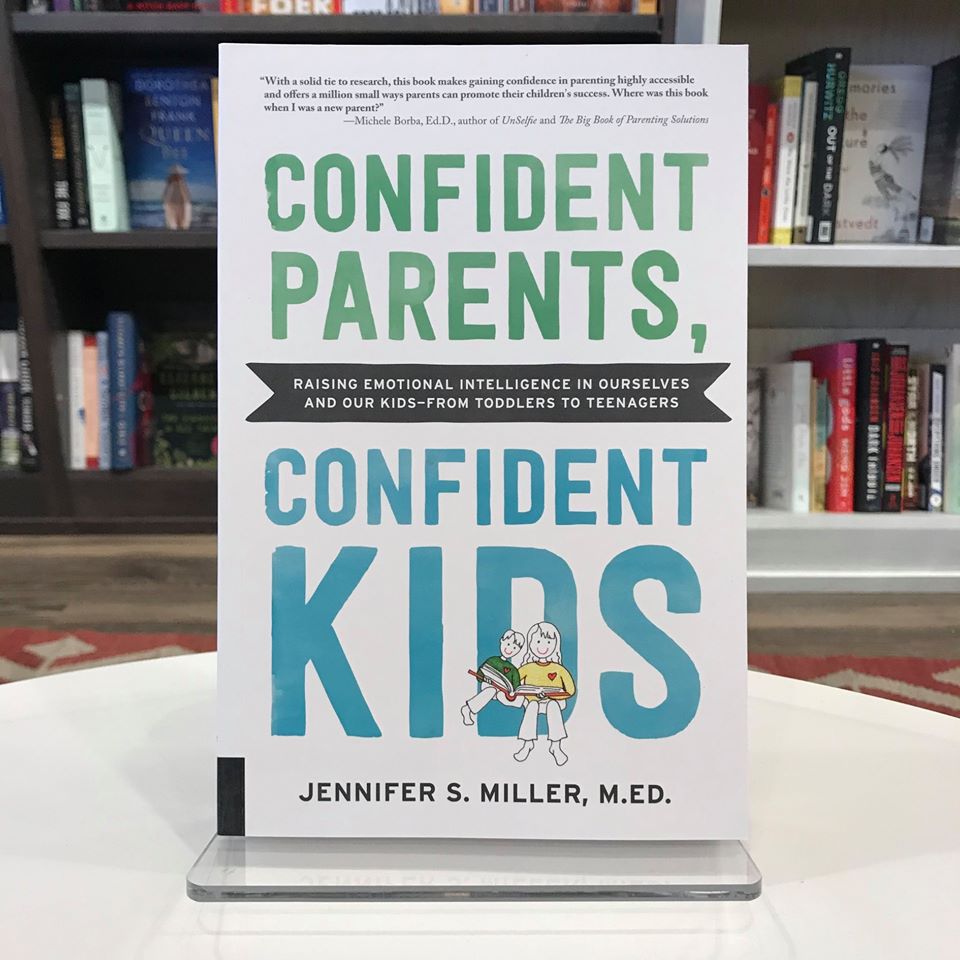
Ready to learn more about your child's development and ways to support it? Order a copy of "Confident Parents, Confident Kids"!

Blog with Integrity
