Learning Together from Summertime Frustrations

Simple and Practical Strategies for Applying Indigenous Wisdom to Managing Upset While Teaching Emotional Intelligence

Frowning faces, furrowed brows, and grumpy expressions may describe your family members’ expressions in the middle of summer as we work hard and play hard while dealing with intense heat and humidity. You may be in that rare season where all family members are home together. Transition times can be tough particularly when children are hot, sweaty and tired. Siblings can begin to get on one another’s nerves being around one another more often – not to mention our own. And responsibilities can fall by the wayside – even if minor and small (“we forgot the bug spray, the sun tan lotion, the bathing suit!”) – and innervate even the most patient of caregivers. But summer can also offer the ideal conditions for teaching invaluable lessons about children’s challenging emotions. With some intentionality and a playful spirit, your family can practice some of life’s most important lessons this summer.

Teaching children about their emotions through the dramatic arts is a simple way to build on children’s vast ability to learn through play-acting. There’s much to learn from the Inuit families who live in the Arctic regions of Canada, Alaska, Greenland and Russia. They make the acting out of anger, our reactions to anger and it’s possible outcomes with their children a widely-used and accepted part of their parenting practices. In fact, Ethnographer Jean Briggs who lived and studied Inuit families reported “…something remarkable was going on in these families: The adults had an extraordinary ability to control their anger.”1

Evidence on how parents were teaching children about anger was found in the consistent healthy management of anger by adults in the community years later. And their formula was simple. When a child gets angry, so their tradition goes, it poses an opportunity to teach a child about how to react. Inuit parents will stop in that heated moment or revisit that moment later. They act out together how the anger feels from one person to the other including what they feel like doing with the feeling, and if/when they lash out, how it feels to the other person, the consequences to the relationship, and how to repair harm if caused. There’s much we can learn from this! Check out the full article from National Public Radio here entitled How Inuit Parents Raise Children to Control Their Anger.

As tensions continue in our family lives, there’s an important opportunity of the moment if we seize it. The big feelings we are all encountering daily and weekly provide a common experience among adults and the children they love. What better chance do we have of teaching our children emotional intelligence than at a time when their emotions are running at a fever pitch? I know what you may be thinking now, Reader. “How can I possibly teach emotional intelligence when I’m feeling overwhelmed, run down, and highly anxious myself?” Well, it’s a good question. And you can! Let me explain.

It helps to draw upon a research-backed framework that gives four essential factors of parenting resilience.They are:

  1. Social connection and support;
  2. Knowledge of parenting and child development;
  3. Social and emotional competence of children; and
  4. Ability to ask for and accept help.

This framework provides the hope that as you gain knowledge of your own role as a parent (you are doing that right now!), you can learn ways in which to promote your child’s social and emotional skills which, in turn, will offer you greater empathy, patience, and sense of agency and competence. In other words, you’ll have greater endurance for the marathon of stress you are surely running parenting in complex times. Learning how to manage your own stress and teaching your children how to manage their own big feelings in healthy ways just may be one of the most significant opportunities of our time. Preparing this generation with the tools to be change-makers to solve the problems our world faces will require that social and emotional training.

Check out my simple ideas for transforming the drama of the moment into a vital lesson for the future.

  1. Invest in the Pause. 

No matter what is going on, no matter your level of frustration, the pause is your best friend. It will transform any immediate reactions based on impulse that may leave you with regret later. Impulse and feeling happen instantly but thought takes a moment. So allow your reaction to be informed by your thoughts by pausing in the midst of the drama. Have a hard time stopping the escalation? Say “stop” or “time out” aloud — for yourself. This will assist your whole body and brain even when highly upset in taking that essential pause. Even better, agree with your family on a word or phrase (such as, “freeze”) you’ll say to each other when there’s a need to pause the drama.

  1. Ask, Listen, Accept.

Though we often think we know exactly what our children are thinking and feeling, we don’t. We may pride ourselves on knowing them best. Yet, the very fact that they are children or teens means that they approach life differently than we do. Though it may be tempting to assume, it’s important that we ask them what’s going on for them. Our fears and worries often are not theirs. But they can become theirs if we engage in projections and assumptions. So as you pause and take a moment to breathe before responding, be sure and ask, “What are you thinking? What are you feeling?” and listen carefully so that you address the problem they are perceiving. And then, whatever feelings they share, we need to be ready to accept them — even those that make us uncomfortable or annoyed. And there are those days when we are right on the verge of our own explosion when it feels like one more challenging feeling from our child will make us erupt. If we reach that near boiling point, go back to the start. Invest in the pause. Breathe. Write down your own feelings. Validate what’s going on for you. Then, return to your child to accept that their hearts are never wrong, that we accept their emotions helping them feel supported and understood.

  1. Brainstorm Healthy Ways to Respond – Together.

Working together to think of healthy ways to respond teaches your child that they have options in any problem and can take steps to feel better and make better choices.  Generating ideas together also takes the heavy lift off of the parent to fix the situation or figure it all out. In fact, if the parent engages in fixes, they rob the child of their learning opportunity. But co-creating solutions scaffolds their participation in cultivating healthy coping skills and making responsible decisions.

  1. Reenact the drama.

When the heat has died down, create a moment to return to the drama for the purpose of learning. It may look a bit differently depending upon the age of the child.

For young children – Pretend play is a hallmark of young children and they are ready to engage in dramatic reenactments on a moment’s notice. So use this to help advance their emotional skills. Be sure and get down on your young child’s level to equalize power. This is important. Make it simple. “I’m so mad. I can feel my face is red. I feel hot. What do you look like when you’re mad?” Make faces at each other — the more dramatic, the better. Then ask, “What can we do or say to feel better?” Be sure that you think of options that cool the heat. In other words, don’t raise voices or throw pillows. Instead, hug a pillow, or get a cool drink of water. Discover together multiple ways to feel better.

Elementary-aged Children – You might ask, “What happens to make you mad?” Then, play act out the story your child offers. Whether it’s a sibling sneering at a joke your child makes or you telling your child to get off screens, you might offer, “let’s act it out and see how it goes.” Try out your own respective roles. “I cannot believe you are making me get off video games now! It’s so unfair!” And you offer what you might say in response, “It’s not right. You know the rules. You’ve taken more time than you are allowed anyway.” Now call, “Time out!” Stop the action. Ask some reflective questions about the moment. “What were you feeling in your body to indicate you were mad?” This raises self-awareness. You may share your own typical physical symptoms you feel when you’re mad as a model. ”I can tell my heart starts racing. I heat up too. What can we do to get to a better place?” Brainstorm together ideas for feeling better and addressing the problem at hand without placing blame or criticizing. And if justice is at issue, anger is a critical emotion to help motivate to action. Discuss what your child can do to right wrongs in ways that create fairness and respect.

Tweens and Teens – This age group is particularly interested in social dynamics and drama. So play on this interest. When friends argue or someone on social media gets mad, what does it look like? What does it sound like? Place your teen in the role of youth culture expert and learn from their experiences. Ask for the full story including what happens when a friend or social media icon “loses it.” What happens in the moment? And even more importantly, what happens later to their reputation? Then, play act It out. You might ask, “Show me how it sounds” and then, “Did this cause harm to you or others?” and if so, “What could this person have done instead?”  Be sure and reflect back that anger can be a vital emotion for moving a person to change, to take action, to right a wrong, or correct an injustice. The question to ask then is, “How can you use your strong feelings to pause and consider how to bring greater justice, fairness and respect to the situation?”

With the busy pace of our lives, we are living through times that produce big feelings for adults and children. We can offer our children and teens a pathway to building strength and resilience if we teach them how to use their anger productively and constructively. Take these small family fires as opportunities to teach your children that they can be change-makers today and you’ll help prepare them for a bright future.

References:

  1. Doucleff, M. & Greenhalgh, J. (2019). How Inuit Parents Raise Teach Kids to Control their Anger. National Public Radio.
  2. Center for the Study of Social Policy (2018). Framework for Parental Resilience; Protective and Promotive Factors; https://cssp.org/wp-content/uploads/2018/08/ProtectiveFactorsActionSheets.pdf

Teaching your Child or Teen to Forgive

Forgiveness is an attribute of the strong.

Mahatma Gandhi

Sammy took my Star Wars Lego out of my hand today at indoor recess. But I forgave him. He loves them too.” relayed my six-year-old son last week. “How do you know about forgiveness?” I asked surprised. “Because you talked about it,” he said with an implied “of course, I know” tone. I marvel at what sticks sometimes and what does not. I was fortunate that the word and the meaning behind it “stuck” this time. It was a reminder to me to continue to use the language of forgiveness because as he grows older the issues will only grow more complex and the need for forgiveness will only increase. If you have a young child, practicing now when small infractions occur will be a big help when bigger issues arise later in childhood and adolescence.

Forgiveness is defined as a voluntary process that involves an individual’s change in emotion or attitude regarding someone who has offended them.1 The person who has been offended has to make a decision to hold the person harmless and not desire retaliation of any kind. Though often addressed in religious circles, there seems less discussion about forgiveness as a social construct. Yet as children grow and develop, conflict will be a regular part of their relationships. Being able to forgive and move on is a critical skill to practice in friendships and in family life. If all is forgiven, then past hurts or poor behavioral choices are not brought up in the heat of an argument. If the past is forgiven, children and parents always start anew and have the chance to make the best choices for all involved.

One of the finest examples of forgiveness in my opinion is the Truth and Reconciliation Commission of South Africa. An entire nation decided that forgiveness was the central vehicle for dealing with the aftermath of apartheid in order to repair the significant damage done. The Commission stated “The conflict during this period resulted in violence and human rights abuses from all sides. No section of society escaped these abuses.”2 People who committed the abuses had to openly discuss their acts of violence and seek forgiveness from those whom they offended. And in the face of their abusers, many were able to forgive. The strength and courage of those people is immeasurable.

Raising confident, socially aware and competent children means that we give them the tools to make responsible decisions considering the consequences to themselves and others. But when they make mistakes or others make mistakes that hurt them, they also have the support, practice, and strength to forgive and move on.

Check out these simple ways to begin encouraging forgiveness in your family’s daily routine especially with younger children and following these ideas, we address older children and teens.

Incorporate the language of forgiveness.

After a disagreement with your partner that your children have witnessed, let them know that you have forgiven one another and have moved on. This modeling will be one of the most powerful lessons you can provide for them. Also offer forgiveness to your child after they have caused harm. And most importantly, move on. The mistakes in the past stay in the past not to be brought up as an accusation at a later date. Children who feel they have a “record” of past wrongs can get into a negative choice cycle assuming that those poor decisions are a part of their identity. Parents who are able to move on offer children a clean slate and the opportunity to make the best choices moving forward.

Model empathy.

As you discuss family member’s or friend’s problems, make sure you include empathetic comments. “It is so difficult on the family that Grandpa decided to stop communicating with your Uncle Fred. But we love Grandpa and we love Uncle Fred. We know they are going through a hard time right now. We will offer support to both of them.

Facilitate dialogue on problem solving between siblings and with friends.

If children are guided through a problem solving process – defining the problem, articulating their feelings, understanding the other person’s feelings, generating solutions and trying one out – they can more easily forgive and move on. For more on facilitating problem solving with children, check out the previous post “Working It Out.”

Give your children opportunities to repair harm done.

Children may feel bad about themselves after they have made a poor choice and harmed another. Perhaps they struggled with controlling their impulses. Sometimes in that moment, children can feel overwhelmed as if all of the important people in their lives are mad at them and like nothing they can do or say can make things better. Help them practice making good choices after they have caused harm. You might say, “Let’s think of ways we can make this better.” Then offer support as they fix a broken toy, repair a ripped book, or offer a popsicle to a child they knocked down. I often find myself saying to E when a friend gets hurt, “Go check on him. Ask if he’s okay or if he needs a bandaid.” The more practice children get thinking about and putting caring energy into repairing damage, the better equipped they will be for situations in which serious damage has occurred and they need to be strong and make better choices. And in turn, when they have been hurt, they will be more ready to give a second chance to their offender. In addition, discuss the consequences of not forgiving. “If you do not forgive Sammy for taking your Lego piece, what will happen to your friendship?

For older children and teens, the issues only become more complex and so to, the need for guidance around how to forgive and what constitutes forgiveness. We can tend to hold some misconceptions. One myth is that forgiveness doesn’t hold the offending party responsible for wrong-doing. In other words, does forgiving mean accepting betrayal or harmful behavior? In fact, forgiveness is how you hold your regard for that person in your own mind and heart. Even if you are no longer in contact with them or they have passed on, you have the power to forgive by letting go of anger, hurt, or resentment that keeps you tied to those harmful behaviors in the past.

You can coach your teen that they have choices. First, with a friendship they want to preserve or in a sibling relationship, they can communicate any ways in which they’ve done harm and take responsibility for their own behavior. This step in a relationship can open a safe space for a friend or peer to do the same but it doesn’t always work. The friend may not always take that opportunity to own their wrong-doing. So then, it’s up to your teen to do their own internal heart work to ensure they are letting go of anger they may be holding. How do they do this? Here are some ideas for how you might guide your teen:

Ensure safety first.

This may seem obvious but with teens, we cannot choose their friends or peer relationships. And often, we know far less about those relationships than we’d like as our teens seek more and more independence. So prompt your teen to ensure their safety. How can they feel emotionally and physically safe around that person going forward? It could be as simple as finding allies or rehearsing what to do or say if or when that person who harmed them comes back to harm again.

Express your anger in safe ways.

Becoming angry at a person because they hurt you is a healthy reaction. It gives you the fuel and incentive to protect yourself and stay safe guarding against more harm. But when the harm has been done and is no longer a threat, we can hold onto that anger much longer than we need to. So it’s important to help your teen know what to do with that anger. You might offer the many ways in which you’ve dealt with your own anger and ask what might make them feel better. Painting, listening to music, dancing, running, journaling, or talking to an uninvolved friend or therapist are all healthy options. The arts in particular can help a teen express what’s inside.

Set a clear boundary.

There’s so much talk of boundaries these days yet, actually setting an authentic boundary in a kind and firm way can be one of the most difficult but also most important tasks in relationships. Your teen has the chance to learn this in their early years so that when they are away from you, they have the strength to do it on their own. What’s most important is for your teen to know what words and actions cross that invisible line? Character attacks – yep. Hurtful rumors – definitely. Your teen’s guide can simply be their feelings. Were they hurt? Are they struggling to get over it? Then it’s likely a boundary was crossed. If it was done by a close friend, then practicing ways to communicate that what they said or did wasn’t okay is important. Less is often more. Saying “stop” or “that hurt me” or “play fair” can all become simple ways to communicate that those lines have been crossed.

Ritualize your letting go.

Whether you are staying in a friendship or leaving it, the feelings involved need to be dealt with before you can truly move on. For your teen, how can they solidify their commitment to letting those angry thoughts and feelings go? Writing out hurts and anger and either ripping up and recycling them or burning them (safely!) can be a constructive ritual for letting go of anger. Writing a letter to the person who crossed the line and expressing exactly what your teen wants to say and then destroying the letter (not sharing it) can also help. Imagining conversations in which your teen retains their sense of agency and courage can help support your teen.

Find compassion.

There is always a reason someone is being hurtful or deceptive. And often (always?) that reason is about their own emotional needs and hurts. So there is compassion we can discover if only we search for it. Again, finding compassion in our hearts – seeking understanding for the circumstances that might cause a person to harm another – is not excusing their wrongdoing. But it’s rebuilding your heart and your trust in humanity. So encourage your teen to tell a story of compassion for the person who is harming. After all, our teen, whether aware or not, will likely be the one doing the harm at one point or another so it’s critical that forgiveness and compassion are reciprocal.

Create new opportunities for connection.

If a friendship has been harmed through an argument and your teen has been able to let go of the anger, it’s time to rebuild. So look for small chances to connect. Extend an invitation for ice cream. Look for a simple way to repair harm and begin to make new memories together.

There will be plenty of opportunities for forgiveness if children and teens watch adults engaged in forgiveness and receive support and encouragement from a caring adult. Those experiences will assist them in becoming more empathetic people and perhaps, stronger and gentler with themselves and others.

References:

1 American Psychological Association (2006). Forgiveness: A Sampling of Research Results. Washington, D.C.: Office of Internal Affairs. Reprinted 2008.

2 The Official Truth and Reconciliation Website. Retrieved on July 11, 2024.

The Opportunity of Summertime Playdates

“Mom, can I have a playdate with Tommy?” my son asks excitedly. Why do I feel ancient when I recall that playdates didn’t exist when I was a young girl? But in truth, kids were sent outside to play with their neighborhood friends or siblings and certainly, parents didn’t travel anywhere beyond their street to assist their child in connecting with friends. Our evolution to playdates represents our growing recognition of our children’s social needs.

More than ever, parents realize that play is the vocation of childhood. It’s the central vehicle for learning – a catalyst for kids’ physical, cognitive, social and emotional development. In play, a child is in control of the world he creates, his only limitation being his imagination.

Developmental Psychologist Lev Vygotsky wrote, “In play, a child is always above his average age, above his daily behavior; in play, it is as though he were a head taller than himself.” Children have the ability and urge to create highly advanced pretend play scenarios, both with others and on their own.

In social play, kids practice cooperation, negotiation, inclusion, communication, flexibility and diversity appreciation. In solo play, children can grow their sense of identity and also practice perspective taking abilities as they pretend to be another person.

Pretend play also can serve a significant role in a children’s mental health and sense of well-being. They are able to face the most feared obstacles with the courage of a true hero whether it’s confronting monsters or villains, weapons or diseases, and even injury or death. Through play, they can conquer these fears and show their strength and resilience.

Social and solo play not only contribute to developing kids’ social and emotional life skills but they also contribute to academics. Often imaginative play will include counting (math), categorizing (science) and storytelling (language) among many other cognitive essentials for school-age children. And there is just no such thing as growing too old to play. When adults are creative or engage in any art form, there is play at work.

And if those aren’t enough benefits to convince you that playdates are valuable, here’s yet another, not to be underestimated. Playdates can provide a powerful parent support network. When my son was an infant, toddler and then, preschooler, a group of Moms formed a regular weekly playdate rotation in which Moms attended and enjoyed coffee and conversation while the little ones played. This became an invaluable source of support for our parenting as we discussed challenges, found commonalities and learned from one another differing ways each of us were addressing those challenges.

In the full schedule-laden school-age years, parents can cooperate or take shifts hosting each other for playdates on free summer days or on weekends. This offers a period of time free for the parents who are not on point to host. And when it’s your turn to host, you can create a safe, caring environment conducive to play.

In addition to the many benefits of play for your child, there are some questions that could be asked related to planning and hosting playdates. Some of these may include:

  • How should a playdate be initiated? Do I wait for my child to ask or seek out friends for my child?
  • If I am hosting, should I have ground rules and if so, how should I communicate them?
  • What if the other child I am hosting makes poor choices? How do I handle a discipline issue with another family’s child?
  • If I am sending my child to another person’s house for a playdate, are there questions I should ask in advance? How well do I need to know the friend’s family? How do I make sure it’s safe?
  • Are there rules or discussions I should have with my own child before going to someone else’s house?

All of these important questions and some added tips will be responded to in the following playdate suggestions.

Follow your Child’s Lead.

Who knows why we are particularly attracted to another person and seek out their friendship? Perhaps it has to do with our developmental needs. But it’s impossible to truly predict which peers our child will gravitate toward. So follow their lead! Who does your child talk about at home? That’s a perfect place to begin.

Get to Know the Other Child and his Family.

So you want to create opportunities outside of camp, extracurriculars or school for Tommy and your son to play since he talks about him frequently? But perhaps you don’t know Tommy or his parents. Instead of scheduling a first playdate, schedule a family meet-up. “We’re going bowling this weekend, would your family like to join us?” Or it may be easier to identify a school activity – a summer festival perhaps? – where parents are invited and seek out Tommy and his family to have an initial conversation. Introduce yourselves and express a desire for a playdate. You’ve then laid the groundwork for the new relationship between your family and theirs. After all, if another family is going to trust you to care for their child, they need to get to know you – and vice versa. It absolutely takes a village!

Talk to your Child before the Playdate about Ground Rules
(including playing with one another, not on screens!)

You want to prepare your child for a fun, successful playdate and you don’t want to have to do a lot of supervising and managing during the playdate if you don’t have to. So why not discuss ahead of time the rules that make the most sense? I always begin a conversation about rules by setting the stage and asking, “I’ll bet you are excited to have Tommy over. I’m so glad! What rules do we need to think about for the time he’s here so that you both can stay safe and have a great time?” And then, let him consider or offer options. Write them down to demonstrate that it’s official and important (and to refer back to if you need to do so during the playdate). Be sure to keep rules brief and frame them in the positive. What do you want them to do versus not to do? So one might be, “Keep play safe.” Discuss what that means. Climbing on furniture or more physical play may not be safe. If tempted, then maybe a good solution would be to play outside if the weather permits. Others may include: staying in certain play areas or living spaces (and avoid others); inside voices are the best to use; or bathroom time is for one child at a time.

Reserve Screen Time for Times Other Than When Friends Are Over

Yes, screen time could take over an entire playdate. Indeed, kids will want to play video games with one another or watch a movie. But plenty of screen time takes place when kids are home without friends there. I’ve noticed that children who are used to many hours of screen time take a little longer to figure out what to play when screens aren’t available. But all of those wonderful benefits of pretend and engage in social play are not fully realized if children are on screens during their playdates. Our rule is “Friends are more important than screens.” And we put away devices before they come. If asked, we share that’s it’s our rule to promote more fun, creative playtime. We leave out costumes, art supplies, legos and other imaginative toys (see resource at the end for more ideas!). My son at ten-years-old now only requires blankets and pillows since fort-making has become his latest pastime with his pals. Create a ready environment for play together and children will forget about their need for screens and reap all of the benefits of their social play together.

Partner with your Child to Communicate Rules to his Friend.

You’ve already discussed safety rules with your child. Welcome your child’s friend in and express your happiness that he’s there to play. Get out the rules you discussed and briefly talk about them. Let the friend know that he can come to you if he’s hurt or feels unsafe or for any reason. And then send them off to have fun!

What If Poor Choices Are Made by Another Person’s Child?

If it’s a minor issue or breakage of your rules, offer first that every family has different rules. You might say to both children, “Tommy’s family likely has different rules at his house and so is just learning about our rules. At our house, we don’t play rough enough that things break. We choose to go outside. Let’s work together to clean up or repair the broken item. Then, you can choose – You can continue to play your game outside or pick a different, less-rough game inside.”

If it’s a major issue, in other words, a child is harmed, then calling the other parents makes sense. But placing blame will not build bridges with that other family so if you need to make the phone call, consider how you’ll create a safe space for discussion. Instead of saying, “Your child hit my child. Come get him.”, you might instead say, “We value Tommy’s friendship. There was some hitting today at our house. It may be a good time to just take a break and calm down since both kids are upset. Then, maybe we can try again another time. For today though, could you please come get Tommy?” In that circumstance, you’ve done your best to keep all safe while preserving the relationship. Either the other family or you can make the choice going forward whether it’s important to offer second chances and try another playdate.

Set the Stage for Sending Your Child to Another’s Home:

Ask about House Rules in Advance.

If you have a playdate set with another family, simply ask what their house rules are. If any particular rule is particularly important, they’ll communicate that to you and you’ll be able to discuss it with your child in advance.

Trust Your Gut.

Your gut is yours and your child’s very own internal safety device. Teach them to use it! Since children are learning about their feelings and developing a language to express them, they may more readily be able to identify physical signs of discomfort first. Their tummy may feel nauseous. Practice doing gut checks. If you see an image in the media that is disturbing, ask how their tummy feels. Make the connection between that icky feeling not only as a sign of discomfort but as a sign of danger and to get out of the situation. If children are taught to trust that feeling, they will become more likely to leave a high-risk circumstance. Let them know if they feel unsafe at another child’s house to find a caring adult and ask to call home. Have an easy plan at the ready so that your child knows how to get in touch with you.

If Trouble, Tell a Caring Adult.

To prevent abusive situations, it’s helpful to get to know the other family first. But also, you can coach your child to find safety in an unsafe situation. If your child feels unsafe, she needs to learn to “look for the helpers,” as Mr. Rogers wisely advised. Abuse usually takes place when two are alone together. Though a perpetrator can and often does rationalize his behavior, there is also a clear sense that it’s not acceptable to others. So if your child knows to find a trusted, caring adult to help, they can remove themselves from the dangerous situation. This teaching is in opposition to the old “stranger danger” counsel kids used to be taught. If your child is afraid of strangers, he won’t seek the help he needs. Instead, work on finding a helper. Practice. Can you find a helper when you are at the store together? Ask your child, “Who would you go to?” Talk about it with your child when you encounter another lost child, witness a fire, or see any kind of dangerous situation. If you feel scared, look for a helper! If the person you are with is scaring you, look for a helper!

Discuss a Way to Get in Touch with You.

Send along your name and number in your child’s backpack or even pin it on their clothing so that they can get ahold of you if they need to. Practice making a phone call to you if they have not used the phone. If it’s a first playdate, keep the timeframe short as a trial run so that you gain more trust with the family and the environment.

Though it takes a bit of effort on the part of parents, children will certainly benefit from friend playtime. Look for ways you can connect with other parents too and you’ll reap some of the supportive benefits of growing relationships in your community!

Extra Resource:

Printable Playthings to Stir the Imagination (Many of Which Are Ready Household Objects)

Adapted from original article titled “All About Playdates” published March 8, 2018.

Responding to Summertime Hurts with Emotional Intelligence

“Are you okay?” I asked as E made a beeline from the outdoors in straight to the upstairs bathroom and shut the door. “No,” he uttered angrily coming out and showing me bloody elbows and knees and scraps up and down the side of his body. It was his first day out of school. And I truly cannot recall one first day out of school when the weather was beautiful and he was free to run outside that he didn’t wind up with at least one scraped knee. Yes, tis the season for “boo-boos”. And for some children, they’ll deal with more serious injuries this summer like concussions, sprains, or fractures.

So how do you manage your own big feelings when your child is in pain? These circumstances test our emotional intelligence because of the mounting emotions we’ll have to confront. After all, we are reacting to our child’s upset which may be expressed in inconsolable crying, yelling, and anger (that could be directed at us), or running away and hiding. We have to cope with our empathy as they endure pain which can be no small feat as we desire their suffering to go away as quickly as possible. We may get squeamish at the sight of blood or have a sense of disgust or revulsion as we view their injury. We may also fear greater internal injuries that we cannot detect on our own so that we have to deal with anxiety and feelings of incompetence when we don’t know what to do.

This seemed an important day for me to consider how we can respond in ways that support our children, acknowledge their big feelings, and deal with our own in constructive ways. Here are a few well-considered tips.

Prepare.

Before your child comes to you with her first scraped knee, make it a start of summer ritual to stock up on first aid supplies. I carry band-aids in my purse everywhere I go. And I’ve helped out other parents in the grocery store, in the park. When a child needs a band-aid, they really need one. Don’t mess with feeling helpless and unprepared. My favorite supplies to keep on hand are: band-aids of all sizes, foaming anti-bacterial solution (it goes on fast and easy), cut strips of clean, soft t-shirts (thank you for this, Mema) to use to clean wounds or as flexible wraps, surgical tape so that it doesn’t hurt badly when you remove it (drug stores have this), ice packs, and popsicles. It’s nice to have a ritual that if you get injured, a cold popsicle always helps a child feel better. 

Why does this all help with your emotional intelligence, you ask? Because you have no control over when and where injuries take place, this will help you feel more competent and ready so that you can take action and not feel helpless.

Clear your schedule.

Injuries, even if just a scraped knee, take your time and attention. A work conference call, a haircut appointment, or a lunch date cannot compare – in the big scheme of things – to taking care of your hurting child when they need you. Time pressures wear away at our patience and add a layer of anxiety to an already charged moment. So remove the time commitment so that you can focus your attention on your child.

Remember to breathe.

There’s typically a time when a parent is sitting and waiting. Whether a child is crying hysterically or shut inside her room or turned away and refusing treatment, there’s waiting time involved with children’s hurts. Use those times to deep breathe. This will prepare your mind and body to respond in the way you most want to respond — with empathy and compassion.

Acknowledge and accept feelings.

It can be tempting – particularly in a sports’ setting – to utter words like, “you’re fine,” “power through,” or “stay in the game,” – when you are not sure the degree to which your child is genuinely hurt though you see him crying or wincing in pain. After all, it’s likely this is how you were coached or parented as a kid so it can become a reflexive response. In addition, you may have a hidden (or not-so-hidden) fear that acknowledging a child’s feelings might encourage the child to seek sympathy or over-emphasize their hurts. In fact, that is a fallacy. The opposite is true. When we ignore or downplay our children’s feelings, they come back stronger in order to get your attention. Their upset wasn’t good enough the first time so in order to prove it to you, they have to up the emotional ante. 

Use your own inner coach in these situations. Breathe first and think “what’s my best response?” Then, acknowledge and accept what they are expressing or what you are observing they are feeling. “It looks like you are really hurt. I’m here to help.” This simple comforting statement will offer your child acceptance. You understand. And you are there for them.

Manage your own reactions. 

If you are indeed feeling disgusted or appalled or terrified by a child’s injury, there’s no way to bury those big feelings nor should you be expected to. But become aware of your big feelings and do something about them. Put your hand on your heart and attempt to slow it down. Stepping aside and taking a few deep breaths or intentionally relaxing your tense body before addressing a crying child can help you respond in a more effective, calming manner which, in turn, will better support your child through the pain.

Wait for consent to treat.

Your child may just refuse to have a wound cleaned for fear it will cause additional pain, as mine did. After you’ve let your child know that it’s necessary to clean it first or it can get infected, you may need to give him time. No need to nag, insist, or force the issue. Being compassionately clear that you cannot move on until you treat the wound is enough. Eventually, your child will consent. Bravery takes time. Be sure and allow your child the time he needs to agree to treat his wound. Of course, in an emergency, you would indeed rush to treat and not offer a choice. But with everyday cuts and scrapes, it gives a child a chance to practice self-management skills, caring for and giving permission with their own body, and handling their emotions with courage if we allow for it.

When in doubt, check it out.

Perhaps you’ve treated the scraps but you see bruising emerging which could indicate an internal injury. When in doubt, check it out. Call your pediatrician triage line and talk with the nurse on call. If you don’t, you risk greater problems down the line so why not take care of it on the day of the injury? If you have questions you might want to research first, check out the site, Kids Health: https://kidshealth.org.

Distract! And offer comfort.

Throw a bag together before leaving for the doctor with some favorite books or card games. Joke books, Seek and Finds, “Would You Rather,” and other puzzle books can be helpful. For young children, pack favorite comfort items like a beloved stuffed friend, blanket and book. And yes, for school age and up, this is the ideal time to use handheld media to help your child through a tough time. Waiting while a child is in pain can be challenging so have some distractions on hand to help get through those time periods.

Children learn to self-soothe by first, watching how we help them feel better. So after the wounds have been cleaned and bandaids carefully placed, how can you offer a quiet, soothing activity in which they can return to feeling better? Can they snuggle up with a bear, pillow, or blanket? Can you read a comforting storybook together? This will help both you and your child transition back to feeling better.

Tell the story.

Reflect together with loved ones on the surrounding events and recount how the injury happened including the feelings’ journey you’re child took. “I felt so hurt, then scared, then relieved.” This offers your child invaluable practice with discussing the difficult pains in life to help learn the lessons involved, process the feelings experienced, and also solidify the memory that he endured pain and survived.

Fortunately, my son was back up and running outside the very next day and though he had moments of pain, he was healing quickly. Summer injuries can test our patience and ability to show compassion at a time when our child most needs it. But with a little forethought, you’ll get through feeling competent, modeling ways to react to the pain that maximize your ability to support your child and help all feel better.

* This article was authentically researched by the author as she endured a basketball bouncing full force into her nose mere days before publication experiencing her own injury and offering greater empathy for her son — challenging her once again to react with emotional intelligence. Ouch! 

Originally published June, 2020.

The Glory of Summer Reading…

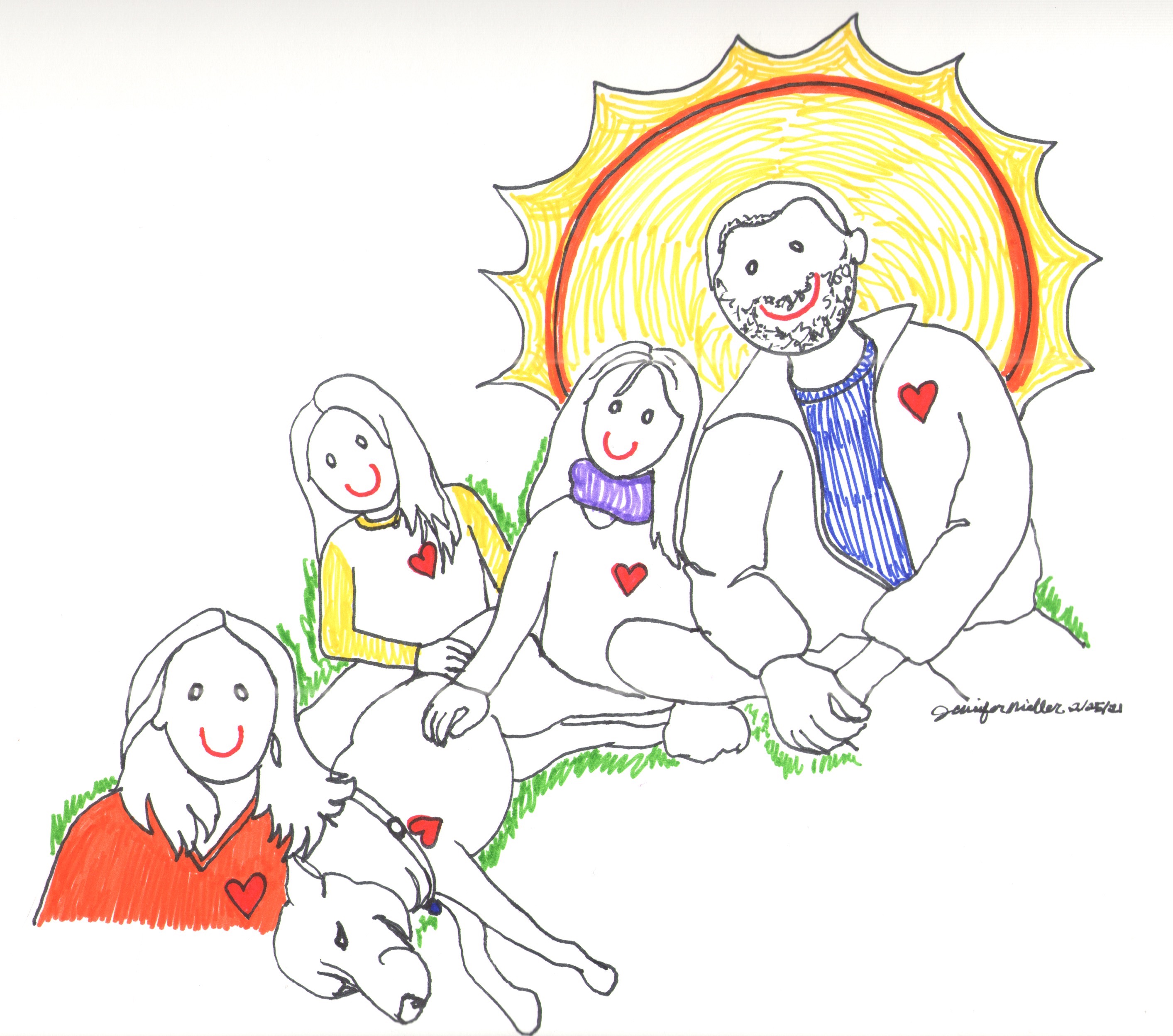
This illustration is a scene from every summer of my son’s younger years. We would throw a cozy blanket on the backyard lawn and sprawl out with a stack of good books. Sometimes we would read together. Sometimes we would read on our own. Snacks would typically be involved. And the glory of summer reading would commence! As he has grown into an independent teen, I tend toward using a chair in the garden and read on my own as he does his independent teen things but yet, I still bask in the glow of summer reading. There’s a freedom to our reading choices when the sun gleams bright and the dappled shade glimmers and shimmers with polka dots of light on the lawn. Somehow the kick-off-your-shoes nature of summer invites us to take reading less seriously and deep dive into magical worlds, suspending the real one for awhile. As I write, I hear the breeze blowing and the blue jays cawing calling me outside.

At Confident Parents, Confident Kids, we have written, revised, and rewritten our book recommendations every year – as true book lovers tend to do to stay current. Some are serious and take a learning agenda in the area of our role as parents. Summer can be a time for our own personal growth, awareness raising, and deepening of our understanding as we retreat and renew. Our children’s books and teen books offer a wide range from fantastical worlds, to travel and social and cultural awareness in this world, to mind-expanding nonfiction. It’s all here. And it’s all been curated with the social and emotional developmental lens in mind.

So check out our recommended lists. Find your favorite kid and your favorite stack of new books, get outside, and get reading! Enjoy!

Check out our best picks for picture books that are sure to delight and also generate important conversations.

Check out our section for first chapter books for ages 7-12 dealing with a range of developmentally appropriate topics.

And check out our teen book list carefully curated with teens to ensure that it’s truly the best of the best from their perspectives.

Happy summertime and happy reading!

The Magic of Fathers

And Gratitude for My Own…

My Dad knew how to play — and still does! As I look back, some of my fondest memories of my childhood were the ways in which may Dad would initiate play. He would…

  • take me on a trip to space using only our IMAGINATIONS. We would each sit in one of the family room recliners. We’d lean as far back as we could go, close our eyes, and we were off! He’d describe the rumble of the engines starting up, the intense fire erupting blast off, passing the sound barrier, the disengagement of our boosters and finally the quiet, calm incredible beauty of space. I remember those trips as magical.
  • take me on an ADVENTURE in our city. On a given Sunday, he would say, “let’s go for a drive!” Neither of us had any clue where we were off to. He’d pack his camera so he was prepared to photograph. And I would call out, “go left here.” We’d end up in a part of our city we had never explored before. We would find old railroad yards and get out and explore. And I learned that there were wonders to be discovered even and especially in areas that seemed forgotten.
  • create rituals to turn everyday experiences SACRED. Though there were numerous and varied ways he created these experiences, one simple and memorable one was the sun salute. Each summer, when we went to the beach and swam in the ocean together, he would initiate the sun salute. It was ultimately gratitude for the sun, for the ocean, and for the time to play together.

These are just a few examples of how my Dad showed me a life of creativity, enchantment, and play. And he did it with his grandson too through puppets and silly games and lots of laughter. Most of all, he listens to me, really listens. He pays attention to the concerns of my heart and gives me trusted space to express myself.

Words cannot express my gratitude to my Dad for all that he has and continues to give to me just by being himself. And I count myself blessed to have two other Dads – my loving partner, Dad to our son, and my father-in-law who also both bring so much joy to our lives.

How will you recognize the intrinsic gifts your father – or a father in your family – gave/gives you this Father’s Day?

If you are a father, how can you embody the best of what Dads can be with your family?

May it be a truly Happy Father’s Day!

School’s Out for Summer…

Ideas for Setting Up Simple Home Structures for Summer Fun and Parental Sanity

“Mom, what do you really want to do this summer?” my son asked me during our bedtime pillow talk last night. I had to think. I wanted my summer sunshine dreams of lemonade stands, library visits, and creeking at local parks to roll off my tongue but instead, my mind was a-jumble.

In our race to the finish line of school, my head is swimming with work agendas and classroom parent tasks to complete. It wasn’t easy to get my mind quickly focused on summertime fun though that’s precisely the hope of my ten-year-old boy. And as I attempt to, waves of anxiety tend to rush through my veins as I figure out the windows of time in which I can accomplish work during those sunny summer days in the midst of playtime.

This was written five years ago and so much has changed including the fact that my son doesn’t “play” anymore but instead “hangs out.” At ten, his head came to the crux of my arm and today, I crane my neck to look up at him. We, however, yet again will have a conversation about summer boundaries and routines as a family. With a teen, you may consider the list I’ve included to tailor your boundaries to your own family’s specific assets and challenges.

I know that if I take some time over the coming weeks to do some collective summer dreaming while establishing some “lite” routines, our summer will be filled with cooperation, shared responsibility, and opportunities for those precious moments of spontaneity — the ones that I truly want to define our summer.

So with that in mind, here are the ways in which we’ll establish a foundation for fun. Perhaps some of these tips will help your household enjoy the summer as well.

Take Time for Sunny Summer Dreaming.

Grab a poster board or newsprint and brainstorm together a list of favorite activities you want to be sure and get in over the summer. Separate into “at home” and “out.” Make sure there are some ideas that can be done as solo play. Hang it on the refrigerator or somewhere you can refer to it throughout the summer. This serves as a terrific way to anticipate the fun of summer and can be an invaluable support for pointing to when your child comes to you bored and unsure of how to spend his/her time. I’ve done this every summer with great success. At ten, my son took the initiative himself without prompting and wrote out thirty-five ideas for summer fun! Now that he’s 15, we simply talk about our hopes and dreams and make some plans together.

Talk about Your Routine “Lite.”

Though you may be eager to relinquish the rigor of the daily school routine, children still thrive with some sense of predictability. So talk about changes in your routine while your family is together. Consider your morning, bedtime and meal times and other transitions in the day. How will things stay the same? How will things change? Perhaps, you’ll agree that getting dressed should happen by a certain time in the morning? Having this discussion can help set expectations for the summer and also provide that sense of stability children can thrive on through routines.

Check out my checklist of all the potential considerations to discuss for summer. Some you may be able to check off right away or skip – you’ve got them covered. Others you and your family might spend some focused conversation on.

Set Up a Regular Quiet Reading Time.

Sure, you may be out of the house some days during a typical quiet time. But consider assigning a particular time of day to serve as a quiet time whenever you are around the house. After lunch could work, late afternoon or right before dinner. Turn off devices and media. Haul out blankets and books. You could include snacks. But it should be a time when all in the household “power down” and take it easy. Set the expectation for this at the beginning of summer and kids will assume it’s part of their summer routine.

Create a Simple Camp or Pool Checklist

Is there a place you tend to go daily in the summertime whether it’s day camp or a pool? Make sure you’ve set up your children for success in getting ready and out of the door with ease. Create a simple checklist together of what’s consistently needed. Bug spray? Check. Sun tan lotion? Check. Water bottle? Check. Use a dry erase board and kids can actually check off items each day. It will help them take responsibility for their own preparation and you won’t have to become the summertime nag! 

Discuss Responsibilities and Consider Adding a Job List

Hopefully, your children understand their household responsibilities throughout the year. But anytime there is a transition, it’s a good moment to revisit. And you may consider one added responsibility to contribute to the household that’s age-appropriate since there tends to be more time in the summer. In addition, if you’re child is eager to earn money but too young to go out and get a job, you may consider putting together a list of jobs beyond their typical responsibilities such as, sweeping the first floor carpet for a $1.00. This will add to their practice of taking responsibility for jobs and offer a chance for your child to earn money this summer while helping you out! Consider a time when you do chores and offer that time for all family members to work together. 

For more on establishing household responsibilities with children, check out this article.  And for an age-appropriate household responsibility list, check out this printable!

Talk about Screen Time Limits and Expectations.

Avoid a daily battle or the chance your child might become addicted to screens and not flourish through multiple activities this summer beyond screens. Learn as a family the reasons why it’s important to limit screen time. Focus on the positive benefits of using time in other ways. Then, be clear together about what limits you’ll agree upon. 

For more on facts about why it’s important to limit screen time as well as, a family media meeting agenda and a family screen time agreement, check out this article.

The warmer weather brings about so many opportunities for laughter and exploration together. May your summer be filled with those kinds of magical moments with your children, teens and whole family!

A Simple Tool to Inspire School Year Reflections

If your family is like my own, you are in the final flurry of school days. Your flurry may involve art shows, concerts, field days, and celebration picnics. If you have older students, they may be chin-deep in final projects, exams, and presentations. And you might be working hard on teacher cards and gifts of appreciation along with volunteering for these final celebratory events. 

But soon, our students will say goodbye to their teachers, their classmates, and their studies and dive into the freedom and glory of summer days with all the promise of joyful play that the sunshine allows. There is, however, a transition that takes place moving from a very structured, very focused, very goal-oriented school year to the less-structured or differently-structured routines of family life. Families often don’t get to participate in these end-of-the-school-year rituals that assist students in that transition yet we want to be a part of it. And in fact, our support of the transition can ensure that, when home together more, we get along smoothly, that we can cooperate on co-creating summer rules and routines, and we move into this next season with hope and a sense of support and teamwork.

So if you are wondering how you might support this transition at home, here’s a simple tool to introduce at the dinner table or wherever you gather to reflect on this important year of learning for your child or teen and your family that is coming to a close.

Spin the wheel of reflection on this past school year. Take a moment to answer a few questions at a time when you are together and recall the major influences – people, places and events – that shaped your learning this school year. For us as parents – the school year/work year is always a learning opportunity too. Whether you respond as a parent partner to your child’s school, a parent volunteer, or a parent support at home or as a professional, be sure you take your own turn and answer the questions for you.

Who 

  • Who had the biggest impact on your learning? Tell a story about how they supported you.
  • Who did you learn the most about? How did your view of them change over the course of the year? What do you appreciate about them now?
  • Who did you learn about in class that impacted you? What did you learn from them? 

What 

  • What did you learn that changed you or had a major impact on your perspective? 
  • What did you learn about how you like to learn or prefer to learn?
  • What new idea or fact did you learn that you are excited to continue to learn more about?
  • What are you grateful for from this past school year?

When 

  • When, during the school year, did you feel the best, most empowered and inspired? What can you learn from that?
  • When did you feel the most anxious, insecure, nervous? What can you learn from that?
  • When did you feel bored or disengaged? What can you learn from that?
  • When did you feel excited and challenged? When did you feel frustrated and challenged? What was the difference?

Where 

  • Where did you experience the most significant learning this year? Why do you think that was the case?
  • Where did you feel safest and at your best? Why?
  • Where did you feel unsafe or scared or uncertain? What can you learn from that?

Why

  • Why was this school year important to you?
  • Why did you choose the friends you choose this year?
  • Why do you love (insert what you love… your school, your classmates, your friend, your teacher, your favorite subject)?

How

  • How did you learn best this year (what conditions, people, supports, ways of learning)?
  • How did you show your kindness to others this year? How did others show kindness to you?
  • How did you deal with your toughest assignments, tests, or projects? Did it work?

Print out this version of the Reflection Spinning Wheel. And here are the printable questions. If you are so inspired, cut out the circle and place it on a cardboard backing. Use a pushpin in the center to anchor the circle but allow for the wheel to spin. Make an arrow on the cardboard backing to signify where the pointer will go and what question to land on. You need not tackle every question. You may take a few spins in one sitting and really savor the stories that emerge from the asking. Perfect for teachers to use too!

Classic educational philosopher John Dewey said, “we don’t learn from experience, we learn from reflecting on experience.” Allow your whole family to do some valuable reflecting together on this past school year – the significant relationships cultivated, the knowledge acquired, the shaping experiences. Promote the higher order thinking skill of meta-cognition or thinking about their thinking so that your children begin to learn more about the ways in which they learn best. These are fundamental lessons that will serve them well through their school career and follow them well beyond into their lifelong learning future!

Happy final school days! 

If you use this tool, let us know how it goes!

Check out these additional ideas:

Bringing Closure to the School Year

Originally published May 23, 2023.

So Many Goodbyes…

Engaging Our Families in Meaningful Endings

Among the many celebrations, final projects, proms, and graduations, there are also many goodbyes that play out at the end of the school year. This year, it feels more dramatic than other years though there are always goodbyes in May. Favorite teachers are moving on. Our son has befriended numerous seniors who have just enjoyed their final day and (literal) run from the school. Professionally, we — co-writer (and partner) Jason and I — are ending a Leadership Lab at our son’s high school in which we’ve grown close relationships and a deep investment in teachers, students, and parents’ success. There are so many goodbyes to say over the coming weeks.

It seems there’s an art and a science to saying goodbye. Though it may happen in an instant, more typically, goodbyes are a process over time. They can be filled with a range of emotions including sadness, fear of the unknown, excitement over what’s next, gratitude, resignation, and even, denial. One of the many nuggets of wisdom I recall from the play, “Hamilton,” is the notion of George Washington teaching the country to say goodbye. In essence, we too have that opportunity in the month of May. We can teach our children and our teens how to say goodbye. And what a critical life skill it is! If we do it well, we’ll feel the feelings associated with our goodbyes moving all the way through them to the other side. And that feeling-all-the-way-through will help us become fully present to our new beginnings like the promise of summer fun,  freedom, and adventures.

Depending on who and why we are saying goodbye, our experience may be very different including the emotions we’ll be experiencing.

If we engage in the process of saying goodbye fully, we’ll share our gratitude and appreciations in meaningful ways. We’ll feel the fullness of our experience with that person. And we’ll give them our best send off as we wish them well on their way to whatever future awaits.

If we engage in the process of saying goodbye fully, we’ll feel the sadness, the bittersweetness that comes from watching someone we care about move on. We’ll relish in the best of our times together and what they’ve taught us that will indeed live on in our hearts and spirits. And as we let go, we’ll feel the fullness of being better having known them for a season and a reason. Those are the ways of the heart, – our experiences and expressions – or the art of saying goodbye. 

The science of saying goodbye tells us that “well-rounded endings,” or the feeling that you’ve done everything you can to complete the experience with the person to the fullest degree possible, lead to the highest positive feelings leaving little regret and easing the transition to the new in the best way possible. In studies of students who studied abroad, for example, those who had a well-rounded ending – a ritual or a connecting goodbye – experienced more positive feelings afterward, held less regret about missing out on other experiences, and had an easier time transitioning back home.1

In this busy time, we can skip the process of saying goodbyes, avoid our feelings, and instead, perform the logistical tasks required of the moment. Buy a card. Stick a potted plant on a desk. Race to the next task. And the get-it-done style may check off the boxes on our lengthy list but it misses the significant opportunity of modeling and teaching your children how to say goodbye.

Here are some ways in which to engage in the well-rounded ending that will bring your school year to meaningful close and demonstrate the value of the relationships forged over the past year.

Write down the impact the person has had on your life.

On a recent stay with my parents, both lifelong educators, I came across my Mother’s retirement album. Every page of the album was filled with layers of note cards and letters from students who took the time to not just say thank you, but explain why and how my Mom made a difference in their learning and their life. And now in her retirement, she returns to read those notes on particularly challenging days when she needs a reminder that she’s truly made a meaningful impact on people. As you consider the teachers, administrators, and pupil support staff who have made an impact on you, your child, and/or your family, take the time to write it down and get specific. Spend time with your child or teen coming up with the content to incorporate their thoughts and feelings. Or spend a little time in a dinner conversation considering educators’ impacts and turn those into a letter. Perhaps pass the letter around for each member who has been impacted to contribute a paragraph. Your reflections just may be carefully placed in an album to offer emotional sustenance as that person ages far beyond your time together.

Draw and create art to show your gratitude.

Art can be one of the sincerest expressions of the heart. You may have a child that naturally gravitates to the drawing board. If you do, then encourage a piece of art that reflects your child’s appreciation for their teacher. Don’t want to draw? Print off photos of your child’s work from a class and make a collage. This can become a lasting keepsake for a teacher.

Mark the occasion with a meaningful and reflective gathering.

Are you saying goodbye to a group of people – a team, a committee, a class? Though this time of year is filled with events, people make a priority of attending ending gatherings so why not host one? It need not be elaborate. It could take place at school so that it’s convenient for students, teachers, and parents alike. Make your gathering meaningful by not only serving sweet treats but also, giving each person the opportunity to reflect on each other’s contributions and offer gratitude for your experiences together. Take a page from our high schoolers who sign one another’s yearbooks with expressions of appreciation. Hang a poster for each person to sign and write appreciations or have note cards at the ready and ask people to write and then give to others at the gathering.

Create a ritual.

If it’s a graduation year for your child, you have a milestone ritual to look forward to. But if not, creating a ritual can be a way to mark the transition and create a well-rounded goodbye. Perhaps your ceremony involves offering a new class a resource you’ve created or wisdom nuggets to pass on from your learning. Jason’s choir had a ceremony in which they robed the new incoming choir members in a procession with music. Though a ritual requires some thought about what might be meaningful to participants, it can create memories that last a lifetime and seal the goodbye with that full circle feeling of satisfied completion.

Because schools are central to our family’s lives and our children’s learning, they are the places of numerous beginnings and endings. If we are feeling sad about saying goodbye, that indicates that there was a richness and an importance in your life that you will miss or that you recognize as a treasure. I hope you’ll take some quiet moments to consider how you are creating meaningful, well-rounded endings with your family. May your goodbyes this season include taking the time to linger in the gratitude for the many who have made a difference in your own and your children’s lives.

References:

Schwörer, B., Krott, N. R., & Oettingen, G. (2020). Saying goodbye and saying it well: Consequences of a (not) well-rounded ending. Motivation Science, 6(1), 21–33. https://doi.org/10.1037/mot0000126