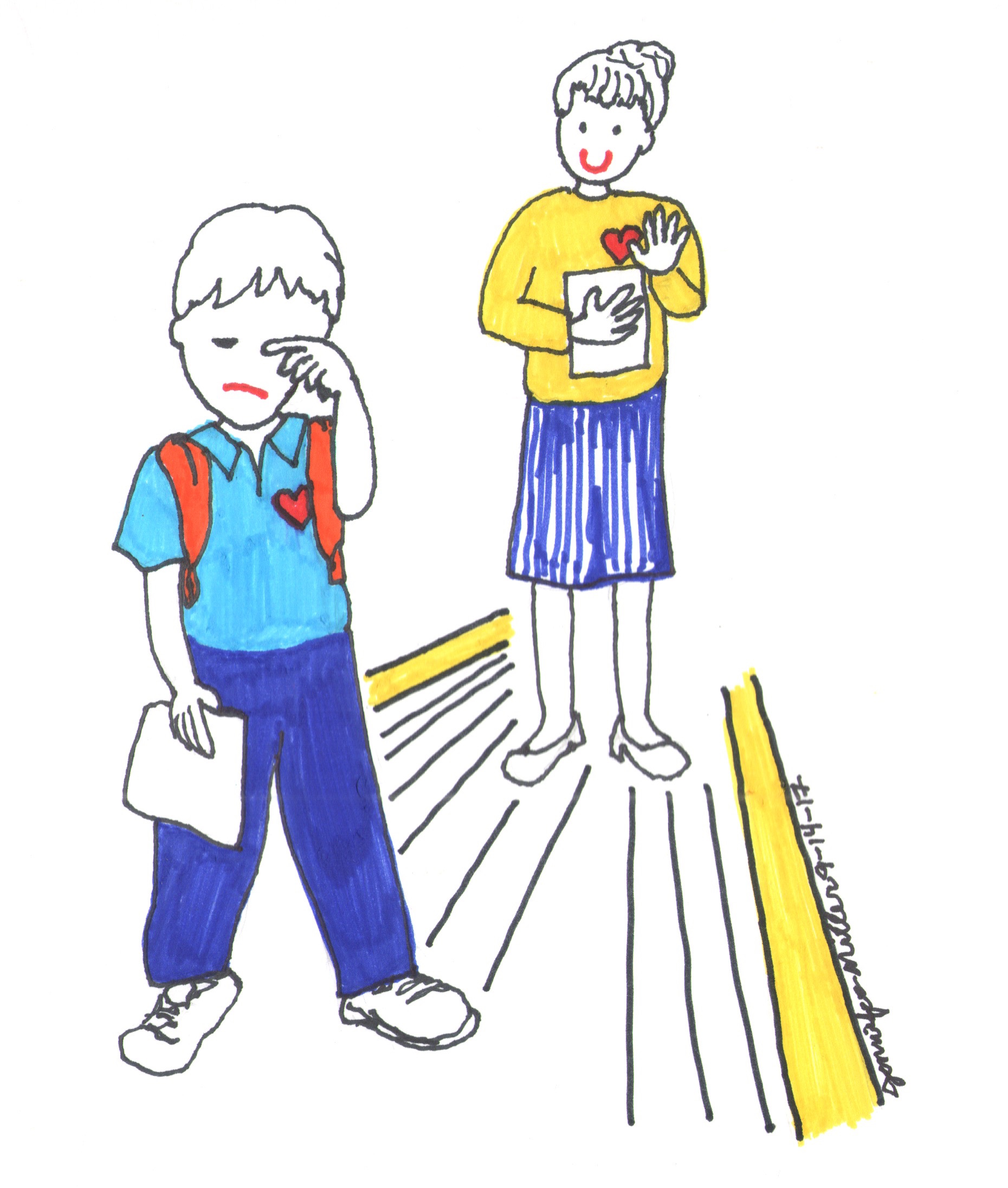
Preventing Our Children’s “Me Too”


What Can Parents Do to Prevent Harassment and Abuse

The “Me Too” movement got my mental wheels churning, as it has for so many. I began wondering, “What can we, as parents, do to prevent our own children’s ‘Me too’?” I recalled when a former uncle cornered me when I was a small, shy child. I remember feeling trapped, in danger, and freezing in my fright. My Mom immediately swooped in to prevent an abusive event. She got between him and me and told him in no uncertain terms that he was being inappropriate and to stop it now. I was too young to know what to do. I am so grateful to my Mom for intervening. And I think her modeling the courage to shut down an attempt at abuse helped stove up my courage for future events.

Particularly if we have been through harassment and felt that pain and vulnerability, we may fear for our kids. But unless we turn that fear into constructive action, it will not assist us in empowering them with the knowledge and skills to keep them safe. Because harassment or abuse can often go unreported, it’s impossible to truly understand the scope of the problem. But there are some facts we can know and understand.

  • 82% of all juvenile victims (reported to authorities) are female.1
  • An estimated 60% of perpetrators of sexual abuse are known to the child but are not family members, e.g., family friends, babysitters, child care providers,
    neighbors.2
  • About 30% of perpetrators of child sexual abuse are family members.1
  • Only about 10% of perpetrators of child sexual abuse are strangers to the child.1
  • Not all perpetrators are adults—an estimated 23% of reported cases of child sexual abuse are perpetrated by individuals under the age of 18.3
  • There has been a decline in child physical and sexual abuse since the 1990s, as reported to National Child Abuse and Neglect Data System (NCANDS) but it remains a problem.4

We certainly can play the role of strong advocates as my Mom did for me to prevent abuse. Thoroughly checking references on babysitters and doing our own gut checks on care providers are a few ways we can take charge of the situation. But it’s just as important to empower our children. There are numerous ways we can prepare our kids so that when we are not there to intervene, they know how to act and react to stay safe. Let’s look at how we can prepare our children.

Ways to Teach Our Children to Stay Safe

Teach and Reinforce the Words “Stop” and “No” as Sacred.
Though this may seem obvious, adults often will keep tickling or pushing a child on a swing even after an earnest “No” or “Stop” has been uttered. It’s a critical habit change we need to make if we are to model and reinforce that “No” should be respected. Voices need not get louder. Crying need not ensue. Use a family dinner time to discuss the issue. Create a new policy. And help remind one another that between siblings, between parent and child, among friends in the neighborhood, when the words “No” or “Stop” are used, they are to be respected.

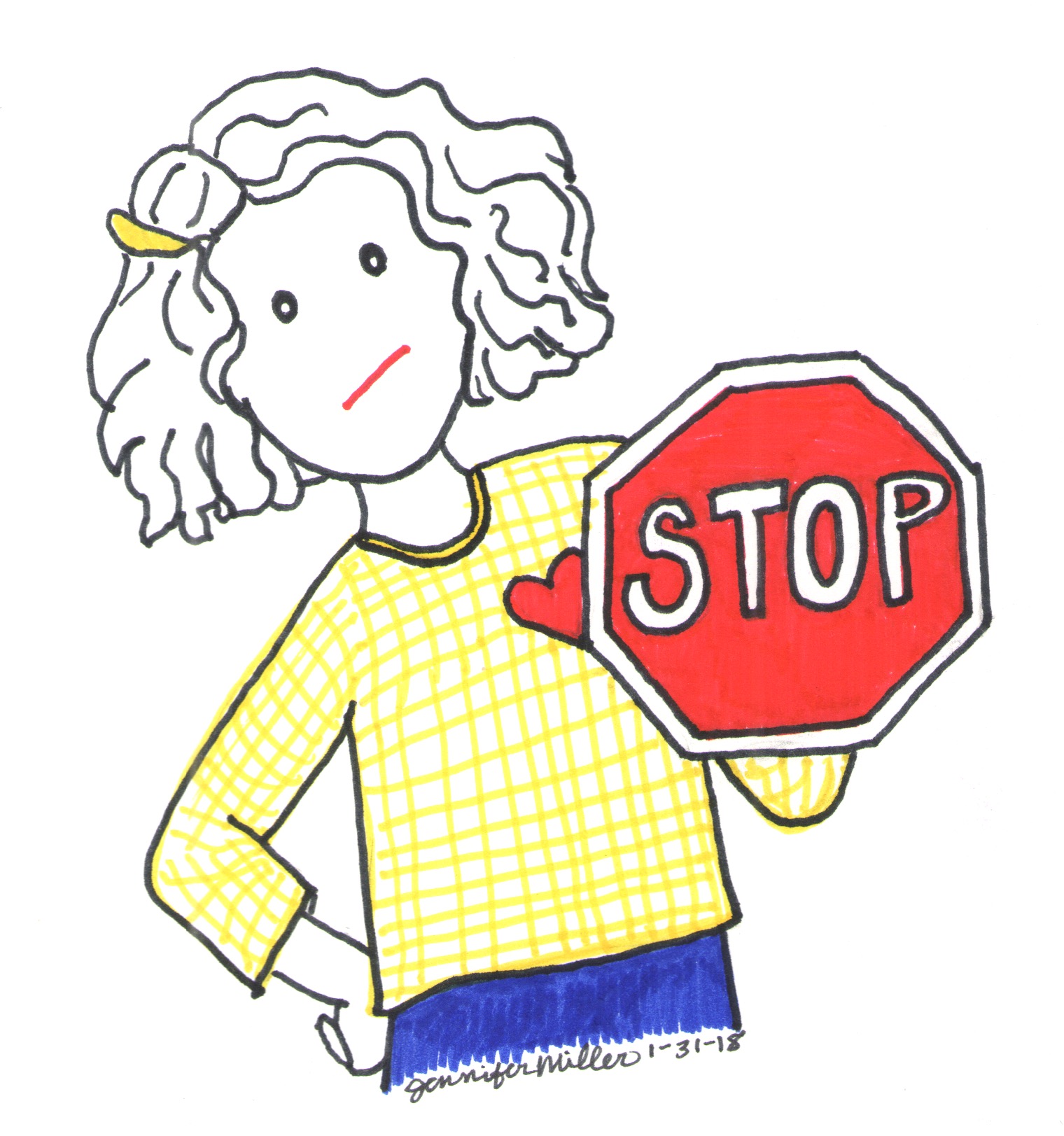
With young children, draw a stop sign together. Hold out your hand when you say “Stop!” Practice stopping with the traffic light game and when the red light is called, be certain that all words, sounds and actions freeze.

Do Gut Checks.
Since children are learning about their feelings and developing a language to express them, they may more readily be able to identify physical signs of discomfort first. Their tummy may feel nauseous. Practice doing gut checks. If you see an image in the media that is disturbing, ask how their tummy feels. Make the connection between that icky feeling not only as a sign of discomfort but as a sign of danger and to get out of the situation. If children are taught to trust that feeling, they will become more likely to leave a high-risk circumstance.

Trust your Feelings.
Yes, if you have Star Wars fans in your household as I do in mine, invoke Obi-Wan’s wise saying! Practicing using feeling words in your family will help your child become comfortable with articulating his/her emotions. This is an important asset for multiple reasons but in this case, your child needs to not only identify that she/he is uncomfortable and scared but also, that she can trust those feelings enough to act on them and possibly disappoint or anger the adult or older individual who is attempting to exert power over her.

Find the Closest Caring Ally.
In an abusive circumstance or any situation in which your child is in danger, they require a caring ally. If five-year-old Addison gets lost at the grocery store, she needs to know that she can find a store clerk or a caring Mom to help guide her to safety and find her family. That same principle is true for abusive situations. Children need to learn to “look for the helpers,” as Mr. Rogers wisely advised. Abuse usually takes place when two are alone together. Though a perpetrator can and often does rationalize his behavior, there is also a clear sense that it’s not acceptable to others. So if your child knows to find a trusted, caring adult to help, they can remove themselves from the dangerous situation. This teaching is in opposition to the old “stranger danger” counsel kids used to be taught. Instead, work on finding a helper. Can you find a helper when you are at the store together? Ask your child, “Who would you go to?” Talk about it with your child when you encounter another lost child, witness a fire, or see any kind of dangerous situation. If you feel scared, look for a helper! If the person you are with is scaring you, look for a helper!

Promote Assertive Communication Skills.
Yes, being assertive is a learned skill. Kids need to be able to not only articulate their hurt, anger or fear but also, tie that feeling to what they know and can articulate is acceptable and unacceptable to them. As with any skill, kids require practice. So as your young child develops the ability to say what she’s feeling, ask, “Okay, so you’re feeling hurt. What do you need to tell others to protect yourself or what action do you need to take to help yourself?”

Then, when our kids do assert themselves, we need to listen and take them seriously. It can be tempting to dismiss a child’s upset because there’s not time for it or we think they are exaggerating. But rest assured, children are upset for a reason. They need to learn to trust their own feelings and that has to come first from our trust in their feelings. So be certain, if you are tempted to shut them down and move on, that you stop yourself and really listen.

Also, offer practice when you are out in public. Instead of talking for your child, allow her to order off the menu for herself or ask the cashier a question. If there’s a problem with her teacher, coach her with some ideas so that she can approach her teacher herself. These small opportunities will offer her valuable practice in talking with adults in a way in which she can assert her boundaries and needs.

Keep an Open Dialogue about Physical, Sexual Development and Talk about Physical Boundaries.
Though we tend to shy away from the conversation, it’s critical to keep an ongoing dialogue and educational agenda related to your child’s physical and sexual development and health. It’s as important as learning to brush teeth and bath regularly. In preschool years beginning around age three, you can start to talk about body parts using their proper scientific names. You can also begin discussing which parts are okay for others to touch. Bathing suit areas are off limits to anyone but your doctor. Teach that others touching you is only okay in areas other than bathing suit areas if you want it. If you feel uncomfortable, say “no.” I teach my son, “You are the boss of your own body!” There are a number of children’s books that can assist you with these conversations. See my favorites list below.

Keeping a discussion open about your child’s developing body and sexuality is important so that your child a.) knows the facts and understands what changes are taking place emotionally and physically, b.) can relate to other children appropriately understanding the boundaries they need to respect, and c.) creates a trusting connection for parent and child so that if there are ever questions or problems, he will be much more likely to come and talk to you.

Talk about What Love, Partnership and Being in a Healthy Relationship Means. Do you discuss what it takes to work at and grow a committed relationship? Do you talk about what love means to you? Ironically, in the logistics of our days, we miss out on discussing some of the most important parts of our lives with our kids. They need to learn what love means to you. They need to learn about what a healthy relationship is. To jumpstart your conversation, talk about and take the Family Fighting Fair Pledge to set healthy boundaries for your arguments. Also, check out how parents can promote Healthy Relationships.

Question your Family Power Dynamics! How is power shared in your family? Are there times when one individual dominates over another? Is communication aggressive, passive-aggressive or assertive? Your child is learning about the appropriate and inappropriate uses of power through your family dynamic. If you are not certain, ask yourself if there are times you feel powerless? And do you think there are times your child feels powerless? How can you learn about new strategies to share power in your family. Hint: there are thousands of ideas for empowering your children with skills in this blog. Here are a couple of articles to get started: Responsible Decision-making and 50 Constructive Alternatives to Detention and Punishment.

Be Open to Questioning Authority and Explain Reasons Behind Your Boundaries.
Though as a parent, you need to set clear boundaries for your children, it’s also important to recognize that children will question the rules. And as they do, they begin to better formulate their sense of what’s right and what’s wrong. You want them to be able to say “No” to an abusive adult so when they say “No” to you, though it can be frustrating, it’s important for children to learn the reasoning behind your “No.” “We set this rule because there is a major safety risk for you. Here’s why…”

There are a number of steps we can take to act as strong advocates for our children. We can:

– do our own gut checks and trust it when our icky feeling arises to tell us a person feels unsafe;
– do our due diligence calling on references and getting to know all caregivers to ensure they can be trusted;
– don’t hesitate to intervene or say “no” to social events or obligations when we feel our child is unsafe;
– never leave a child alone with other children or adults that feel unsafe; and
– channel any anger or fear we have from past experiences into constructive action while having self-compassion for our hurts from the past.

As we work on the multiple ways of preventing our children’s “Me Too,” we also need to remember that our own fear while preparing them can work against our hopes and goals of prevention. Fear, after all, can be paralyzing. And we want to build skills and empower our children to speak up and take action toward safety. So become self-aware. Take some deep breaths and prepare yourself for calm if you need to prior to practices or conversations. Use this as an opportunity to face and overcome your fears by giving your child the skills you may not have had at your disposal. Or if it’s too challenging for you and you are too fearful to advance your child’s learning in a particular area, enlist a trusted partner to regularly engage in these conversations. Focus on the areas of preparation where you’ll feel confident you can help prepare your child to keep safe!

A child who is knowledgeable, who can assert herself and her needs, who has open communication with her parents and doesn’t feel she needs to hide her feelings and experiences is far less likely to be taken advantage of and less vulnerable. Confident parents have a critical role in responding to their own “Me Too”s by investing in their children’s emotional well-being and keeping all safe!


Resources for Healthy Physical and Sexual Development Education:

For Adults in Preparation for Discussing with Kids:

Talk Sex Today; What Kids Need to Know and How Adults Can Teach Them by Saleema Noon and Meg Hickling (2016).

Preschool Age:

Who Has What? All About Girls’ Bodies and Boys’ Bodies by Robie H. Harris (2011).

Amazing You! Getting Smart about your Private Parts by Dr. Gail Saltz (2005).

It’s Not the Stork; A Book about Girls, Boys, Babies, Bodies Families and Friends by Robie H. Harris (2006).

School Age – 7 years old and up:

It’s So Amazing! A Book About Eggs, Sperm, Birth, Babies, and Families by Robie H. Harris and Michael Emberley (2014).

10 years old and up:

It’s Perfectly Normal. Changing Bodies, Growing Up, Sex, and Sexual Health by Robie H. Harris and Michael Emberley (2014).


References:

1.“Sexual Assault of Young Children as Reported to Law Enforcement: Victim, Incident, and Offender Characteristics,” U.S. Department of Justice, Bureau of Justice Statistics, 2000.

2. “Child Maltreatment 2012,” U.S. Department of Health and Human Services, Administration for Children and Families, Administration on Children, Youth and Families, Children’s Bureau.

3. Kilpatrick, D., R. Acierno, B. Saunders, H. Resnick, C. Best, and P. Schnurr, “National Survey of Adolescents,” Charleston, SC: Medical University of South Carolina, National Crime Victims Research and Treatment Center, 1998.

4. The U.S. Department of Justice. Raising Awareness about Sexual Abuse. Facts and Statistics, https://www.nsopw.gov/en-US/Education/FactsStatistics?AspxAutoDetectCookieSupport=1

Helping Kids Deal with the Stress of the Test!


”Mom, everything seems to speed up around me, get louder in my head, and I can’t take my test. I feel scared.” This is how my ten-year-old son described his anxiety during test taking time. But though I know he has felt those feelings in the past, this is the first time he’s been able to articulate it.

In fact, anxiety is experienced differently by every person. Some may get headaches, some tummy aches. Some may feel hot, sweaty or like they are going to faint. But whatever the physical symptoms, frequently they can be accompanied by a host of fears. Yes, the stress of performing well is one of those fears but those worries may lead to a number of others like, “Will everyone make fun of me when I fail?” “Will I learn that I actually don’t have the smarts to do it?” and “Why can’t I think? My head feels like it’s about to explode. What’s wrong with me?”

There is no predicting what particular worries your child will have or develop. But testing time can be a common time of anxiety for parents, teachers and students alike. In fact, because there are pressures on teachers to prepare students for tests, students can pick up on their teacher’s anxiety and feel even more worried experiencing the emotional contagion to which we are all susceptible. So it’s worth looking at ourselves from a bird’s eye view and asking, “How do I talk and act when it’s test-taking preparation time?”

Modeling is a critical teacher so first, take note of your own reactions and anxiety. We can unwittingly contribute to and escalate any fear if we respond to our child’s responsibilities with anxiety. So becoming self-aware and practicing our own self-management over anxiety in those moments is fundamental to helping our children.

If you notice your own worries building, stop and take some deep breaths before responding to your child. I notice that I can hold greater patience in those times of struggle when I put on my “teacher hat,” and, as parents, aren’t we all teachers? All of a sudden, instead of being an annoyed parent, I become an intelligent and empathetic adult whose role is guidance, modeling, facilitation, and support. There are many ways you play a support role, as a parent or an educator, to help your children through this high-pressure time.

In the days before the test…

Get organized.

Be sure you have sharpened pencils (several), erasers and a high protein snack (if allowed) along with a water bottle ready for test-taking day. Your child may want to select her outfit to wear ahead planning for comfort and ease.

Prepare.

If your child’s teachers have given study guides or there are other materials to review, set up a schedule of a time block each day that can be dedicated to studying. Ensure that extra time is allotted (do you need to begin a couple weeks in advance?) in order to well-cover the materials. Give your child a choice (which will help with motivation). You might ask, “When after school, do you feel like studying – right after school or before or after dinner?” Also to help with motivation, work on your own paperwork alongside your child as s/he studies to give the feeling that we are in this together.

Connect Physical Symptoms with Stress.

Because the many possible physical symptoms that accompany anxiety can worsen a child’s worries (“Why do I feel so awful? What’s wrong with me?”), it helps to talk about potential signs. You may want to share how your body feels when you are really worried and ask, “How does your body feel?” If your child cannot answer the question, that’s okay. Just your exploration of possible signs of stress in the body may help your child identify it as stress when it arises the next time.

Learn and practice deep breathing.

Practice deep breathing together. Practice making the noise of the sea waves while breathing deeply from your diaphragm. Close your eyes with your child and imagine that your anxiety is a fiery flame waiting on a sandy shore. And as you breathe life into the ocean waves, they grow closer and closer to the flame to extinguish it. This is a coping strategy that can be used anywhere at anytime and particularly, on the day of the test!

Brainstorm and practice other coping strategies.

Though breathing will be their best bet in returning to calm, here are a few additional coping strategies that can be paired with breathing while sitting taking a test.

  • Close your eyes.
  • Focus on your heartbeat. See if you can begin to slow it down.
  • Tighten and release your muscles.
  • Tighten and release your pencil grip.
  • Plant both of your feet firmly on the floor and imagine them on solid ground.
  • Raise your hand and ask the teacher if you can walk out in the hallway for fresh air or to get a drink of water.
  • Imagine your most calm, serene place (Ask your child where they might want to travel to in their head?).

Don’t worry that your child won’t be focused on the test while trying a coping strategy since their anxiety will prevent them from taking the test anyway. One or some of these could help them to return to the test sooner. Be sure once you talk about these, you try them out! Make it a game. Sit at your kitchen or dining room table and introduce each of these. If you have several children, try it out as a family. Find out which one your child is comfortable with and encourage using it.

Talk through emotions.

Talk through your child’s feelings in an open time slot when you don’t have other pressures. List out all aspects of what they are afraid of. If it’s taking a test, what parts of the taking of a test don’t they like? The time pressure? The silence and focus required? The challenging questions? The fear of failure? What’s the worst thing that could happen to them? Find out all of the aspects of what’s worrying them and be sure to discuss their worst case scenarios. Just acknowledging their worries can bring to light unlikely scenarios they are ruminating on and help them feel understood.

Promote a “Can Do” attitude.

Your attitude about testing will certainly impact your child whether you are considering it will or not. Be sure that you are noticing the positive. Tell stories of your child’s ability to work hard and be resilient in the midst of challenges. Show your confidence that she can learn anything she needs to with time, practice and effort.

The night before…

Your child may be tempted to cram more studies in the evening prior to the big test. And a review after school of the materials could be a big help. However, having a healthy dinner and getting to bed on time should be a high priority that evening. Set the scene for a restful night’s sleep by lowering lighting and turning off screens (at least one hour before bedtime). Perhaps take a bath or read a book to help prepare for sleep. Getting a full night’s rest prior to the test is one way to ensure your son or daughter will be ready to give his or her best.

The morning of…

Stick with your consistent morning routine so there are no surprises or power struggles. If you don’t have a consistent routine or feel that it’s a stressful time typically, then part of your own preparation can be working on creating a family responsibility plan so that you begin starting days ready for learning. Check out this short “Smooth Morning Routine” video to learn how.

Focus on giving your child a high protein, low sugar breakfast (oatmeal, cheese stick, low sugar cereal, peanut butter?) since the protein will provide an even source of energy throughout the morning versus the highs and quick lows of sugar. See if you can incorporate a little bit of exercise that morning whether it means a walk to school, a stretch together, or a jog up and down the driveway. When you get your body moving, you get your brain moving and your child will feel more ready to face the challenges ahead.

Most importantly, be sure to say goodbye with love, a big hug, and words of confidence that she can do it!


For related articles, check out:

Halloran, J. (2017). Raising Kids Who Can Cope with Tough Times. Confident Parents, Confident Kids.

Miller, J.S. (2015). Elements of a Confident Kids…Coping Skills. Confident Parents, Confident Kids.

Dealing with Young Children’s Big Feelings!

Join me today (free) in the Preschool Mindfulness Summit! What do you do when your toddler or preschooler melts down in the Target checkout line? I share specific examples of how parents can help young children deal with their big feelings in ways that build social and emotional skills – while cultivating them in yourself as a parent or educator. Don’t miss this wonderful conference. Listen in from the comfort of your home or office free. 

Preschool Mindfulness Summit Next Week!

Our children are dealing with increasing pressures at younger ages – to perform academically, in sports, and in the arts. While we know they will encounter stress, we can offer them tools to deal constructively with anxiety on their own when it arises. Offering practice in mindfulness in simple ways both at school and at home just makes sense.
Mindfulness requires practice and can involve multiple strategies. We, as educators and parents, can offer that invaluable practice to help children develop resilience. I’m honored to be speaking about “Raising Confident Children” among twenty-five experts and authors on this important topic.

Please join me FREE next week, January 22nd-26th, for the online Preschool Mindfulness Summit with speakers like Dr. Daniel Seigel, Dr. Richard Hanson, and many others. I am excited to listen to interviews on the topics of “Resilient – How to Create a Core of Calm, Strength and Happiness,” “Mindful Parenting of Preschool Children,” and “Discovering Our Mindful Superpowers” among many others.

Watch these interviews from the comfort of your own home or office and learn strategies you can use right away!

Helen Maffini is the host of the 2018 Preschool Mindfulness Summit. She is a doctoral researcher, author, and educator. Helen is the creator of the MindBEpreschool curriculum used in schools across Asia. She is co-author of the book Developing Children’s Emotional Intelligence and creator of the course Thriving Kids.

REGISTER for this FREE Online Interview Series!


Martin Luther King Jr.’s Message for Us Today


When we think of the civil rights movement or we consider our current circumstances, we may think of a country divided. But Martin Luther King Jr.’s message and the vision that galvanized so many to act bravely in the face of fear, consisted of values that any person in any corner of the world can aspire to. They are values that, when lived, have the potential to unify. So when you are talking with your children today about why we celebrate Martin Luther King Jr., be sure and include those values that he articulated and modeled and that so many were able to demonstrate through their actions. Think about small ways in which you might demonstrate those values in your day-to-day life. If you do so, you will be honoring the memory of all those throughout time whose lives and livelihoods were threatened and despite that, made choices that aligned with the best of who we can be.

Martin Luther King Jr. valued:

Equality. He said, “I have a dream that my four little children will one day live in a nation where they will not be judged by the color of their skin, but by the content of their character.” We can share with our children the value of equality. Though there are differences among every one of us, there are more aspects of who we are that unite us. Every person has the right and responsibility to express who she or he truly is.

Ask: How can you demonstrate equality in family life? How can you help children understand equality not as sameness but as appreciation and respect for all? How can you teach your children inclusion?

Small Actions: Work on observing your own informal talk around your home. Are you expressing critical judgements about others? If so, children learn that judging others is acceptable. How can you begin to notice your language? And when you do, how can you incorporate the language of acceptance of differences, perspective-taking and compassion? When others challenge you, search for ways to learn more about yourself, others, and the experience. For more, check out the article, “Expanding the Circle, Teaching Children the Values and Actions of Inclusion.”

Hope. He said, “We must accept finite disappointment, but never lose infinite hope.” It’s incredibly easy to complain about our life circumstances. But if we view ourselves as individuals with choices who can learn from our mistakes, we begin to take responsibility for our actions. And we can work on forgiving those who have hurt us. We can reflect on and evaluate our mistakes so that they become our curriculum. And with that learning mindset, we have hope. Because there’s always a chance to grow wiser and make better decisions. We want our children too to learn that there’s always a second chance. There’s always room to grow and give our best. And there’s always an opportunity to contribute who we are to better the world around us.

Ask: When we approach a problem with our children, do we show hope (or do we show a resignation or feel they might let us down)? How can we incorporate expressions of hope? How can we increase encouraging words and our show of confidence that each family member can make positive choices?

Small Actions: Your reactions to your children’s problems model how they will learn to deal with problems so it’s worth reflecting on those reactions. Consider one time you had a problem with your child. For example, perhaps she got frustrated with her math homework and refused to do it. Think about how you reacted. Now re-imagine that same scenario with you expressing and demonstrating hope. Think through exactly what you might say instead. For example, “I hear you are frustrated. But I know you are capable of doing it and more. It just may take some time and focus.”

Character. He said, “The function of education is to teach one to think intensively and to think critically. Intelligence plus character – that is the goal of true education.” Character is the true expression of an individual, their integrity. It means knowing and expressing who we are – self-awareness – which requires regular reflection. It also means regularly examining ways we can fine-tune who we are and how we express to benefit ourselves and others. So morality or ethics is a critical part of the equation. We only pursue the ways in which our lives can contribute to the deepening of our individual expression and measure that in terms of how it also contributes to the growth and development of others and the environment.

Ask: What are ways in which we promote the character of our children in our family life? How do we encourage responsibility? How do we offer choices to give our children practice with thinking about consequences? How do we guide our children to consider others’ perspectives in any given problem? How do we offer a model of empathy and compassion by expressing others’ viewpoints ourselves?

Small Actions: Though children may experience an inner voice, they do yet have an understanding of their inner moral compass and how it may steer them. In addition, that sense of ethics is constantly changing in all of us – being informed by our environment and by learning from past challenges. So consider how often you guide reflection with your children. Do you ask them questions about their thinking? Do you ask them about their choices and the impact on themselves and others? Those reflections will help promote a child’s thinking skills so that they learn to go through those mental processes on their own when faced with difficult decisions. Find ways to practice reflective thinking with them and those experiences will significantly contribute to their ability to handle problems at home, at school and in the future lives.

Peace. He said, “Peace is not merely a distant goal that we seek, but a means by which we arrive at that goal.” We still live in a world in which many believe that violence can teach, that violence can solve problems. Martin Luther King Jr. taught that it’s impossible to use violence to end violence. Instead peace must be the vehicle for establishing peace. So many of us have inner turmoil we are actively managing day to day. As we work on dealing with our own pain and suffering, we make regular choices about how we cope and process those feelings. If we stuff them down and allow them to build and finally explode, then we are putting our loved ones in danger. Instead, we can set boundaries for fighting in family life such as, “We will never use violence or physical harm of any kind in our arguments.” And we can plan for our upset emotions ahead of time so that we never risk hurting family members. We can find ways to express and let go of our hurt in safe, constructive ways over time.

Ask: How can promote peace in my family life? How can my words become more empowering and less accusatory? How can my tone of voice become one of inspiration, not condemnation? And how can my smallest actions particularly when angry show that I value peace as the vehicle for promoting peace in the world?

Small Actions: The best way each of us can promote peace in the world is by starting in our family lives by not harming those we love through words or actions. Becoming planful about how we manage our emotions can save us from ever regretting our reactions in heated moments. Please visit the Family Emotional Safety Plan to download a simple template you can use for yourself and to start a conversation with family members on this critical issue. In addition, take the Fighting Fair Family Pledge which articulates clear boundaries for arguing while maintaining respect for others.

Service. He said, “Life’s most persistent and urgent question is, ‘What are you doing for others?” and “Everyone can be great because anyone can serve.” The theme of service – of doing for others – is a core value for all of our greatest moral leaders including Mahatma Gandhi, Nelson Mandela, and Mother Theresa. We have an epidemic in the U.S. of depressed teenagers who could not be so if they knew how their unique qualities could significantly contribute to the world around them. Giving offers us a sense of purpose.

Ask: How do we develop a service mindset among each of our family members? Do we promote and cultivate a culture of kindness, help, and support in our family life? How could we do more to appreciate others and offer regular gratitude for the abundance in our lives? How could we, as adults, model noticing needs and offering care for others?

Small Actions: Notice and appreciate kindness when you see it happen around your home. “You took care of cleaning up your mess and I didn’t have to ask you. That’s taking responsibility and I see you doing that.” Point out kindness when you see it in the world. “Did you notice that woman help that older gentleman through the door at the grocery? How kind of her to notice he needed help.” Do it enough and you will begin to hear your child finding examples of kindness for herself. Read more about how parents can serve in their roles by acting as family servant leaders. And also, learn more about how you can guide your teenage daughter or son to considering how they might find their own sense of purpose.

Love. He said, “We must develop and maintain the capacity to forgive. He who is devoid of the power to forgive is devoid of the power to love. There is some good in the worst of us and some evil in the best of us. When we discover this, we are less prone to hate our enemies.”

He said, “I refuse to accept the view that mankind is so tragically bound to the starless midnight of racism and war that the bright daybreak of peace and brotherhood can never become a reality… I believe that unarmed truth and unconditional love will have the final word.

He said, “There can be no deep disappointment where there is not deep love.”
So if the only vehicle for peace is by acting out of peace and love, then forgiveness is core to our task. And our job as parents becomes to equip our children to learn to forgive. They will encounter pain despite our best efforts. But we will give them the tools of resilience, of strength if we offer them guidance on the process of healing and forgiving those who have hurt us.

Ask: How do we forgive in our household? Do we find ways to make reparation for harms done? And do we find words and actions that show we are asking for forgiveness? And are we able to grant pardon when someone harms our feelings? Are there new ways we can go about including forgiveness as an expression of love in our family life?

Small Actions: Consider how you model owning your role and responsibility in any family problem. How do you articulate your area of responsibility? When you do, it opens the doors for others to take responsibility for their roles and it knocks down the wall of “me versus you.” Find times to have honest conversations without judging your children’s actions. Allow them to tell you their problems while you listen with compassion. They will come to you with bigger problems down the line if you offer this kind of small support in day-to-day situations. Consider how you handle hurts whether your own or your child’s. How can you model the language of forgiveness? How can you guide your child to think through actions they might take to make up for harm they have caused? For more ideas, check out my article on “Second Chances – Teaching Children Forgiveness” on the NBC Parent Toolkit.

Of course, love is at the heart of it all. Though outwardly, some may choose to hurt or exclude others, we can be certain that inside, they too feel pain and are convinced they are not loved yet require love desperately to soothe their wounds. Children can acquire their own pain not just by yelling or spanking parents but also, by parents ignoring their needs – whether physical or emotional. Show your love through your attention. Put down devices. Turn off the television. Take their hopes seriously. Take their fears seriously. Really listen to what they are telling you. That is the small, slow but powerful way you can best teach your children to love.

Thank you, Martin Luther King Jr. and all those nameless individuals who have demonstrated their values through their daily courageous actions. May we all attempt that show of strength. I am sharing two of Martin Luther King Jr.’s incredible speeches that could be shared as a family today as we remember and apply those teachings to our present context.

How To Talk To Teens About Their Purpose In Life

By Guest Writer, Dr. Kendall Cotton Bronk; Associate Professor of Psychology, Claremont Graduate University

“Not to brag, but I can make my teen crabby just by saying hello.”

As the parent of a pre-teen, I can relate. And judging from the sixty-three comments attached to this Facebook meme a friend posted, so too can a few other parents. Although stereotypes of rebellious, moody teens tend to be overdrawn, most would agree that it can be challenging to talk to teens, especially about the important stuff. Like their purpose in life.

What do your teens want out of life? What do they hope to accomplish? How do they want to leave their mark? Why?

Broaching these kinds of topics can be tricky. As parents, we want to be encouraging but not pushy, supportive but not manipulative. It can be difficult to walk this fine line. And yet, it’s important to have these kinds of conversations.

Amorphous, philosophical topics, like purpose, are not typically the focus of psychological study, but in the past decade and a half, research on this topic has exploded. From this work at least two clear findings have emerged. First, we’ve learned that leading a life of purpose is beneficial in more ways than one. Purpose is associated with physical health, including better sleep, less chronic pain, and longer living, and with psychological health, including hope, happiness, and life satisfaction. The second thing we’ve learned is that the experience is rare. Only about 1 in 5 high schoolers and 1 in 3 college-aged youth reports leading a life of purpose.

Taking these findings together – that leading a life of purpose is a beneficial but rare experience – members of my Adolescent Moral Development lab and I began to explore ways of fostering purpose among young people. In the process, we learned a lot about how young people identify meaningful, long-term goals that allow them to contribute to the broader world. Below I outline some strategies and conversation starters parents can use to start a discussion with their teens about their purpose in life.

Model purpose.
Have you ever told your teen or twenty-something what gives your life purpose? Have you tried explaining how raising children fills your life with meaning, or how doing a job that positively influences the lives of others gives your life direction? Rarely do we share the things that give our own lives purpose, but doing so is critical. Not only does it help introduce adolescents to the language of purpose, but it can also help them begin to think about the things that give their own lives purpose.

Focus on young people’s strengths and values.
Help young people identify their strengths and consider the values that are most central to them. Purpose emerges when young people apply their strengths to affect personally meaningful changes in the broader world. For example, a young person who cares about the environment and is equally a good writer may find purpose in promoting conservation through journalism.

Foster gratitude.
It may seem counter-intuitive to foster purpose by cultivating a grateful mindset, but it works. Helping young people reflect on the blessings and the people who have blessed them naturally inclines young people to consider how they want to give back. At dinner each night, ask each family member to share at least three things from their day for which they’re grateful. Or, use holidays as a way of starting an on-going conversation about gratitude.

Encourage youth to reach out to friends and family members.
Young people may not know what their purpose is, but the adults in their lives may have a pretty good idea. Encourage your teens to send emails to or strike up a conversation with at least five adults who know them well, asking: (1) What do you think I’m particularly good at? What are my greatest strengths? (2) What do you think I really enjoy doing? When do you think I’m most engaged? (3) How do you think I’ll leave my mark on the world? You can help by encouraging the recipients of these emails to respond. They don’t need to spend more than five minutes doing so; what you want is their gut reactions. The responses youth receive can be very eye-opening. They’re likely to learn quite a bit about their purpose when they hear what others think it might be.

Focus on the far-horizon.
All too often our conversations with adolescents focus on the here and now. Did you finish your homework? Which colleges are you applying to? Are you ready for your physics test? Instead, ask adolescents questions that focus on the bigger picture. Ask youth to imagine if things have gone as well as they could have hoped, and now they’re 40-years-of-age, what will they be doing? Who will be in their life? What will be important to them? Why? This long-term thinking helps youth focus on what it is they want out of life. And don’t forget the whys! Purposes often appear in the whys!

In addition to trying these empirically-based strategies for cultivating purpose in the lives of young people, encourage your high schooler to participate in The Purpose Challenge (purposechallenge.org), where they can complete a brief set of online tools designed to help them discover their purpose, write a short purpose-inspired college essay, and submit that essay for a chance to win a college scholarship. Entries for the college scholarship are due February 1st so check out the site and learn more soon!

Dr. Kendall Cotton Bronk is an associate professor of psychology at the Claremont Graduate University in the Division of Behavioral & Social Sciences, where she studies the things that give young people’s lives purpose. Dr. Bronk teamed up with the Greater Good Science Center at UC Berkeley and social impact firm ProSocial to translate research on purpose into an online toolkit called The Purpose Challenge, which youth can use to explore their own purpose in life.


Quiet Winter Reflection

After the hub-bub of the holidays, I find myself craving quiet, the central gift of wintertime. Much of the natural world is in hibernation and the snow muffles the sounds of the city holding them at bay. As I put away holiday decorations and purge old items that can find a better home elsewhere rather than collecting dust in my own, I am clearing my mind as well. I know if I give into this desire for quiet I’ll be rewarded over time with clarity and focus and a sense of purpose in my family and work life. And so, I walk outside and breathe deeply the frigid air. And I listen to whatever it is I might hear. I ask big questions and I allow them to linger in me for awhile without skipping quickly to the neat answers others might approve of. No, I listen and wait for the answers that I know will ring true.

Here are some of those questions that I ask. My hope in sharing these is that you’ll find your quiet winter too and live the questions for a time listening for authenticity before diving into your new year with answers.

  • What gives me a sense of meaning and purpose?
  • What hopes and dreams do I have for myself?
  • How can I maintain or regain my sense of calm as the storm of responsibilities – family and work – rain down?
  • What are my hopes and dreams for my child?
  • How do I need to align my actions to meet those hopes for my child? What do I need to work on in small, simple, daily kinds of ways?
  • What if my son/daughter were moving out next year? What values would I want him know and hold dear too? How would I do things differently this year to help him learn those values?
  • What beliefs or perceptions can I let go of that may be holding me back from being my best self?
  • How can I show gratitude for my loved ones particularly when life gets busy?
  • How can I be certain that my family members know that I love them unconditionally?

These are just a few of the questions I am holding onto and allowing to stir in my head these winter days. May you too be enriched by your questions.
Happy new year!

The Best of 2017 from Confident Parents, Confident Kids


In 2017, the Confident Parents, Confident Kids’ community continued to grow in followers and collaborators and celebrated five years. Thank you for your continued participation in this critical dialogue on how we can promote essential life skills in our children! In case you missed any, here are the most popular articles from the past year!

  1. A Storied Childhood; The Impact of Stories on Children’s Social and Emotional Development

This article continues to be the most popular of all published. Here’s how it begins…

Oh, the places you’ll go! The worlds you will visit! The friends you will know! – Dr. Seuss

“What are you guys up to?” I say to the three six-year-old friends in my living room. “We’re sharing our books!” one says with an “Isn’t it obvious?” tone. Reading is a top priority in the early elementary school years with some states enforcing a reading guarantee (“All kids will read with proficiency by the third grade.”). And so at times it feels, the pressure is on. “Mama, I feel with my whole body that I won’t learn to read,” E said to me at age five. Yet, we have read together since the days when he was swimming in amniotic fluid. “Oh, the Places You Will Go!” was our favorite. We have books in every room of the house. We’ve read several books together every day of his life. But he has a mounting anxiety around learning to read. Perhaps because it is so much a part of our lives, he feels the importance of reading. But also, I suspect that school is pushing hard to make sure he hurries his learning pace. He’s not alone. A worried mother recently confided in me, “I’ve had my son going to a tutor all summer because I’m told he has to read by the time he starts first grade!” Yes, learning to read is certainly important but how children learn to read is just as important. Read the full article.

2.Kindergarten Exhaustion

How Can You Help Your Five-Year-Old during the Major Adjustment to All-Day Kindergarten?

“We have to go back every day?!” exclaims five-year-old Simon incredulously in the first week of kindergarten. I was reminded of when the nurse told me “only 20 more minutes of pushing and the baby should be out,” during drugless labor. It felt like a lifetime and I had no clue how I would survive a minute longer more or less 20 minutes! This is how a typical kindergartner feels. They are nervous and scared about the many new faces, places, and expectations. They are sad missing play-time at home with you and a much shorter day with far fewer responsibilities. They feel guilty because they know they should be “big” and act “big” but deep inside, they want to snuggle back under the covers. Read the full article.

3. Parents as Servant Leaders

“It is high time the ideal of success should be replaced by the ideal of service.”
– Albert Einstein

Most leaders acquire their power from the choice of their social group to elevate individuals to that level. However, parents, by the very nature of our roles, serve in a leadership position while we raise our children. A servant leader realizes that his or her ability to significantly influence others and achieve any vision comes from serving others. Understanding the qualities of a successful leader – that of a servant leader – can assist any parent in further refining his or her values and skills to better perform her role. Research on power demonstrates that the skills required to rise to leadership are empathy and social skills.1 However, interestingly, those are the very skills that become the most challenging to leaders once they have acquired power. So when we are parenting, we may have a greater challenge than in other roles with our ability to be empathetic and to demonstrate social intelligence. Read the full article.

4. Raising Kids Who Can Cope with Tough Times by Guest Writer and Expert, Janine Halloran

When you think of the word childhood, what comes to mind?

Perhaps you think of carefree times, playing games and giggles, stomping in puddles, scribbling crayons, or running on a playground.

But things aren’t always sunny and perfect in childhood. There are times when challenging events happen in a child’s life. Sometimes these events are small, like a favorite toy breaking, or having an argument with a friend. But sometimes they can be much bigger events, like a loved one dying or parents getting divorced.

As parents, we want to try to protect them from these experiences, and while it’s tempting to do, that wouldn’t be helpful. The truth is that kids will feel sad. Kids will feel frustrated. Kids will feel stressed. Kids will get mad. That’s part of life. Life isn’t always going to be perfect and fun all the time –  there will be storms that happen. Read the full article.

5. 50 Constructive Alternatives to Detention or Punishment

Ideas for Parents and Educators

“Are you okay, E?” I overheard a concerned classmate ask my son as he walked out of the school building yesterday at pick up time. “I’m okay.” he assured the friend. In my head, I was saying “Uh-oh!” bracing myself for the unknown challenge ahead. I ditched my errand-running plans and headed straight to the ice cream store to get provisions for our conversation hoping to channel the clarity of focus that only ice cream can bring. He relayed the story calmly. “Our class was coming back to our room from gym. Sarah (that’s what we’ll call her) was trying to push her way to the front. I was at the beginning of the line and she grabbed my arm and scraped her fingernails down it.” He extended his forearm and revealed two lines of broken skin, red and raw, from his elbow down to his wrist. After washing and treating it, I asked how he had responded and then, how the school had responded. E had said back to Sarah after the scratch “I have to tell the teacher.” And he did. “We were both sent to the principal’s office.” he said. Read the full article.

And A New Book!

Also in 2017, Jennifer Miller, author of CPCK, contributed to the book, Building Powerful Learning Environments from Schools to Communities by Arina Bokas. In both roles – as a parent and as an educator – it can be difficult to understand why there are not stronger partnerships between those three entities – families, schools and communities – who all impact the same children’s lives and care deeply about their learning. In theory, it sounds right. We should work together, communicate with one another and coordinate for a more powerful impact on the development of our children. But the reality of making that happen is quite different. “Feeling voiceless and powerless is likely to resonate with many parents who tried to advocate for their children in schools,” writes Arina Bokas. And for educators, we are often told what we have to do without consideration for our own professional expertise and wisdom. Teachers and administrators can shy away from parents because of accusations and attacks they’ve received in the past. And frequently, community members are unclear whether or not they are welcome in schools and if they are, what roles they can play. This book offers plenty of practical wisdom to help create more trusting, connected partnerships. Check out this excellent book! 

What topics do you want to explore in the coming year? Please comment and let me know!

Happy new year!

Family New Year’s Resolution – The Fighting Fair Family Pledge

What if, this new year, you introduced a family new year’s resolution – to agree to fight fairly?

Fighting is inevitable in families. It does not represent weakness but only reality. Be sure to read through to the end of this article to find the easy-to-print and use “Fighting Fair Family Pledge”!

Throughout childhood, kids are beginning to understand how to disagree and struggle with another person’s perspectives. They may be more impulsive and lash out or run away or even dig in their “heels” deepening the power struggle. I’ve heard many Moms’ laments over their siblings fighting repeatedly over the same issues at the same time of day when patience is low and kids are tired and hungry for dinner. So how can you deal with your children’s conflicts?

Take a look at your own arguments. Kids are learning directly from observing how we handle conflicts with our partners. Do you shout or name call or run away? Do you lash out with passive aggressive comments? Whether we like it or not, our kids are keen observers of how we work through our arguments. Their sense of security is shaken, whether they are a toddler or a teenager when they witness their parents fighting. So they are eager to see how and whether we are able to resolve our problems and move toward a closer relationship.

John Gottman, who has done extensive research on marriage, found that couples who stayed together versus those who divorced did not fight less. In fact, they fought just as often. But there were some keys to how they fought fairly. He writes, “A lasting marriage results from a couple’s ability to resolve the conflicts that are inevitable in any relationship.”1 In addition, they balanced their negativity with positivity. There was, in fact, a magical amount of five positive interactions to one negative interaction, called the Gottman Ratio, that allowed for long-term, sustainable relationships. And it’s true with our parent-child and sibling relationships as well. Consider at the end of a particularly difficult day with your kids, “Did they have five positive interactions with you to counteract the one challenging one?”

Studies have been conducted on how kids’ developing brains are impacted by parents’ conflicts. Kids who lived in households with regular fighting experienced a stress level others who lived in more peaceful households did not. Over time, that stress compromised their brain development leading to impairments in learning and memory. But kids who lived in households in which parents argued but genuinely resolved the arguments (kids were aware if parents faked a resolution.) were actually happier than before they experienced the argument, claims E. Mark Cummings, senior researcher at Notre Dame University. He writes

It reassures kids that parents can work things through. We know this by the feelings they show, what they say, and their behavior—they run off and play. Constructive conflict is associated with better outcomes over time. 2

If the quality of the fighting and subsequent interactions is critical in sustaining a healthy marital relationship, then it’s conceivable that it is also critical for sustaining positive friend and family relationships. And since kids learn directly from the modeling of their parents’ arguments, it’s worth examining how you fight with one another.

There are ways of fighting that are unfair and those are important to discuss as a family. In addition to becoming clear about words, intentions, and actions that are destructive to relationships, I’ve also listed simple ways to teach children alternatives so that not only do they understand what not to do but what TO do.

Agree with family members not to use:

1.Criticism.
Though it can be tempting to criticize another (and at times, it may seem harmless), those words constitute an attack on the person you love. Focus on the problem at hand, the struggle, not the quality or character of the person with whom you are fighting. Criticism of another can remain in the heart and mind of the recipient and whittle away at the trust in a relationship.

Teaching your kids.
When my child is mad at another, I typically say “We are all learning. Your friend is learning too.” Focus on the problem, not on the person. He may not be getting his needs met. We may not be able to understand why he is doing what is making us mad but we can understand that there’s a reason for it. Reframe how you discuss the problem. Say “What actions/choices didn’t you like?” versus “What did he do wrong?”

2. Contempt.
Contempt is another way of showing disdain for another person. It may involve name-calling, hostile humor or sarcasm, dismissive or baiting body language or mockery. None of these are fighting fair. Not only are these forms of character attacks but they also have the implicit intention to harm the other’s feelings.

Broken Heart by Jennifer Miller
Teach your kids about the destructiveness of name-calling by using the broken heart example.

Teaching your kids.
It’s never okay to name-call no matter how mad you are or think the other deserves it. You might ask, “If you held up a mirror and that body language or those words came back to address you, how would you feel?” One way we taught kids about hurting other’s feelings in schools was by the broken heart example. Draw a simple heart on a piece of paper. Now have the child call the paper disparaging names. Tear the paper each time he calls it a name. When finished, work together to tape the paper back together. Though you can reassemble the heart, it becomes permanently damaged. Children need to understand their words can have that same impact. Don’t allow contempt to pass between siblings. Tell them to go cool off first. Then, come back and you can help kids talk to one another in constructive ways.

3. Defensiveness.
Being on the defensive is a slippery slope that sinks further down into the argumentative mire. It does not help anyone work toward a resolution. It’s easy to become defensive when the other is placing blame. So make a rule in your household. Avoid words like “always” and “never” in conflicts. First of all, it can’t be true that someone is always one way or never another. And second, it leads to further escalation of the conflict and often to hurt feelings. The best way to avoid defensiveness is by owning your own role in the problem, not pointing the finger and blaming other (watch for starting statements with “You…”), and hoping (though there’s no forcing it) others will accept their roles.

Teaching your kids.
“Always” and “never” are not permitted in arguments in our household. If they are used, it’s time to cool down and see what other words could be used. Also, teach your kids to say how they played a role in the situation first. Use I statements such as, “I feel mad when you grab my toy because I was playing with it.” Owning your role in problem takes courage. So teach them how to take responsibility in the most challenging of circumstances by practicing simple words they can use.

4. Stonewalling.
This takes place when a person refuses to listen, shuts down the argument or gives the silent treatment such as Jonathan closing his ears and singing. Make no mistake about this technique. It is not peacemaking. Far from it, this method of fighting is aggressive and hurtful to the person on the receiving end.

Teaching your kids.
Don’t allow kids to confuse time to cool down with stonewalling. There is a significant emotional difference. In the first, a person leaves upset and returns calmer and ready for constructive dialogue. In the latter, a person leaves upset and the upset escalates with both conflict participants. Silent treatment or shutting down another person only leads to more problems, hurt and upset. When kids are calmer, encourage them to come back together to work it out. If they struggle with talking, have them write to one another. Communication between the two is critical to work through their problem. For more on facilitating problem-solving between kids in conflict, check out “Working It Out.”

Establishing some guidelines for fighting fair for all family members can ensure that you are ready when the inevitable problems arise.

Guidelines for Fighting Fair

Instead, your family can agree to…

Get proactive about how you are going to calm down. What do you do when you feel the heat rising in your face from anger and frustration? Develop your own plan for calming down in advance of troubles. And have the discussion with your family. Use the Family Emotional Safety Plan as a simple guide for that discussion. Also, are there times of the day when siblings tend to fight over and again? If so, proactively institute a quiet time or “brain break” as schools who use mindfulness practices call it. A brain break involves simply sitting down and focusing on breathing to regain calm. It can become a powerful household tool if parents use and model it too.

Trust that the other person has good intentions. If we begin from a place of blaming and accusation, defensive walls go up on both sides. In order to keep those emotional walls from being erected, we need to trust that there is a good reason behind the other’s arguments.

Start with empathy. When a conflict arises, training yourself to think about the thoughts and feelings of the other involved helps us communicate with compassion and fairness. It can be difficult to focus on empathy when we are in our own heads reinforcing our perspectives and creating new arguments to support our main points. But after a focus on calming down, we are more capable of doing this. You might begin with, “I think you are feeling worry and frustration and you want me to change my actions so that you don’t feel that way anymore. Is that correct?”

Take responsibility for your role only. Ask “What’s my role in this problem?” and “How can I articulate my role fairly?” You may say “I admit that I didn’t pick up your library book today but I am feeling frustrated because I had a good reason why I did not.” This also helps avoid the blame game. When you take responsibility for your own role in the situation, the other is more likely to take responsibility for his role as well.

Seek understanding. Often we cannot move on from our conflicts because we feel so sorely misunderstood. And at times, though it can be uncomfortable, we miss the chance to gain understanding by not sharing our feelings, thinking it will leave us vulnerable. In fact, it is in the sharing of our feelings that we begin to connect more deeply on the core problem and offer a chance to resolve it constructively. In order to resolve the issue, use “I” message language. “I feel frustrated and mad when you don’t tell me you are coming home late because I’ve worked hard on a family dinner.” And make sure you offer to turn the tables to gain an understanding of your partner’s perspectives.

Work together on an agreement. No agreement is going to work if needs – physical or emotional – are not met. So before finding solutions ask “What needs have to be met on both sides?” Then with those needs in mind, discuss ways you might move forward and resolve the problem.

End with love. This is typically not a possible way to close a conflict if the problem is still there, not truly resolved. But if you’ve heard each other’s feelings and thoughts, worked to understand one another and tried to resolve the problem fairly, then ending with an expression of your love and care is not only possible, it’s likely.

If we know that the way we fight – what we say, how we say it and what we do – can either deepen our intimacy and strengthen our bonds or create divisions and break down trust, then it’s worth becoming clear about and agreeing upon our boundaries. Introduce this to your family while you are on winter break or during a family dinner. Make this commitment to one another and keep it handy to remind of your agreements throughout the year when challenges arise.

Here is the pdf version of the Fighting Fairly Pledge to print and use! 

Conflicts are the most rigorous tests of our relationships. Reflect with your partner on your own methods of arguing so that you can ensure you are modeling the behaviors you want your kids to learn. And give your children ample practice with calming down and then communicating with each other in respectful and constructive ways so that when they are on their own in the world, they will carry those critical problem-solving skills with them. If you do, you will feel confident that your kids will be prepared to pursue healthy, sustainable relationships. You’ll be starting 2018 with an expressed demonstration of learning and growing in love together. From my family to yours, happy new year!

References:

1. Gottman, J., & Silver, N. (1994). What makes marriage work? It’s how you resolve conflict that matters most. Psychology Today. Retrieved on 4/27/16. http://www.psychologytoday.com/articles/200910/what-makes-marriage-work


New Year’s Routine Reboot

The Start of the Year Offers the Ideal Chance to Create Smoother Bedtime and Morning Routines at Any Age…

E, now ten-years-old, has a full two and a half week break over the holidays. And yes, we’ll do lots of visiting with friends and family. Sure, we are planning multiple entertaining outings. But there’s also an opportunity we’ll take advantage of while we have the luxury of time to prepare for the year ahead.

Gretchen Rubin, author of the book Better Than Before, suggests that any major changes in life can be supported and successfully sustained by initiating them at a turning point or natural time of transition. 1 Because we feel we are in a cycle of change anyway, adding another change to it feels more in alignment with our lives.

As we tried to get E ready for a playdate this morning, we reflected on how it was chaotic, awkward, and driven by us, the parents despite the fact that we’ve worked hard to instill a sense of responsibility in our child. We know he’s well-rehearsed in all of the tasks he needs to accomplish to get out of the door. Yet, we found ourselves nagging. And we know it’s not necessary. Time to revisit our routines! And the new year presents a perfect opportunity to do so.

The holiday freedom can throw us off of our game as we go to bed later and get up later. Then, that first week back from holiday break can typically be a tough one — getting up and out of bed on time further complicated by the snow, ice and sub-zero temperatures. We begin the new year with a host of new hopes, desires and plans. But getting back into our routines may create unnecessary aggravation, certainly not setting us up to achieve those hopes, if we are not proactive about them.

Making adjustments to our winter routines just makes sense. Harsh weather adds so much to our typical mornings that if we don’t accommodate those additions, we will end up consistently stressed and our kids will too. And the resulting negative mood can trickle down into our work and school days. But there’s good news from research done on self-control. Apparently, we have the greatest capacity for self-control in the morning when we are fresh and rested. As the day wears on, our self-control can experience fatigue like a muscle. 2 The implication is that if we have set ourselves and our kids up for success by getting to bed on time in the evening and getting up on time in the morning, then we can draw upon our refreshed self-control to proceed calmly and with patience while our child struggles to get on his boots. Why not plan for success and make some small adjustments with your kids to help each member contribute to making the morning go smoothly?

Make a Plan Together. You can use a poster board that you’ll post nearby to refer to during your routines. Or you can use a small white board so that you can easily erase marks and start over. Pick a time to discuss and work on your plan when you have no time pressures. Involve your child in the creation. For younger children, (toddler through first grade) create a simple, illustrated plan and for older children (school age and up), create a checklist. You may want to focus on “things we need to do” to get out of the door on time.

For younger children… Creating a plan together can be simple and powerful. You might ask, “what do we do first when we begin our bedtime routine?” Write down in as simple terms as possible and if your child can write it herself, that’s preferred. Have her illustrate the concepts. The more she can contribute, the more ownership she will have over the plan.

For older children… It seems human nature that checking items off a list offers satisfaction. And research now supports that when there is added complexity in any situation, using a checklist can offer a simple organizer to ensure all issues are addressed. 3 Give your kids the opportunity to check off their list. “Today’s special class is library. What do you need to put into your backpack?” you might prompt. “Books, check!” replies your highly responsible child! The checklist can help your child get involved in making sure everything is ready for the day.

Plans offer practice in goal setting and problem-solving as they think through possible solutions to typical challenges that occur. And in the implementation of the plan, children are able to exercise their self-management and responsible decision-making skills as they set about following through on their plans.

Organize. Take time during your break or after school to organize your winter wear and school project materials. It seems at the same time the wet, snowy outdoor clothing is piling, there is an influx of historical dioramas and science poster boards. Where are the repositories for completed academic work that were brought home? Where do you keep academic materials that have to travel back and forth to school? Be certain there is an assigned container, bin or binder that your child can regularly use. And then, how do you deal with all of the extra winter wear? Where do wet scarves, gloves and hats go? Those are the buggers that tend to run and hide at the last minute before everyone needs to leave. And what about at bedtime? Would it help to select and lay out clothing for the next day during your bedtime routine? Create a solution together. The more you can involve your child in that solution (perhaps she draws a sign for a bin? perhaps the bin is her favorite color?), the more ownership she will take over keeping track of those articles.

Evaluate Time and Adjust. It’s a simple fact that if you have added winter clothing and academic projects to your morning routine, you should be allotting more time than when the weather was pleasant. Never plan for the exact amount of time it takes for your routine to go smoothly. How often does that work out? Instead plan extra time for problems so that when they occur (Tommy has a meltdown about wearing new pants.), you won’t panic because you don’t have the time for a problem. Delays still may occur on occasion. But with a little padding, you will possess that additional calm to get through most mornings.

Move your muscles together. During the hibernation months, children are often seated in a classroom in school all day and return home to more schoolwork. Recess may be indoors and involve board games instead of the typical outdoor running around that occurs during nicer weather. Movement may be significantly limited particularly compared to the warmer months. That movement, though, helps children fall asleep faster at night and get their required rest. So consider finding an opportunity to move after dinner each night. Can you do a chase game safely in your basement? Can you try out family yoga together? How about a dance party? It could be as simple as turning on some upbeat music. Create chances to move so that you do not have to do all of your wiggle expelling at the moment it’s time to go to sleep.

Do a Dry Run. Instead of playing your favorite board game, host a game of “Morning” or “Bedtime Routine.” Once may be enough to allow you and your kids to practice and provide a significant memory from which to draw. Be certain to make it enjoyable. With a doughnut in hand (this is my personal version of making it enjoyable :), go through each of the steps of the morning with your checklist. Or if bedtime is particularly challenging, do this with bedtime. You could have your child teach their favorite bear their routine in the process. Set a timer to see how quickly you can get through each step. Allow your kids to tell you what’s next. When you come upon typical morning or bedtime struggles, stop to brainstorm. “How can I help you with this? What could make this easier so we can beat our time?”

Prepare the Night Before. Instead of trying to get ready for the next day on your own after the kids have gone to bed and you’re exhausted, involve your kids in getting ready. In the evening, set aside time. Use your checklist to call out items that need to be in backpacks. Lay out clothing. If there’s any new clothing, this would be the time to try it on so there are no morning surprises.

Have Back Ups. For school supplies, medications and winter wear including snow and rain gear, try and have inexpensive back-ups easily on hand. Gloves get lost. And the realization typically occurs when your foot is halfway out of the door. Make it easier on all involved and have a second pair.

Particularly if you have kindergarten-age children or younger, going over the full morning and bedtime routines will set you up for later success. You will have involved your children and taught and reinforced those behaviors you want to see each morning at a time when they are still figuring out the rules of school.

For older children, they know the gig well enough to resist it! And if we’ve already gotten into a pattern of nagging, children expect and rely on that nagging to get moving. They will tend to wait until the tenth nag or the volume is raised before really moving at a pace that will get them out of the door. That’s the routine they’ve fallen into. So creating a plan or checklist together involves them in problem-solving. They certainly don’t enjoy being nagged. So it’s in everyone’s best interest to work together to figure out how evenings and mornings can move successfully with each family member taking responsibility for his or her roles and tasks.

Children will be more successful in school and have a greater sense of well-being on a daily basis if they have a consistent bedtime routine that assures they get the required sleep for their age at night. For ages and sleep requirements, check out this chart from the National Sleep Foundation. Also, winter mornings don’t have to begin with stress. With some teamwork and a little planning, they can go smoothly once more. And you can stop nagging and yelling and feeling guilty. It’s worth a little extra effort to not start your day on a negative note. I treasure the mornings when my son gets out of the car at school and I feel like we’ve both had a positive start. And that is my wish for you for this new year! That you are able to get your children to bed on time so that you have some time of your own and that most of your mornings prepare each family member to start the day feeling calm and ready.

For more on these topics, check out:

A Smooth Morning Routine (video short)

Monkey Mind at Bedtime, Reflecting on Children’s Thinking

The Opportunity of Bedtime, Part One

The Opportunity of Bedtime, Part Two — Troubleshooting Bedtime Challenges

References:

1.Rubin, Gretchen. (2015). Better Than Before; What I Learned About Making and Breaking Habits – To Sleep More, Quit Sugar, Procrastinate Less and Generally Build a Happier Life. NY: Broadway Books.

2. Hagger, M.S., Wood, C., Stiff, C. & Chatzisarantis, N.L.D. ( 2010). Ego Depletion and the Strength Model of Self-Control: A Meta-Analysis. National Institute of Education, Singapore. In Press, Psychological Bulletin.

3. Gawande, A. (2009). The Checklist Manifesto; How to Get Things Right. NY: Picador.